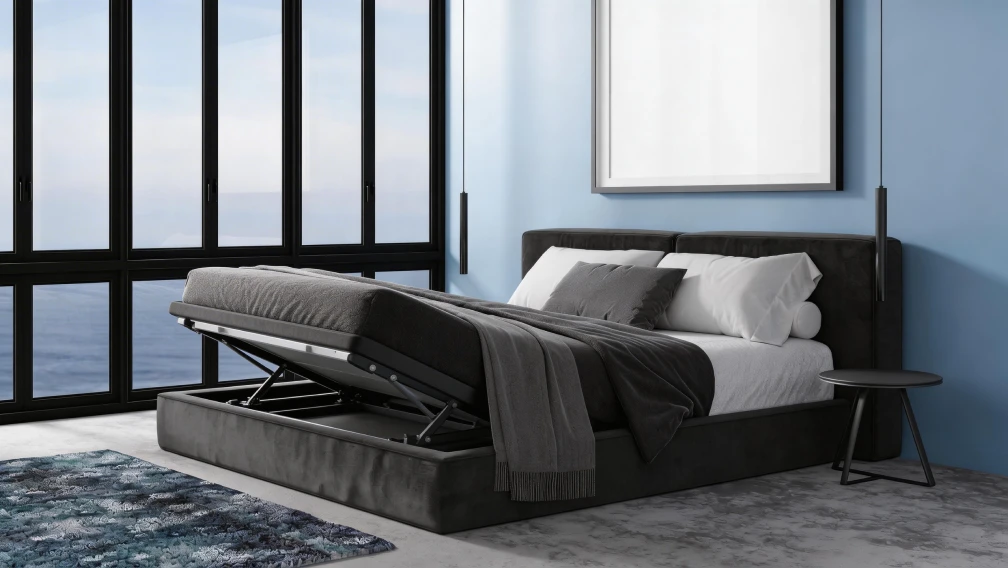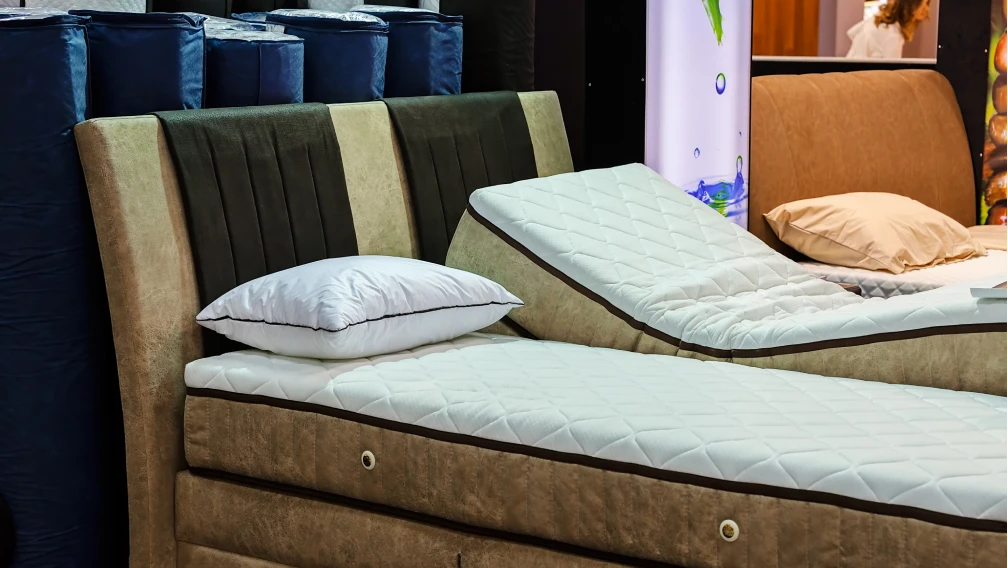

Institutional bed frame procurement sits in a different world from consumer furniture sourcing. Multi-family housing developers, university dormitory operators, military housing contractors, and large residential project developers buy bed frames by the thousand, deliver them to construction sites or centralized receiving warehouses, and expect them to serve occupants for 10 to 20 years with minimal replacement or repair. For these procurement programs, selecting a bulk bed frame supplier for housing projects — or an institutional bed frame manufacturer for dormitory contracts — is a decision that balances unit economics, structural durability, installation logistics, and long-term serviceability in ways that retail furniture sourcing never encounters.
This guide is written for institutional procurement directors, multi-family housing developers, university facilities managers, military housing contractors, and general contractors managing large residential projects. It covers the product specifications, supplier evaluation criteria, and procurement practices that deliver reliable bed frame performance across large institutional programs.
1. How Institutional Bed Frame Procurement Differs from Residential Furniture Sourcing
Institutional bed frame procurement operates under a different set of constraints than residential furniture sourcing. Understanding these constraints is the first step in developing an effective procurement strategy.
The first difference is volume. Residential furniture programs typically involve dozens or hundreds of units; institutional programs commonly involve thousands or tens of thousands. A mid-sized apartment development might require 300 to 800 bed frames. A university dormitory renewal program might involve 2,000 to 5,000 beds. A military housing contract might cover 10,000 or more beds across multiple bases. Each volume tier changes the economics of the procurement program and the supplier capabilities required to execute it reliably.
The second difference is occupant use pattern. Institutional residents typically use furniture more intensively than single-family homeowners. College dormitory residents move in and out annually, and each move-in and move-out involves handling that stresses the furniture — beds are disassembled, pushed against walls, stood on, and sometimes used as stepstools. Military housing residents rotate on deployment schedules. Multi-family housing tenants change on 12 to 24 month lease cycles. Each resident transition creates wear that consumer furniture is not designed to withstand.
The third difference is maintenance responsibility. Institutional property operators — dormitory operators, housing management companies, military installations — are responsible for furniture repair and replacement throughout the service life. This creates total cost of ownership considerations that residential buyers do not face. A bed frame that costs 20 dollars less at procurement but requires 5 dollars in annual maintenance over a 10-year service life is not a cost-effective purchase compared to a more durable product that requires zero maintenance. Industry resources such as the U.S. Department of Housing and Urban Development publish multi-family housing operations guidance that addresses furniture life-cycle cost considerations in affordable housing program budgets.
The fourth difference is installation logistics. Residential furniture is typically delivered to individual consumer addresses. Institutional furniture is delivered to construction sites, centralized receiving warehouses, or centralized storage facilities, then distributed to individual unit locations during installation. Installation logistics can involve hundreds or thousands of units over a concentrated installation window — 300 bed frames installed in 45 apartments over a 5-day installation period, for example. Packaging, palletization, and loading sequence affect installation efficiency and can meaningfully impact project timelines.
The fifth difference is specification consistency requirements. Institutional procurement requires identical specifications across the entire order. Every bed frame in the order must match the approved specification — not just in appearance, but in dimensions, weight capacity, slat spacing, leg height, and assembly hardware. Specification variance that would be unnoticed in residential contexts becomes an installation problem when 300 frames in a dormitory must align with identical bed positioning grids and mattress specifications.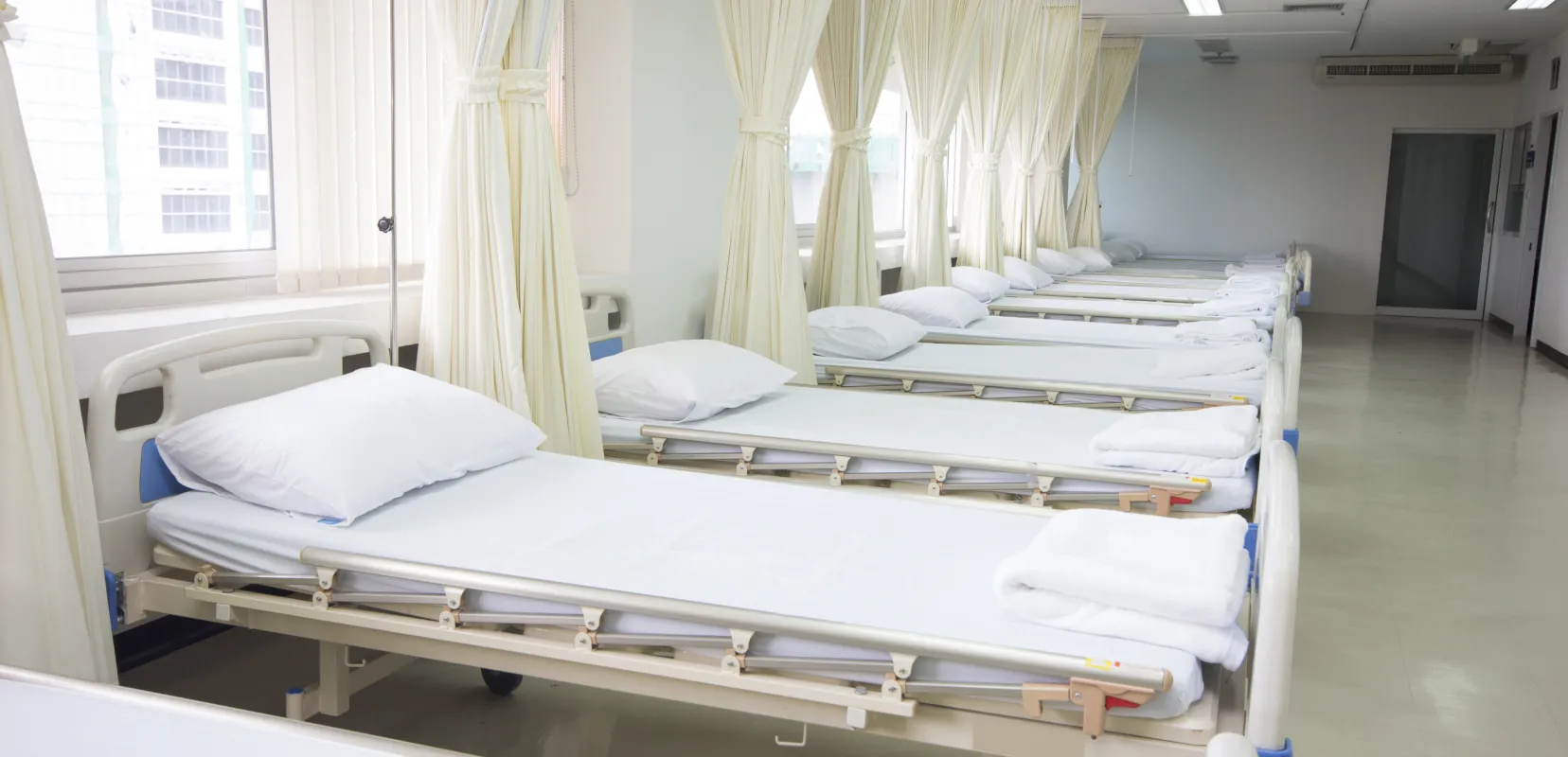
2. Multi-Family Housing Bed Frame Specifications for Apartment and Townhouse Projects
Multi-family housing projects — apartment buildings, townhouse developments, condominium projects — have specific bed frame specification requirements driven by the intended occupant type and property class.
Market-rate apartments typically specify mid-range bed frames that balance durability with unit economics. These frames are usually metal platform beds with integrated slat support, finished in neutral powder-coated colors that coordinate with standard unit interior design. Frame heights typically range from 14 to 18 inches, with under-bed clearance for resident storage. Weight capacity specifications typically require 800 to 1,000 pounds to support a range of resident body types and any additional weight from bedding layers, mattress toppers, and occasional guests.
Affordable housing programs have similar product specifications but typically operate under tighter budget constraints. These programs often specify basic metal bed frames with simplified feature sets — flat platform design without integrated headboards, standard hardware without premium fasteners, and packaging optimized for volume distribution to multiple units.
Student housing developments have bed frame specifications driven by student use patterns. Students tend to use beds more roughly than typical apartment residents — beds are used as seating during study sessions, jumping is not uncommon, and cleaning intervals during move-out periods involve significant handling. Student housing bed frames typically specify higher weight capacity (1,000 pounds minimum), reinforced corner welds, and simplified assembly to accommodate rapid annual turnover. Loft-style and bunk-configuration frames are common in high-density student housing to maximize floor space.
Senior living and assisted living communities have bed frame specifications oriented toward accessibility and caregiver workflow. Bed frame heights are often adjustable or specified at specific heights (18 to 22 inches) to match resident mobility needs. Side rail compatibility may be required for certain resident classifications. For residents requiring nursing-level care, the housing program may transition from standard bed frames to home care beds with electric adjustment capabilities.
Luxury and premium multi-family developments specify bed frames with upholstered finishes, integrated headboards, and aesthetic designs that match the property’s design standards. These frames cost more per unit but support higher rental pricing and property class positioning. Premium specifications typically include designer-matched fabrics, wood or metal leg options, and packaging that supports damage-free installation in finished units.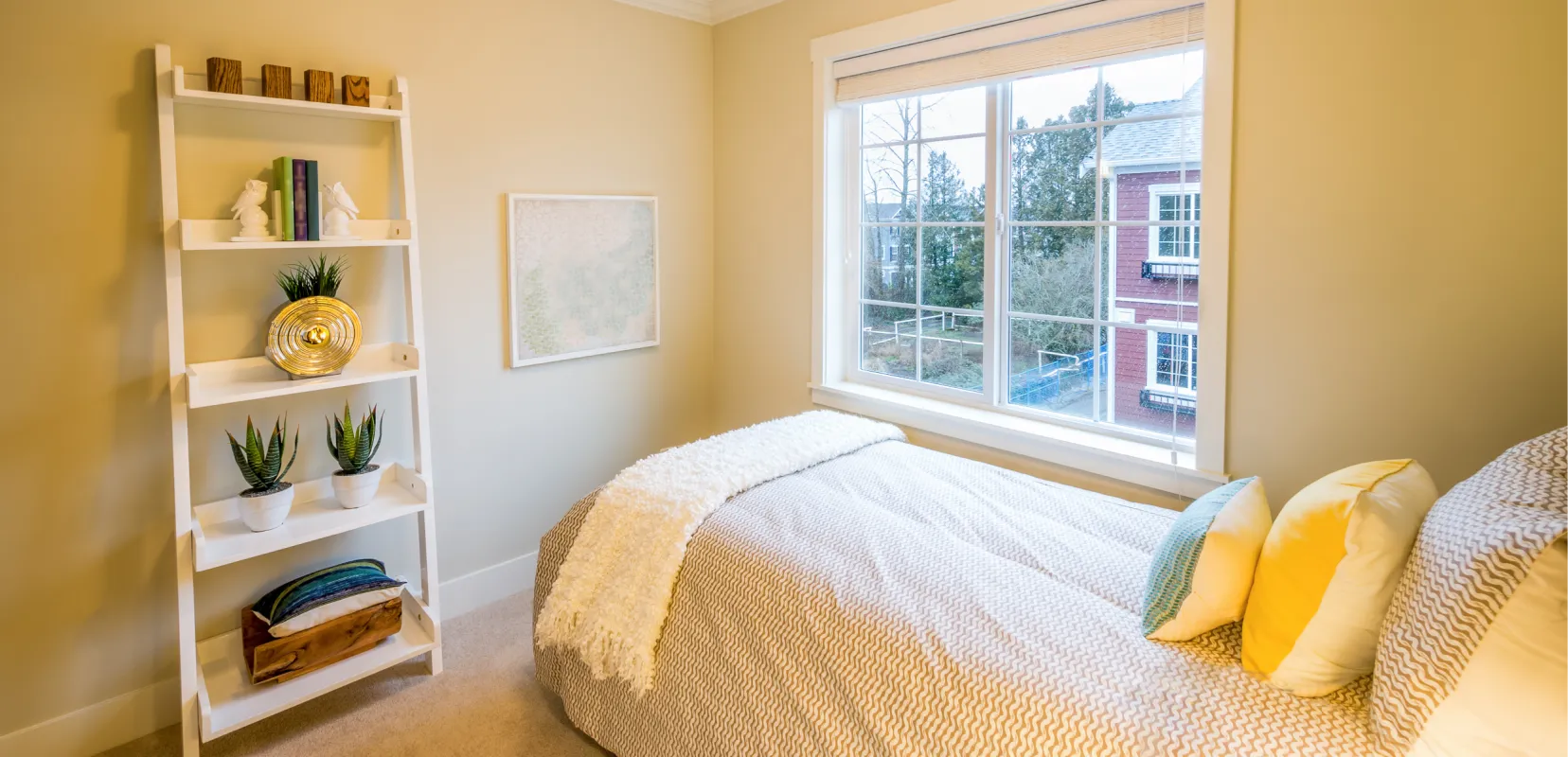
3. Dormitory Bed Frame Manufacturer Evaluation for University and Student Housing
University dormitory and student housing procurement has developed standardized specifications over decades of institutional experience, with national organizations providing guidance on construction, dimensions, and durability requirements. Resources such as the Association of College and University Housing Officers - International (ACUHO-I) publish specification guidelines that dormitory procurement programs commonly reference.
Standard dormitory bed specifications typically include:
• Twin XL dimensions (38 inches wide by 80 inches long) as the universal dormitory mattress size
• Adjustable frame heights (often 3-position adjustable from low-rider position to loft position)
• Loft capability (adjustable to 72+ inches above floor to provide under-bed desk or storage space)
• Weight capacity of 400 to 500 pounds dynamic load, 800 to 1,000 pounds static load
• Stackability for summer storage when dorms are vacated
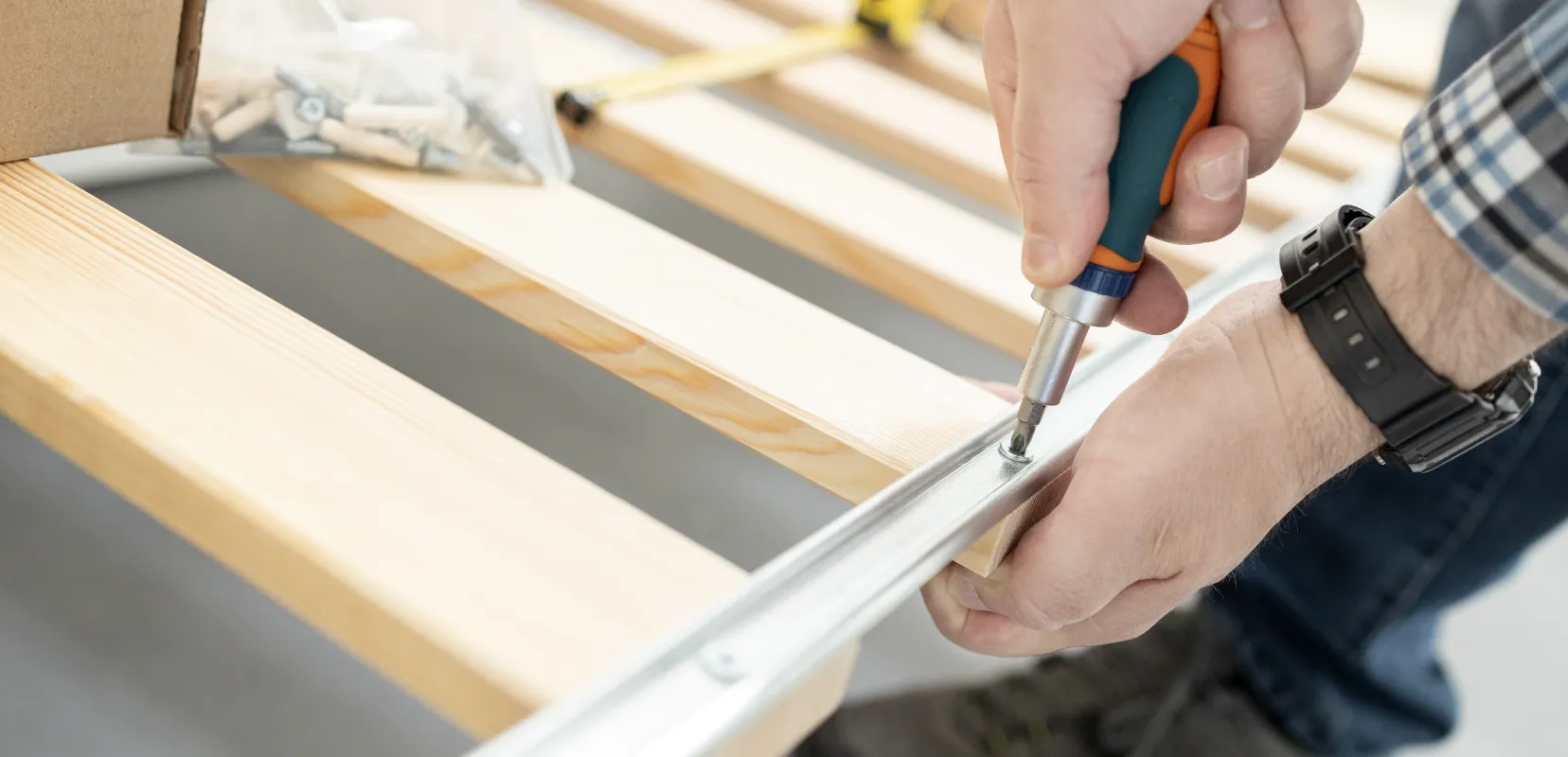
• Simplified assembly using tool-less or minimal-tool connection systems
• Powder-coated steel construction with damage-resistant finishes
Manufacturer evaluation for dormitory bed supply should verify production capability for these specifications and experience with dormitory-specific requirements. Not all metal bed frame manufacturers produce dormitory-spec beds; some are optimized for consumer platform beds that do not meet institutional standards.
Supplier experience with large-volume dormitory orders is a key evaluation criterion. A supplier who has delivered 5,000-unit dormitory orders in recent years understands the logistics, packaging, and coordination requirements that smaller consumer-focused suppliers may not. Ask for references from recent dormitory supply programs and verify delivery performance, specification consistency, and warranty response.
Production scheduling flexibility matters for dormitory procurement because of the calendar-driven nature of university housing. New dormitory construction targets August completion dates to match fall semester move-ins. Renovation programs typically execute during summer break months (June through August). Supplier lead times must align with these calendar windows, which often requires production capacity commitments 6 to 12 months in advance of delivery dates.
Assembly support capability is another evaluation criterion. Large dormitory installations may require on-site assembly support from the supplier or their contracted installation team. Suppliers with established installation support networks can coordinate assembly across hundreds of units in compressed timelines; suppliers without this capability require the university facilities team or a third-party contractor to manage installation, which adds cost and coordination complexity.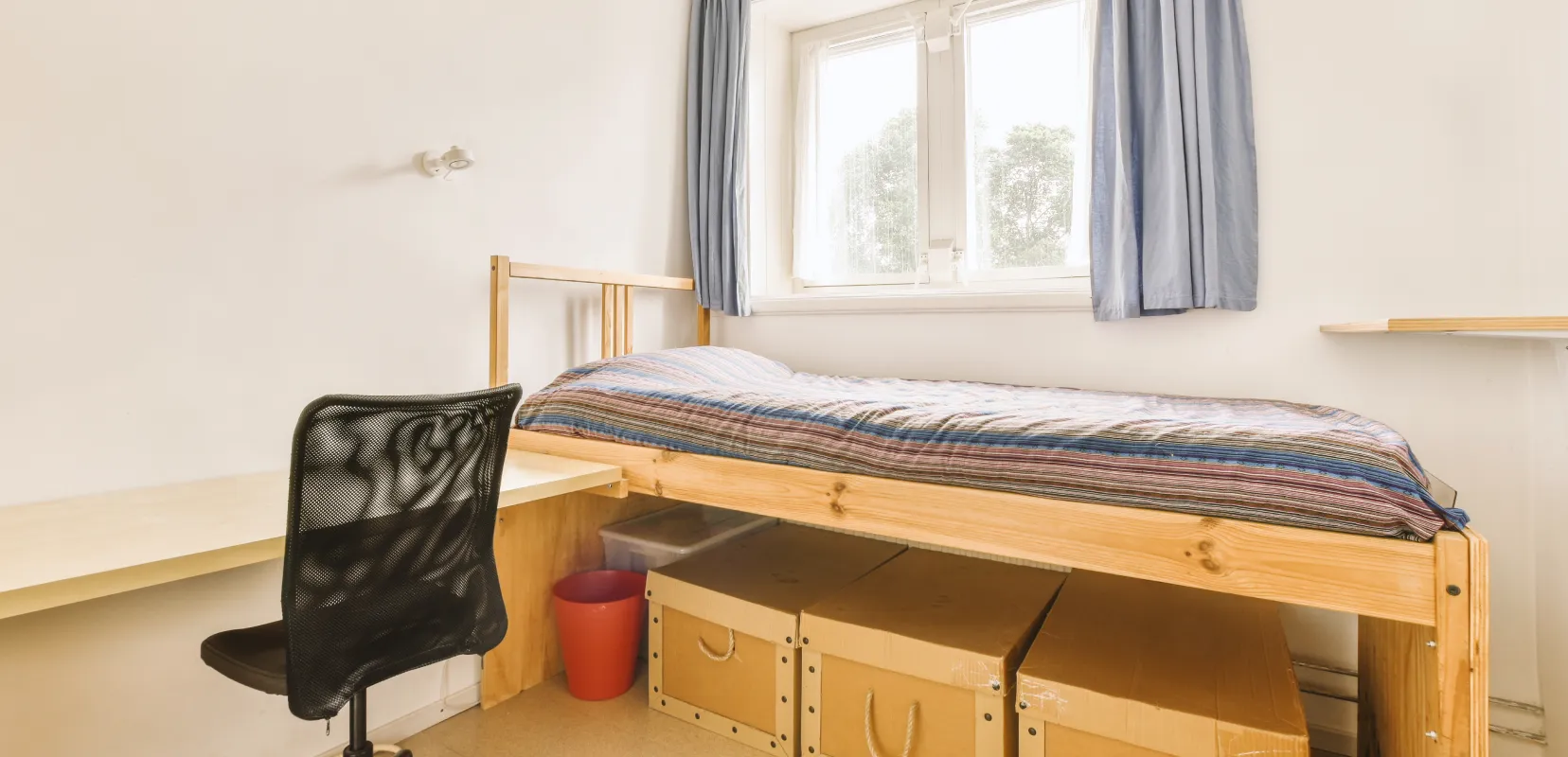
4. Military Housing Bed Frame Supplier Requirements and Procurement Standards
Military housing procurement operates under federal acquisition regulations that apply additional specification requirements and supplier qualifications beyond commercial dormitory or apartment standards.
Specification documents for military housing bed frames typically reference specific federal specifications or commercial standards adapted for military use. These specifications define structural testing requirements, materials specifications, flammability standards, and sometimes specific manufacturer qualifications. Suppliers bidding on military housing contracts must demonstrate compliance with all specified requirements, with testing documentation from accredited laboratories.
Buy American Act and Berry Amendment requirements may apply to certain military housing procurement programs, which affect country-of-origin sourcing. These requirements typically mandate that certain percentages of component materials (steel, fabric, hardware) be sourced from qualifying countries. Suppliers bidding on military contracts must demonstrate compliance with the applicable sourcing requirements, which may require specific component sourcing and documentation.
Flammability standards for military housing are typically more stringent than residential standards. Federal specifications may require compliance with FAR 25.853 (aviation-derived flammability standards adapted for ground furniture) or specific military specifications for barracks furniture. Suppliers must provide test documentation proving compliance with the specified flammability standards.
Contractor certification and past performance records are typically evaluated in military procurement bid processes. Suppliers with extensive past performance in military procurement (demonstrated through GSA schedule listings, past contract performance records, or subcontracting to established military suppliers) have advantages in competitive bidding. New suppliers without established military procurement track records face evaluation hurdles that can take multiple bid cycles to overcome.
Delivery scheduling and coordination for military housing procurement often involves base-level receiving protocols, security clearances for delivery personnel, and compliance with specific receiving procedures. Suppliers without experience in military logistics may underestimate the coordination complexity and miss delivery windows.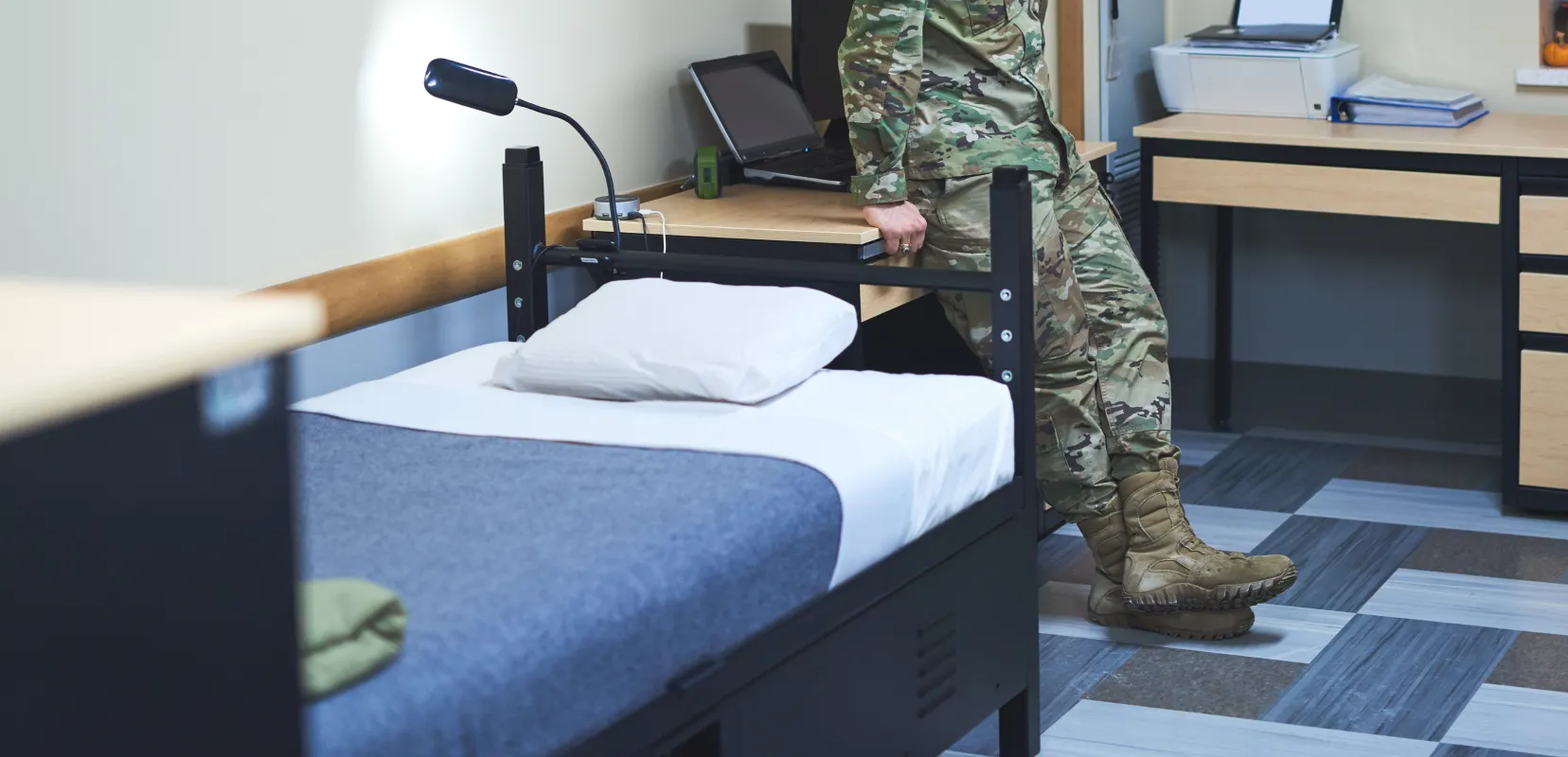
5. Project Contract Bed Frame Procurement: Construction and Installation Coordination
Project contract bed frame procurement coordinates with construction and installation schedules that have narrow delivery windows and strict coordination requirements. Understanding these constraints is essential for developing procurement timelines that support project completion.
Construction phase coordination typically involves three delivery periods:
Rough-in phase (not applicable to bed frames) — This phase focuses on structural, mechanical, and electrical infrastructure.
Finish phase (6 to 12 weeks before project completion) — Furniture delivery typically begins during the finish phase, once units have been cleaned and painted and are ready for furniture placement. Bed frames are usually delivered to centralized receiving locations on the project site and staged for installation.
Punch-list phase (last 2 to 4 weeks before project completion) — Final furniture installation and unit completion occurs during the punch-list phase. Any bed frames that are incorrect, damaged, or delivered late create critical path issues that affect project delivery dates.
Delivery coordination requires accurate scheduling against the project’s construction completion milestones. Furniture delivery too early creates staging and storage problems on the construction site; delivery too late creates project completion delays. Most project managers require bed frame delivery 4 to 8 weeks before unit turnover dates, with flexibility for installation scheduling within that window.
Receiving logistics at the construction site affect supplier selection. Large project sites typically have dedicated receiving areas and on-site coordinators for furniture deliveries. Smaller projects may require flatbed deliveries directly to specific buildings or units. Suppliers with experience delivering to construction sites — and equipment for handling the uneven terrain and limited access common on active construction sites — perform better than suppliers accustomed to delivering to completed warehouses.
Damage during installation is a common project issue that affects both supplier and general contractor. Bed frames damaged during construction handling or installation require rapid replacement to maintain project schedules. Suppliers with local warehouse stock or rapid replacement logistics can resolve damage issues within 1 to 2 weeks; suppliers with longer replacement timelines create project coordination challenges.
| Project Phase | Typical Bed Frame Activity | Lead Time from Supplier Required |
| Design specification | Specification finalization, sample approval | 6-12 months pre-opening |
| Manufacturing release | Production start, progress reporting | 4-6 months pre-opening |
| Shipping coordination | Ocean freight booking, arrival timing | 2-4 months pre-opening |
| Staging and receiving | On-site delivery, staging coordination | 6-12 weeks pre-opening |
| Installation | Unit-by-unit delivery, assembly | 2-8 weeks pre-opening |
| Punch-list resolution | Damage replacement, missing component supply | Final 2-4 weeks |
6. Bulk Bed Frame Manufacturer Volume Pricing and Commercial Terms
Volume pricing structures for institutional bed frame procurement differ from retail pricing in both structure and negotiation dynamics. Understanding typical commercial terms helps procurement teams benchmark supplier proposals against reasonable market practices.
Tier pricing scales are the standard structure. Most bulk bed frame manufacturers offer pricing tiers based on order volume — Tier 1 for orders under 500 units, Tier 2 for 500 to 2,000 units, Tier 3 for 2,000 to 10,000 units, Tier 4 for orders above 10,000 units. Each tier typically delivers 8 to 15 percent price reduction from the previous tier, with the largest savings typically available between Tier 3 and Tier 4.
Contract pricing protection is common in long-duration projects. For projects spanning 12 months or longer from initial order to final delivery, pricing is typically fixed at contract signing to protect the buyer from mid-project price increases. Suppliers may require clause protections for raw material cost volatility — such as provisions that trigger price adjustment if steel commodity prices move beyond defined thresholds.
Payment terms for institutional procurement typically involve 30 to 50 percent deposits at contract signing or order confirmation, with progress payments tied to manufacturing or shipping milestones. Balance payment is typically due on bill of lading or arrival at destination, with payment terms sometimes extending to Net 30 or Net 60 after delivery for established customer relationships. Some project financing structures involve third-party payment administration that affects supplier accounts receivable management.
Packaging cost accounting varies by supplier. Some suppliers include standard flat-pack packaging in the quoted price; others quote product FOB factory with packaging as a separate line item. For institutional procurement, packaging cost transparency matters because project-specific packaging (palletization, property-specific labeling, unit-specific bundling) may involve additional costs that are not included in standard quotations.
Freight cost allocation is another contractual consideration. For international sourcing, suppliers may quote FOB factory (buyer responsible for all shipping), FOB port (supplier responsible for inland freight to origin port), CIF destination port (supplier responsible for ocean freight to destination port), or DDP delivered to specified location (supplier responsible for all freight and customs). Each freight allocation structure affects the true comparative cost between supplier quotations and should be normalized during supplier evaluation.
7. Institutional Bed Frame Supplier Selection: Operational Capability Verification
Operational capability verification for institutional bed frame suppliers requires deeper evaluation than typical consumer furniture sourcing. The program-level consequences of supplier failure are significantly higher than individual consumer order failures.
Production capacity verification should include both current capacity and surge capacity for peak demand periods. Institutional orders can create short-term production surges that stress supplier capacity — a 5,000-unit order delivered in 90 days requires 60 units per day of production, which may exceed some suppliers’ comfortable operating capacity. Ask suppliers for current daily production rates, maximum sustainable production rates, and peak capacity with overtime or secondary shift operation.
Quality management systems documentation should include production quality procedures, incoming material inspection protocols, in-process quality checkpoints, and final product testing procedures. ISO 9001 certification is the baseline expectation; suppliers without ISO 9001 certification should be screened out of institutional procurement consideration. Seemoon holds ISO 9001 and ISO 14001 certifications along with Walmart and Costco factory audit passing records, with operational standards documented through our ERP-managed production tracking system.
Testing laboratory capability matters for institutional procurement because specification verification requires documented test results, not manufacturer claims. Suppliers with in-house testing laboratories can perform structural load testing, weld quality verification, and coating durability testing on production samples from each order batch. Documentation from in-house testing should be provided with each shipment to verify compliance with specified requirements.
Supply chain resilience is a program-risk consideration for long-duration institutional procurement. Suppliers with multi-facility production networks, diversified component sourcing, and established supply chain continuity procedures are more likely to deliver consistently through multi-year programs than single-facility suppliers dependent on concentrated component sourcing. Multi-country production capability also addresses trade policy and tariff risk that has become more significant in recent years.
Long-term stability of the supplier as a business entity affects program risk. Institutional procurement programs span multiple years, and supplier business failure during the program creates severe project consequences. Evaluate supplier financial stability through years in business, financial reporting (for suppliers that provide it), customer reference durability, and ownership stability. Suppliers with 10+ years of continuous operation, established customer relationships, and stable ownership structures are preferred for long-duration institutional commitments.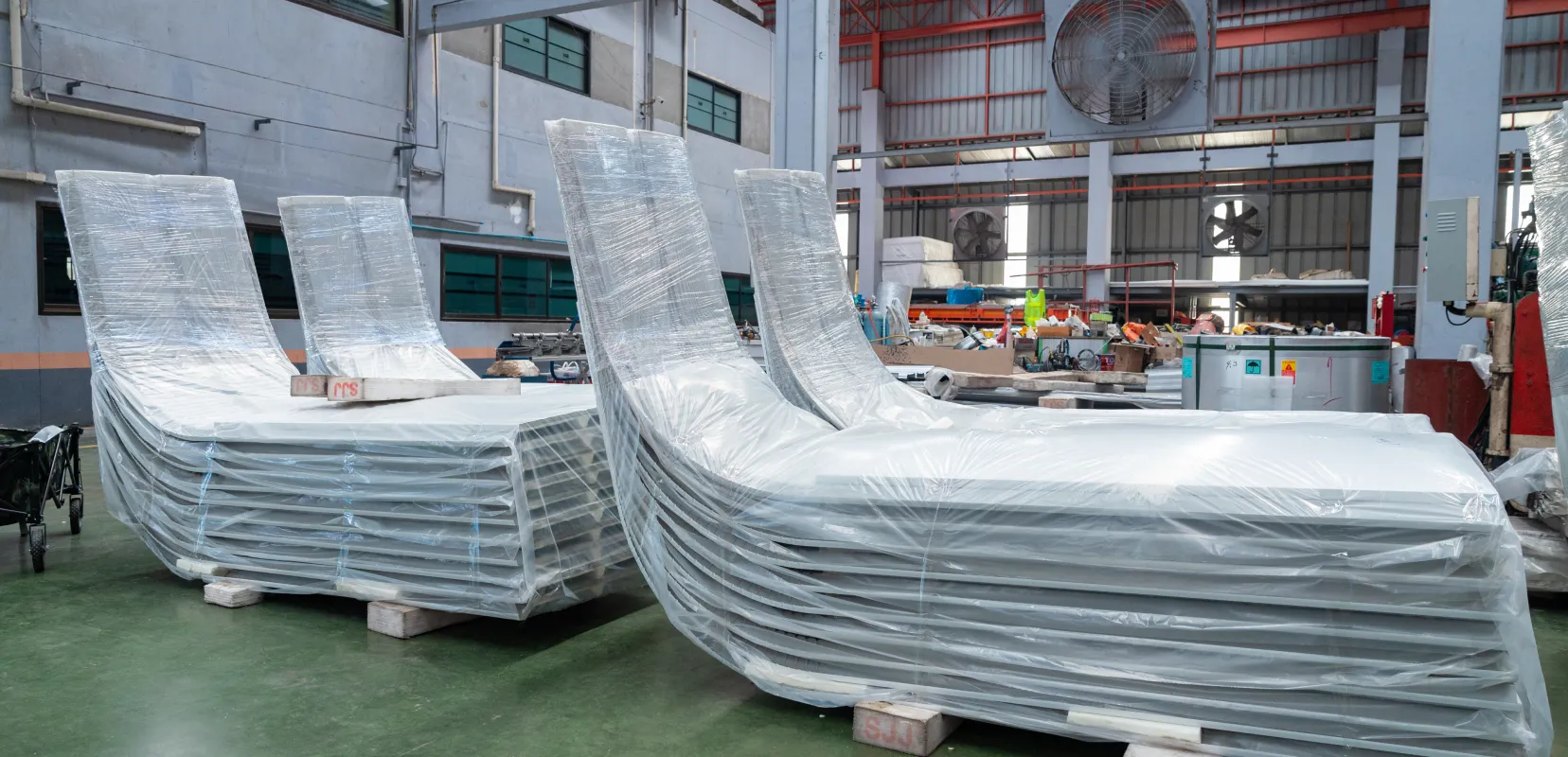
8. Long-Term Project Bed Frame Supplier Partnership for Multi-Year Developments
Multi-year institutional development programs — phased apartment developments, university master plan implementations, multi-base military housing projects — create opportunities for supplier partnership structures that benefit both parties.
Annual volume commitments across multi-year programs support supplier capacity planning and buyer pricing stability. A developer with a 5-year master plan covering 6,000 total bed frames across phases can commit to annual procurement volumes that allow the supplier to dedicate production capacity and provide committed pricing. These commitments typically require structured forecast accuracy, with pricing protection contingent on meeting volume commitments within defined tolerance ranges.
Specification continuity agreements prevent costly specification changes mid-program. Even small specification changes — a fabric shade adjustment, a leg height modification, a hardware component change — can disrupt manufacturing flow and create inventory mismatches between phases. Institutional partnerships typically include specification change control procedures that manage change requests through formal review and approval, with cost impact analysis before changes are released to production.
Dedicated account management provides continuity of relationship management across multi-year programs. Frequent changes in the supplier’s account team create communication friction and coordination loss. Suppliers who commit to dedicated account teams for institutional customers — typically including a senior account manager, a production coordinator, and a quality/logistics contact — deliver better program execution than suppliers with rotating account staff.
Shared market intelligence benefits both parties in long-term partnerships. Suppliers gain visibility into the buyer’s planning pipeline, upcoming project opportunities, and evolving specification preferences. Buyers gain visibility into supplier capacity, industry trends, and emerging product options. This information flow supports better planning decisions on both sides.
Strategic product development cooperation becomes possible in long-term partnerships. The supplier may invest in custom tooling, new production processes, or specification development specifically for the institutional customer’s requirements. These investments require multi-year payback that transactional relationships cannot support. For institutional buyers with specialized specification requirements, supplier willingness to invest in specialized production capabilities is a meaningful partnership benefit.

Source Bulk Bed Frames for Your Institutional Procurement Program
Seemoon manufactures bed frames for institutional procurement programs including multi-family housing developments, university dormitories, military housing projects, and large residential construction contracts. Our production capacity — annual output exceeding 360,000 units across bed frames, adjustable beds, and home care beds — supports large single-order volumes and multi-year program commitments without capacity constraints.
Our institutional bed frame product line includes basic metal bed frames for volume apartment programs, reinforced platform bases for student housing applications, folding bed foundations for cost-efficient high-volume projects, and upholstered bed frames for premium residential and senior living developments. All products are manufactured with robot-welded steel construction, electrostatic powder coating, and structural load testing documented through our in-house quality laboratory.
We hold ISO 9001 and ISO 14001 certifications, and our manufacturing facilities have passed Walmart and Costco supplier audits. Our dual-facility network — Pinghu, China and Long An Province, Vietnam — provides supply chain resilience and production capacity flexibility for multi-year institutional programs. Our ERP-managed production tracking delivers order visibility and delivery schedule accuracy required by construction-timed procurement programs.
If you are an institutional procurement director, multi-family housing developer, university facilities manager, or military housing contractor evaluating bulk bed frame suppliers, contact our commercial accounts team. We will provide a detailed manufacturing proposal including specifications, lead time, volume tier pricing, and project coordination support within 48 hours.
-

Author
Seemoon
Seemoon is a Senior Product Expert and Sleep Ergonomics Specialist. With extensive experience in the design and manufacturing of adjustable beds and smart sleep solutions, Seemoon is dedicated to sharing authoritative insights on furniture innovation, ergonomic health, and global B2B sourcing trends. All content is grounded in authentic manufacturing expertise to help global buyers make informed decisions.