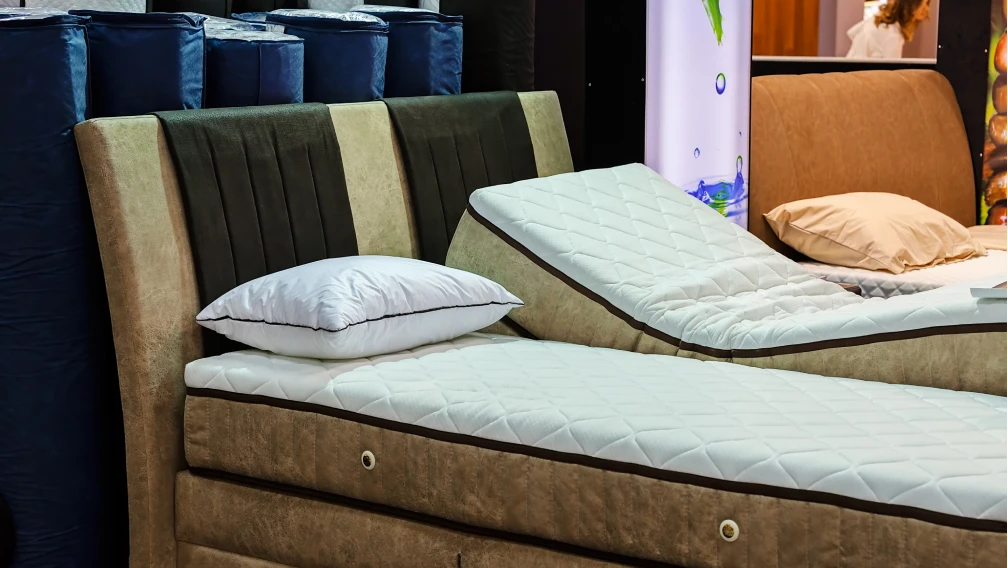

Sourcing adjustable beds from an OEM manufacturer involves a different set of considerations than sourcing standard furniture. Adjustable beds are electromechanical products that combine steel frame fabrication, motor installation, electronic control systems, and fabric or upholstery finishing. The supply chain complexity is higher, the quality failure modes are more varied, and the after-sales support requirements extend well beyond the initial shipment.
This guide covers the critical evaluation criteria for adjustable bed OEM manufacturers, from production capability assessment through quality systems, motor specifications, compliance testing, and long-term supply reliability. It is written for furniture brand owners, retail buyers, e-commerce sellers, and distribution companies who are evaluating new manufacturing partners or optimizing their existing adjustable bed supply chain.
1. Understanding the Adjustable Bed Manufacturing Process
Before evaluating an OEM manufacturer, it helps to understand the major production steps involved in adjustable bed manufacturing. Each step introduces potential quality variables, and a manufacturer’s capability at each stage determines the consistency and reliability of the finished product.
Steel frame fabrication is the first major step. Raw steel tubes are cut to length, bent or formed to the required profiles, and welded into the frame structure. The frame is the structural foundation of the adjustable bed — it bears the combined weight of the mattress, the user, and the forces generated by the motor actuators during articulation. Frame fabrication quality depends on the precision of tube cutting (CNC-controlled preferred), the consistency of welding (robot welding preferred), and the steel tube specification (wall thickness and grade).
Surface treatment follows frame fabrication. The raw steel frame undergoes shot blasting or chemical pretreatment to remove mill scale and prepare the surface for coating. Electrostatic powder coating is then applied and cured in an oven. The coating must be thick enough (60–80 microns) to resist scratching during transit and daily use, and it must adhere firmly enough to pass cross-cut adhesion testing.
Motor and actuator installation involves mounting the electric motors and linear actuators to the frame at the correct positions and angles. Each motor controls a specific adjustment zone — head, foot, lumbar, or pillow tilt. The motors must be aligned precisely to ensure smooth articulation without binding, uneven movement, or excessive noise. Wiring harnesses connect the motors to the control box and handset.
Electronic control system assembly includes the control box (which manages motor sequencing and safety limits), the handset or remote control, and any wireless receivers for Bluetooth or RF remotes. The control system must be programmed with the correct motor travel limits, preset positions (zero-gravity, anti-snore, flat), and safety cutoffs.
Fabric and upholstery application covers the frame with nonwoven fabric, mesh, or decorative upholstery material. The deck surface — the top of the frame where the mattress sits — is typically covered with nonwoven or mesh fabric stretched over the platform. Side panels may be wrapped in grey border fabric for a finished appearance.
Final assembly and testing is the last production step. The fully assembled bed is placed on a test station where each motor function is operated through its full range, the remote control is verified, the frame is inspected for weld defects and coating damage, and the unit is weighed and measured against the product specification. Units that pass are packaged; units that fail are routed for rework or rejection.
2. Motor Specifications: The Core Component of Every Electric Adjustable Bed
The motor system is the most critical component in an adjustable bed. It determines the bed’s functional capability, noise level, reliability, and service life. It is also the single largest cost component, typically accounting for 30–40% of the total unit cost.
Motor type matters. Adjustable beds use linear actuators — electric motors that produce linear (straight-line) movement rather than rotational movement. The actuator converts the rotational force of a DC motor into the push-pull force needed to raise and lower the bed sections. The key specifications are thrust force (how much weight the actuator can push), stroke length (the distance the actuator extends), speed (how fast the bed section moves), and noise level (measured in decibels).
Motor brand is the most visible specification in B2B adjustable bed sourcing. The three tiers of motor brands in the adjustable bed market are premium (OKIN, Linak), mid-range (Kaidi, Timotion), and economy (various Chinese motor manufacturers without established international brands). Each tier represents a different combination of cost, reliability, noise level, and after-sales support availability.
| Motor Tier | Representative Brands | Typical Cost Impact | Noise Level | Duty Cycle | After-Sales Support |
| Premium | OKIN, Linak | Highest (+40–60%) | Very low (<35 dB) | High (15–20%) | Global service network |
| Mid-range | Kaidi, Timotion | Moderate (baseline) | Low (35–45 dB) | Moderate (10–15%) | Regional service |
| Economy | Various | Lowest (-20–30%) | Variable (40–55 dB) | Variable | Limited |
The motor brand you specify affects more than just cost. It affects the acoustic experience for the end consumer (a noisy motor generates customer complaints and returns), the warranty claim rate (premium motors typically have lower failure rates), and the regulatory pathway (motors from established brands often come pre-certified to UL, ETL, or CE standards, simplifying the product compliance process).
For OEM buyers, the recommendation is to match the motor tier to your product positioning and target market. Premium motors for premium retail brands; mid-range motors for volume e-commerce and mid-market retail; economy motors only for highly price-sensitive markets where brand positioning is secondary to landed cost.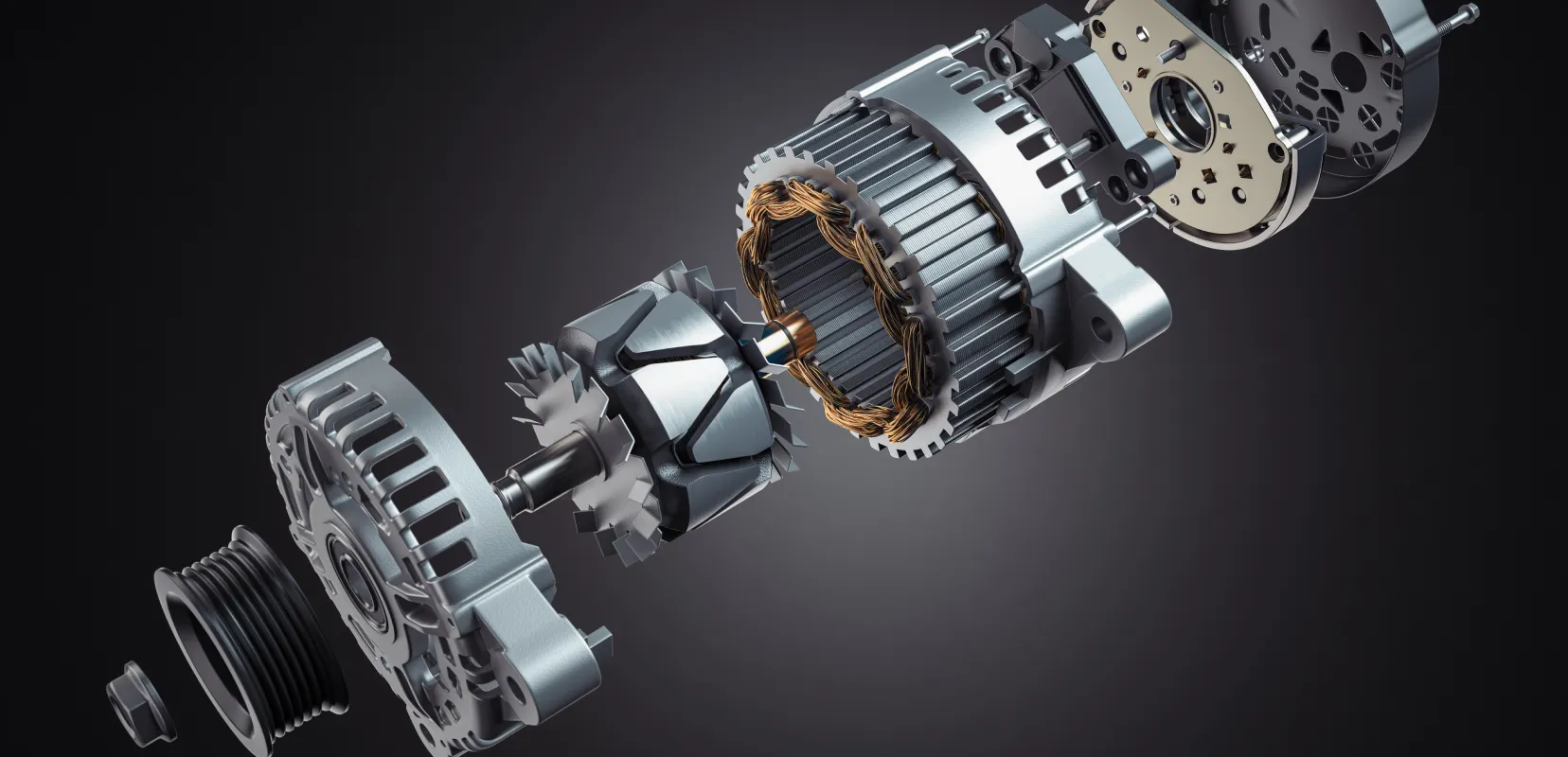
3. Adjustable Bed Frame Construction: What to Inspect on the Factory Floor
Frame construction quality is the second most important factor in adjustable bed manufacturing, after the motor system. A poorly constructed frame can result in noise during articulation, uneven movement, structural failure under load, and premature wear of the motor actuators.
Welding quality is the primary indicator of frame construction standards. Robot welding produces consistent, repeatable welds with uniform penetration and bead profiles. Manual welding quality varies with the skill and fatigue level of the individual welder. When inspecting frames on the factory floor, look for uniform weld bead width, absence of porosity (small holes in the weld surface), full penetration at joint intersections, and absence of spatter on surrounding surfaces.
Steel tube specification determines the weight capacity and structural rigidity of the frame. The relevant specifications are the outer diameter of the tube, the wall thickness, and the steel grade. Thicker walls and higher grades provide more rigidity and higher weight capacity, but also increase material cost and product weight.
Frame geometry — the layout of tubes, crossmembers, and reinforcement — affects how evenly the frame distributes load across the mattress platform and how smoothly the articulating sections move. A well-designed frame distributes the motor force evenly across the hinge points, preventing binding or uneven movement that can stress the actuators.
Center-folding mechanism quality matters for shipping and setup. Most adjustable beds use a center-fold frame that folds in half for compact packaging. The folding hinge must be robust enough to maintain frame rigidity when deployed, while allowing smooth folding for packaging. Inspect the hinge for slop (looseness when the frame is deployed), alignment (the two halves should form a flat, continuous surface), and fastener security.
4. Electronic Control Systems and Remote Control Options
The control system translates the user’s commands into motor actions and enforces safety limits. It is the interface between the consumer and the mechanical bed, and its quality directly affects user satisfaction, return rates, and safety compliance.
The control box is the central electronic unit that manages motor sequencing, travel limits, memory presets, and safety cutoffs. It receives input from the handset or wireless remote and sends power to the appropriate motors. The control box must handle simultaneous motor commands (raising the head while lowering the foot, for example), enforce end-of-travel limits to prevent the motors from overdriving, and manage power distribution to avoid overloading the electrical circuit.
Wired handsets are the simplest and most reliable remote option. They connect to the control box via a cable and provide tactile buttons for each function. Wired handsets do not require batteries, do not suffer from wireless interference, and are less likely to be lost. They are the standard option for entry-level and mid-range adjustable beds.
Wireless remotes — using RF (radio frequency) or Bluetooth — provide more convenience but add complexity. RF remotes use a small USB receiver plugged into the control box. Bluetooth remotes can also interface with smartphone apps for app-based control. Wireless remotes require batteries and can experience pairing or interference issues in certain environments.
For OEM buyers, the control system specification should include the number of programmable preset positions (zero-gravity, anti-snore, flat, and custom), the availability of a flashlight function on the handset, the inclusion of a child lock or function lockout, USB charging port integration (which is controlled by the electrical system rather than the control box per se), and the method for syncing paired remotes in split king configurations.
5. Quality Management Systems: What ISO 9001 and Factory Audits Actually Indicate
Quality certifications and factory audits are commonly referenced in OEM sourcing discussions, but not all buyers understand what these credentials actually verify — and what they do not.
ISO 9001 certification indicates that the manufacturer has implemented a documented quality management system that meets the requirements of the ISO 9001 standard. This includes documented procedures for production planning, process control, inspection, corrective action, and management review. ISO 9001 does not guarantee that every product is defect-free. It guarantees that the manufacturer has a system for identifying defects, tracking quality performance, and implementing corrective actions. The value of ISO 9001 is in the system, not in any individual product.
Walmart and Costco factory audits are more rigorous than ISO 9001 in certain respects. These retail-specific audits evaluate not only quality management systems but also social compliance (labor practices, working conditions), environmental practices, safety protocols, and supply chain transparency. A manufacturer that has passed a Walmart or Costco factory audit has demonstrated compliance with some of the most demanding supplier standards in the retail industry.
ISO 14001 certification covers environmental management systems — waste handling, emission controls, energy management, and environmental impact reduction. While not directly related to product quality, ISO 14001 indicates a level of operational maturity that correlates with overall manufacturing discipline.
For adjustable bed sourcing specifically, buyers should also ask about in-process quality checkpoints (are beds tested at intermediate stages, or only at final assembly?), AQL sampling standards (what defect acceptance levels are used for incoming materials and finished goods?), reliability testing (are sample units subjected to accelerated life testing — repeated motor cycling, load endurance, drop testing?), and customer complaint tracking (does the manufacturer maintain records of field failures and implement root cause analysis?).
6. Compliance Testing and Certifications for Adjustable Bed Export
Adjustable beds are subject to electrical safety, fire safety, and structural safety regulations that vary by market. The compliance requirements affect both the manufacturer and the importer/distributor.
UL/ETL certification (Underwriters Laboratories / Intertek) is the standard electrical safety certification for the US market. Adjustable beds are tested to UL 962 (household electric furniture) or UL 60601 (medical electrical equipment, for healthcare-positioned products). Certification involves product testing, factory inspection, and ongoing surveillance. Products bearing the UL or ETL mark have been verified to meet applicable safety standards.
CFR 1633 is the US federal flammability standard for mattresses and mattress/foundation sets. If the adjustable bed is sold with a mattress or marketed as a sleep set, the complete product must meet CFR 1633 open-flame fire testing requirements. If the adjustable bed base is sold separately (without a mattress), CFR 1633 generally does not apply to the base alone.
California Proposition 65 compliance requires that products sold in California do not expose consumers to significant levels of listed chemicals without providing a warning. Many adjustable bed components — powder coating, foam, fabric, electronics — can contain trace amounts of Prop 65 listed substances. OEM manufacturers should be able to provide Prop 65 testing reports for their products.
CE marking is required for products sold in the European Economic Area. Adjustable beds must comply with the Low Voltage Directive (LVD 2014/35/EU), the Electromagnetic Compatibility Directive (EMC 2014/30/EU), and the Machinery Directive (2006/42/EC) depending on the product classification. Testing is performed against harmonized EN standards.
ISTA 3A testing evaluates packaging performance under simulated transit conditions — vibration, compression, shock, and atmospheric conditioning. This standard is commonly required by Amazon and other e-commerce platforms to ensure products survive the fulfillment and delivery process without damage.
For OEM buyers, the key question is whether the manufacturer can manage the compliance process end-to-end — including product design for compliance, prototype testing, certification application, factory inspection coordination, and ongoing compliance maintenance. Manufacturers who have existing UL/ETL listings for their adjustable bed products can often extend those listings to cover new OEM configurations more quickly and at lower cost than starting a new certification from scratch.
7. OEM Customization Scope: What Can and Cannot Be Modified
Understanding the practical boundaries of OEM customization helps buyers set realistic expectations and avoid costly delays in the product development process.
Easily customizable elements — things that can be changed without new tooling or significant engineering — include remote control branding (logo, color, button layout), fabric type and color on the deck and border, packaging design and branding, assembly instruction content and branding, leg height and style (within existing molds), and finish color for the frame (different powder coat colors).
Moderately customizable elements — requiring some engineering but no major tooling — include motor brand substitution (switching from one linear actuator brand to another within the same mounting specification), feature addition or removal (adding USB ports, removing massage function), frame size adaptation for non-standard dimensions, and control box programming changes (preset positions, travel limits).
Difficult or expensive customizations — requiring new tooling or significant engineering investment — include entirely new frame geometry (new tube layouts, hinge positions), new motor mounting configurations, new headboard or footboard attachment systems, and custom actuator specifications (non-standard stroke lengths or force ratings).
For OEM buyers placing their first order with a manufacturer, it is practical to start with an existing model from the manufacturer’s standard product line and customize the easily modifiable elements — branding, fabric, packaging, and feature configuration. This minimizes development time and cost while still creating a differentiated product. Structural and mechanical customizations can be pursued in subsequent order cycles once the manufacturing relationship is established and production volumes justify the tooling investment.
8. Supply Chain Reliability: Evaluating Manufacturer Capacity and Consistency
Supply chain reliability is the factor that separates a good first order from a sustainable multi-year OEM relationship. A manufacturer that delivers one container on time and in spec may still fail when volumes increase, when component supply is disrupted, or when seasonal demand creates capacity pressure.
Production capacity should be evaluated in terms of both peak and sustained output. Ask the manufacturer for their monthly production capacity in units, their current capacity utilization rate, and their historical output data for the past 12 months. A factory operating at 90% or higher capacity utilization may struggle to accommodate urgent orders or volume increases without impacting lead times for other customers.
Component supply chain management is particularly important for adjustable beds because the motors and electronics are sourced from specialized suppliers. Ask how the manufacturer manages motor inventory — do they maintain safety stock, or do they order components after receiving your purchase order? A manufacturer that pre-stocks critical components can offer shorter and more predictable lead times.
Multi-facility capability provides supply chain resilience. Manufacturers with production facilities in both China and Vietnam (or other Southeast Asian locations) can shift production between facilities in response to capacity constraints, trade policy changes, or logistics disruptions. This geographic diversification reduces single-point-of-failure risk in your supply chain.
Communication infrastructure affects day-to-day supply chain management. Evaluate the manufacturer’s responsiveness to inquiries, their use of ERP systems for order tracking, their ability to provide production progress updates, and the availability of English-speaking project managers for direct communication.
9. Total Landed Cost Analysis: Beyond the FOB Price
The FOB (free on board) price quoted by a manufacturer is only one component of the total cost of sourcing adjustable beds. A comprehensive landed cost analysis includes several additional cost categories that can significantly affect the true per-unit economics.
Ocean freight cost depends on container loading efficiency, origin port location, destination port, and current shipping rates. A manufacturer in southern Vietnam may have different port access costs than a manufacturer in eastern China. Container loading efficiency — determined by product packaging dimensions and weight — directly affects how many units you can ship per container.
Import duties vary by product classification and country of origin. The HTS (Harmonized Tariff Schedule) code for adjustable beds determines the applicable duty rate. Products manufactured in Vietnam may qualify for different duty treatment than products from China under current trade agreements and tariff schedules. This is a significant cost factor that can shift the total landed cost calculation by 10–25%.
Customs brokerage, port handling, and inland transportation from the port to your warehouse add per-container costs that are allocated across the units in each shipment.
Quality-related costs include incoming quality inspection at your warehouse, warranty claims and returns, replacement part inventory, and customer service handling for defective units. These costs are harder to predict but can be significant — a 2% field failure rate on a 10,000-unit annual program represents 200 warranty claims, each with an associated handling, replacement, and shipping cost.
Insurance, financing, and inventory carrying costs round out the total landed cost picture. These costs are specific to your business operations and financial structure.
For OEM buyers, the recommendation is to request landed cost estimates rather than just FOB prices when comparing manufacturers. A manufacturer with a slightly higher FOB price but better container loading efficiency, lower defect rates, and shorter lead times may deliver a lower total landed cost than a cheaper manufacturer with quality inconsistency and logistics friction.
Start Your Adjustable Bed OEM Sourcing with Seemoon
Seemoon is a factory-direct adjustable bed manufacturer operating from a 20,000 m² production facility in Vietnam, backed by a China-based headquarters with over 20 years of furniture manufacturing experience. We produce dual-motor, three-motor, and quad-motor adjustable bed bases across all standard sizes, with full OEM customization support.
Our manufacturing infrastructure includes 20 robot welding machines, in-house powder coating, 4 dedicated adjustable bed production lines, and an ERP-managed quality system. We hold ISO 9001 and ISO 14001 certifications, have passed Walmart and Costco factory audits, and currently supply adjustable beds and bed frames to major North American retail and e-commerce programs.
If you are evaluating OEM manufacturers for your adjustable bed product line, send us your specifications and volume projections. Our team will provide a detailed manufacturing proposal — including FOB pricing, lead time, customization options, and sample arrangements — within 48 hours.
-

Author
Seemoon
Seemoon is a Senior Product Expert and Sleep Ergonomics Specialist. With extensive experience in the design and manufacturing of adjustable beds and smart sleep solutions, Seemoon is dedicated to sharing authoritative insights on furniture innovation, ergonomic health, and global B2B sourcing trends. All content is grounded in authentic manufacturing expertise to help global buyers make informed decisions.