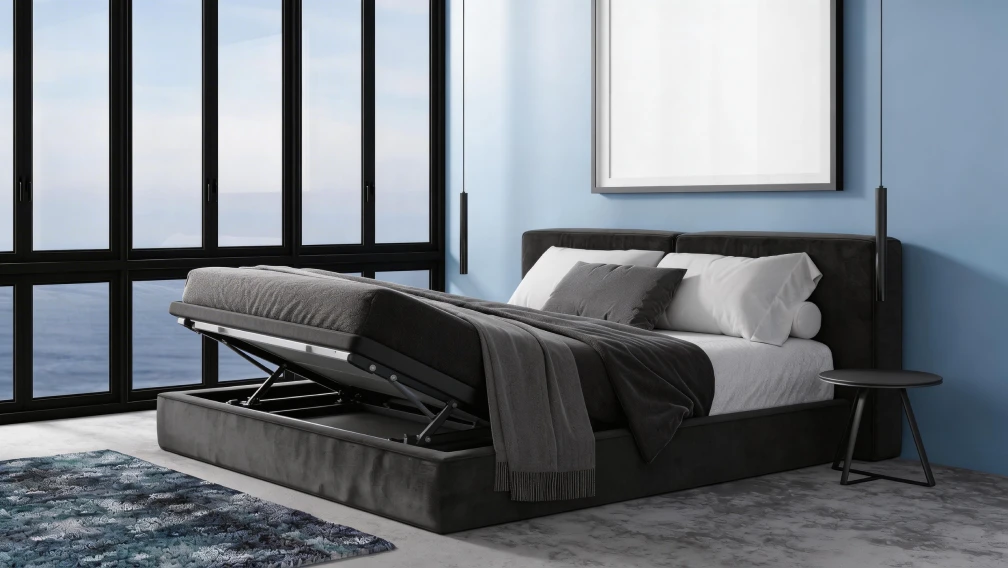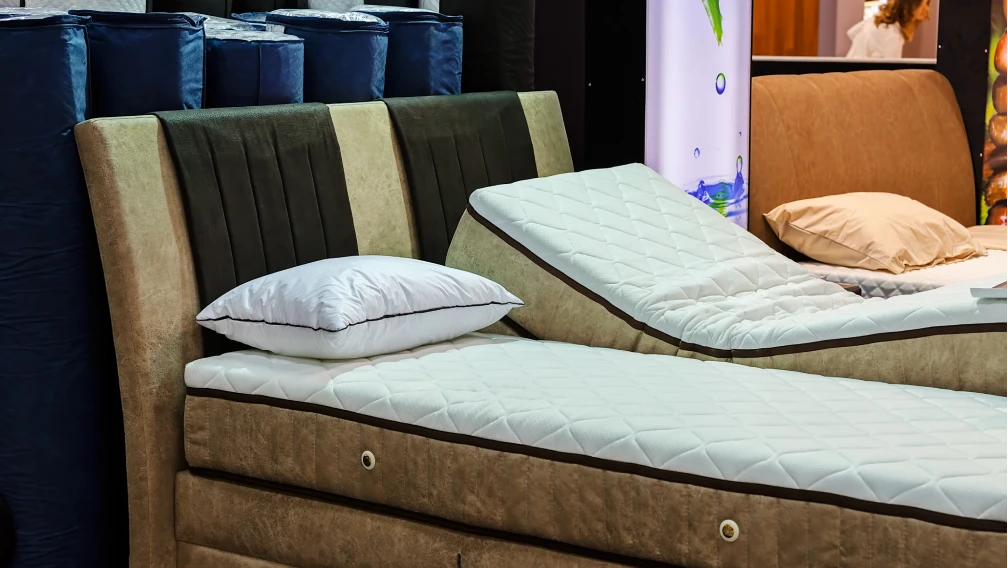

Procuring Furniture, Fixtures, and Equipment (FF&E) for commercial environments requires hardware engineered for maximum abuse. Hospitality operators, student housing directors, and multi-family developers face severe financial penalties when relying on retail-grade sleep foundations. High occupant turnover rates, variable weight distributions, and the stringent demands of commercial housekeeping require bed frames that prioritize structural integrity over aesthetic minimalism. Sourcing the correct foundation infrastructure minimizes ongoing maintenance budgets and eliminates guest complaints related to instability or noise.
At Seemoon, we engineer and manufacture metal bed frames specifically designed for high-traffic commercial environments. This solution guide details the mechanical specifications, material requirements, and engineering protocols necessary for successful contract bed frame procurement.
The Financial Mathematics of FF&E Durability
In retail furniture markets, a bed frame typically serves a single user or couple over a predictable lifespan. Commercial applications present a radically different stress profile. A hotel bed frame experiences daily sheet changes requiring housekeepers to lift heavy mattresses, frequent lateral impacts from luggage carts, and dynamic loads from occupants of varying sizes. When a foundation fails, the cost is not merely the replacement price of the frame. The true cost includes the labor to remove the broken unit, the storage of spare inventory, and the potential revenue lost if a room must be taken out of service.
Therefore, the primary objective of commercial procurement is identifying hardware with a near-zero failure rate. Upfront investments in thicker steel gauges and reinforced joint architectures yield exponential savings over a five-to-ten-year capitalization cycle. Contract buyers must evaluate specifications based on total cost of ownership rather than initial unit cost.
Metallurgical Specifications and Yield Strength
The foundation of any commercial bed frame is its metallurgy. The thickness of the steel tubing directly dictates the yield strength and deflection resistance of the product under heavy loads. The industry measures this thickness using the gauge system, where a lower number indicates thicker steel.
Consumer bed frames frequently utilize 18-gauge or 20-gauge steel to reduce shipping weight and material costs. In contrast, a true heavy-duty metal bed frame destined for a hotel or dormitory must utilize 14-gauge or 16-gauge tubular carbon steel. This high-density carbon steel resists bending and warping when subjected to concentrated point loads. For the primary side rails and central support beams, rectangular tubing provides superior resistance to vertical deflection compared to standard square or round profiles.
Surface treatment is equally critical. Commercial environments subject metal to cleaning chemicals and variable humidity. Seemoon utilizes a multi-stage phosphatizing pre-treatment followed by high-temperature electrostatic powder coating. This process binds the protective layer to the steel at a molecular level, preventing oxidation and resisting the chipping that occurs during vacuuming or luggage impact.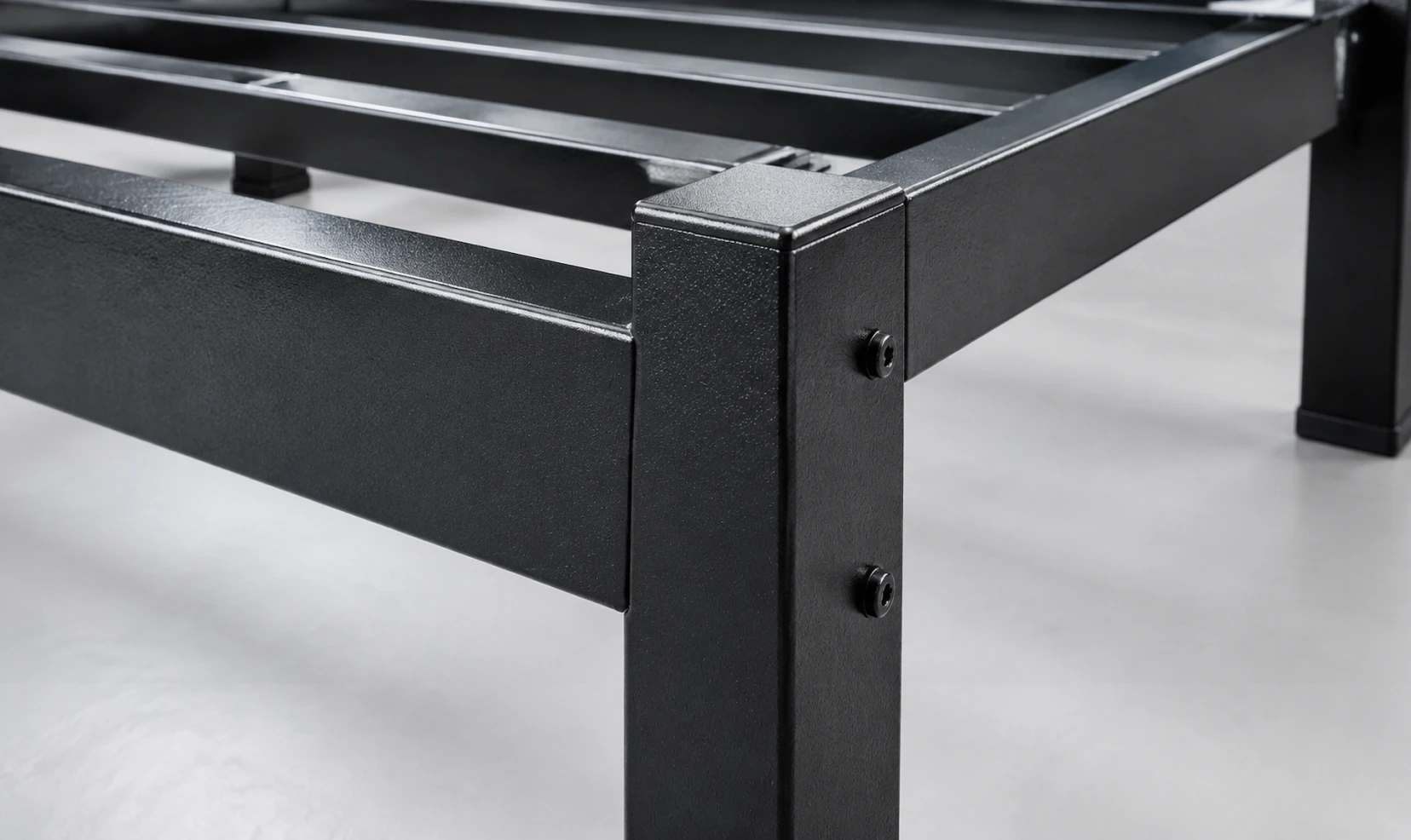
Load-Bearing Architectures: Gussets, Legs, and Center Supports
Static weight capacity defines how much stationary weight a frame can hold. Dynamic weight capacity defines the force the frame can withstand when an occupant drops heavily onto the mattress. Commercial frames must accommodate dynamic load spikes.
To achieve capacities exceeding 1,500 pounds, the architectural layout of the frame must distribute force evenly. Standard retail frames rely on four perimeter legs and a single center support. A commercial-grade steel platform bed frame for Queen or King sizes requires a minimum of six to nine points of floor contact. The central support beam must run from the head to the foot of the bed, absorbing the heaviest concentration of human weight.
Furthermore, the connection points where the side rails meet the cross-arms are historical failure zones. Quality contract frames utilize reinforced steel gussets at these junctions, welding triangular steel plates into the corners to lock the 90-degree angles and prevent the frame from racking or shifting laterally over time.
Acoustic Isolation in Commercial Sleep Systems
Guest satisfaction scores in the hospitality sector are heavily influenced by acoustic comfort. A squeaking bed frame immediately signals poor quality to a hotel guest and generates negative online reviews. Metal-on-metal friction is the primary source of this noise.
Acoustic isolation requires specific engineering interventions at every connection point. In a standard 4-leg metal bed frame, we integrate high-density nylon gaskets or engineered polymer washers between all interlocking metal parts. These dampeners absorb micro-movements and eliminate the friction that causes squeaking. Additionally, the base of each leg must be fitted with commercial-grade rubberized glides. These glides perform a dual function: they prevent noise transfer into the floor structure and protect luxury vinyl tile (LVT) or hardwood flooring from deep scratches during room cleaning.
Bed Bug Mitigation Through Mechanical Design
Pest control is an operational priority for any facility manager overseeing hundreds of beds. Bed bugs (Cimex lectularius) seek out dark, narrow crevices measuring 1mm to 2mm in width. Traditional wooden bed foundations provide thousands of potential harborage points within wood grain, fabric staples, and poorly joined corners.
Upgrading to hotel bed frame supplier selection standards means specifying sealed tubular steel. Metal provides no organic material for pests. More importantly, the manufacturing process must eliminate crevices. All tubular ends must be sealed with tightly fitted polymer end-caps or fully welded shut. Seam welding must be continuous rather than tack-welded, leaving zero microscopic gaps where pests can hide. This physical design choice drastically reduces the cost and downtime associated with pest extermination protocols.
Setup Economics: Tool-Free Assembly Protocols
For a multi-family housing development or a new hotel opening, the labor cost associated with furniture installation represents a significant budget line item. When outfitting 300 rooms, a bed frame that takes 20 minutes to assemble via bolts and Allen wrenches requires 100 hours of manual labor.
Contract-grade bed frames are engineered for rapid, tool-free assembly. Utilizing wedge-lock joints or heavy-duty keyhole slot-and-pin mechanisms, a single technician can assemble the frame in under three minutes using only a rubber mallet. As downward weight is applied to the bed over time, these gravity-assisted wedge joints actually tighten, increasing the structural rigidity of the frame without requiring maintenance staff to periodically retighten loose bolts.
Integrating Flexible Inventory: Folding and Rollaway Units
Hospitality operators require flexible sleeping arrangements to maximize room revenue. Supplying an extra bed for families or larger groups necessitates durable temporary sleep solutions. Standard retail folding beds utilize thin wire mesh that sags under adult weight and flimsy casters that break during hallway transport.
A commercial folding guest bed is built on a heavy-duty tubular steel chassis. The sleep surface utilizes solid steel slats or reinforced helical springs capable of supporting adult occupants. The casters must be industrial-grade polyurethane wheels equipped with locking brakes, ensuring smooth transit over thick hotel corridor carpets and absolute stability when deployed in the guest room.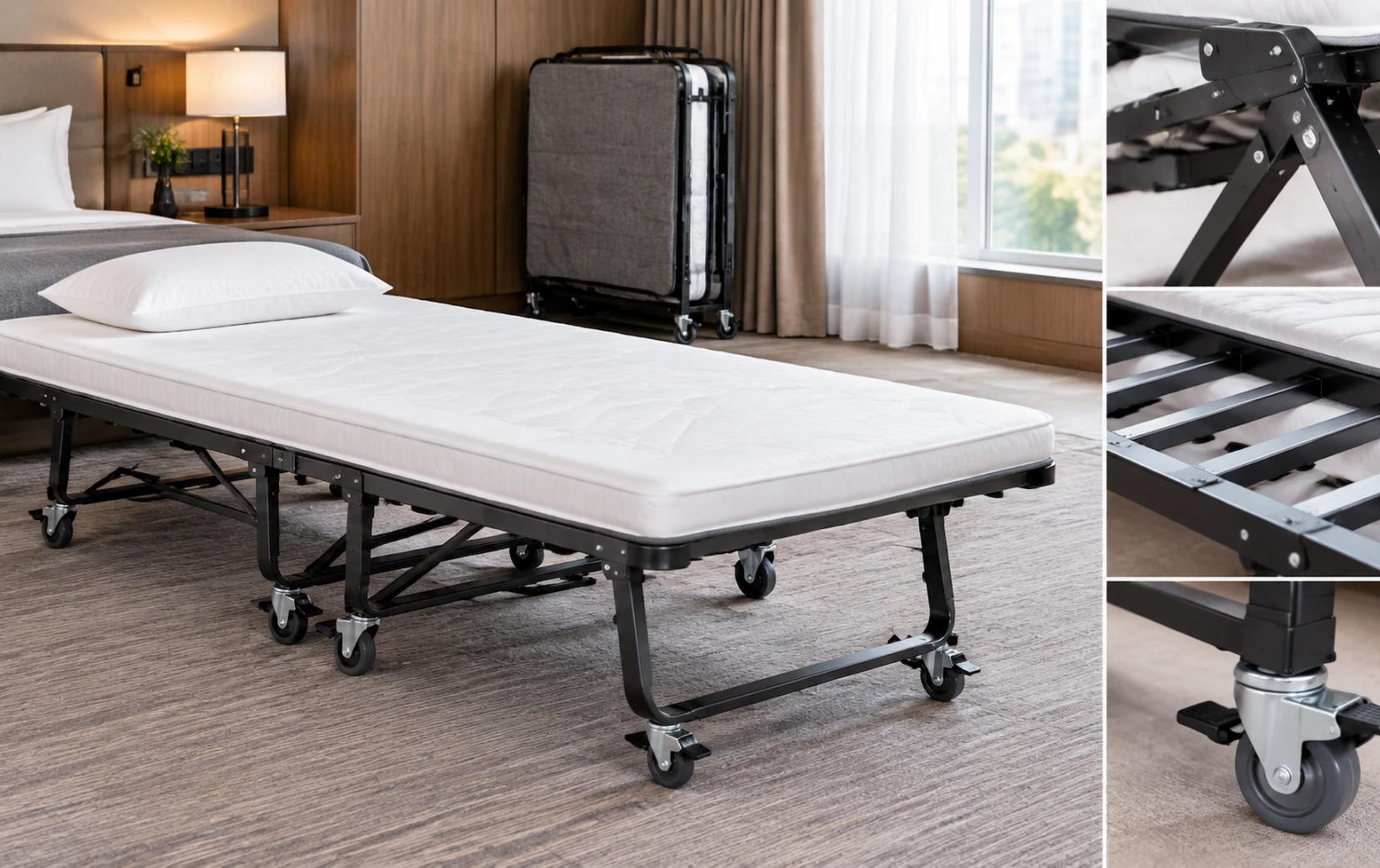
Partnering with Seemoon for OEM and Contract Manufacturing
Seemoon provides direct factory sourcing for high-volume contract furniture projects. Our production facilities operate under ISO 9001 quality management protocols, ensuring absolute dimensional consistency across thousands of units. We support student housing dormitory bed frame wholesale programs with highly optimized flat-pack carton engineering, maximizing container loading efficiency to suppress per-unit freight costs.
Procurement teams require reliable logistics and transparent manufacturing processes. We provide pre-shipment inspection documentation, certified load testing reports, and the capability to customize dimensions, leg heights, and bracket placements to accommodate proprietary mattress dimensions or specific architectural constraints.
FAQ
1. What is the minimum static weight capacity required for a commercial hotel bed frame?
A commercial-grade Queen or King bed frame should support a minimum static load of 1,500 pounds. This capacity ensures the frame can easily handle heavy luxury mattresses, multiple occupants, and dynamic impact loads without yielding or bending over a long capitalization cycle.
2. How does steel gauge thickness correlate to frame longevity in student housing?
Student housing environments expose furniture to extreme wear. Utilizing 14-gauge or 16-gauge steel prevents the central support beams and side rails from bowing. Thinner steel (like 18-gauge) will eventually warp under the point-loads generated when occupants sit heavily on the edge of the mattress.
3. Why are wooden bed foundations being phased out of commercial hospitality?
Wooden foundations act as primary harborage sites for bed bugs due to the porous nature of wood and the presence of joints and staples. Additionally, wood absorbs ambient moisture, leading to warping or mold over time. Sealed tubular steel eliminates these sanitary and structural liabilities.
4. What specific design features prevent a metal bed frame from squeaking?
Acoustic control is achieved by eliminating metal-on-metal friction. This requires integrating high-density nylon gaskets at all overlapping joints, utilizing precise welding techniques to ensure components fit tightly, and capping the steel legs with impact-absorbing rubber glides.
5. How does flat-pack engineering reduce FF&E shipping costs for large development projects?
Flat-pack engineering breaks the bed frame down into linear components that nest tightly within a slim corrugated carton. This maximizes the cubic meter utilization inside an ocean shipping container, allowing hundreds of frames to ship simultaneously, thereby drastically lowering the landed freight cost per unit.
6. What is the difference between a platform base and a standard foundation in contract use?
A standard frame requires a separate box spring to support the mattress. A steel platform base utilizes integrated metal slats or a solid steel grid, allowing the mattress to rest directly on the frame. This eliminates the cost of purchasing and replacing box springs, lowering the overall cost per room.
-

Author
Seemoon
Seemoon is a Senior Product Expert and Sleep Ergonomics Specialist. With extensive experience in the design and manufacturing of adjustable beds and smart sleep solutions, Seemoon is dedicated to sharing authoritative insights on furniture innovation, ergonomic health, and global B2B sourcing trends. All content is grounded in authentic manufacturing expertise to help global buyers make informed decisions.