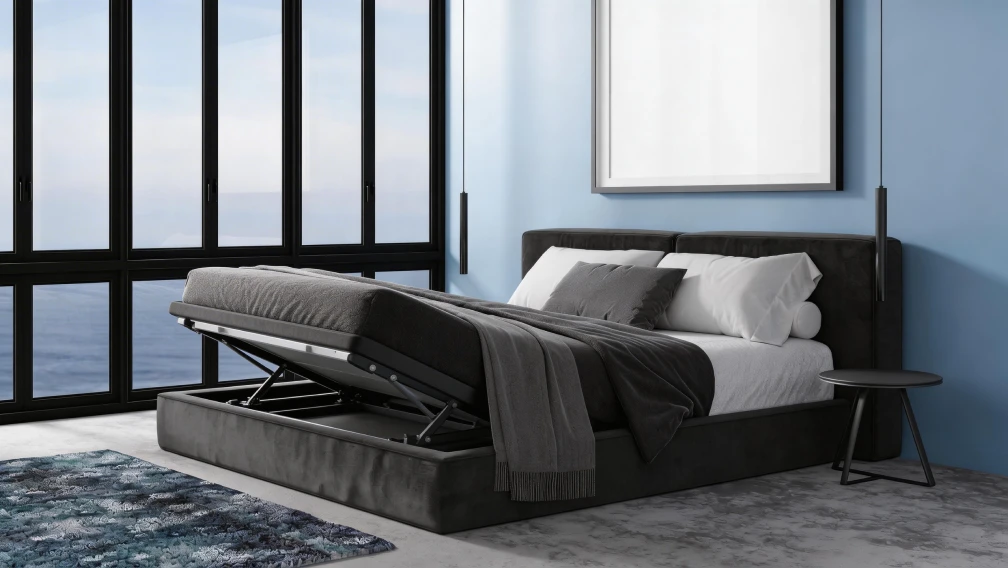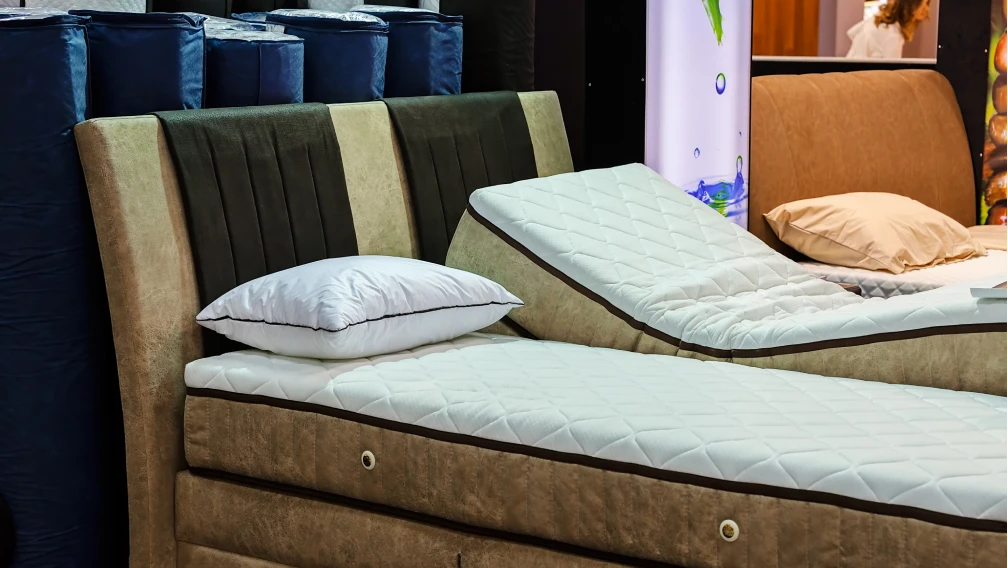

Furniture retailers and mattress chains operate under a set of sourcing constraints that differ meaningfully from other B2B channels. Multi-store programs require identical product specifications delivered to dozens or hundreds of locations. Floor samples must survive daily showroom handling without visible wear. Warranty obligations extend years beyond the initial sale. And inventory planning must accommodate seasonal demand cycles that hit hardest during Q4 and the first quarter mattress-purchase peak. For these operators, selecting an adjustable bed supplier for furniture retailers — or a bed frame manufacturer for mattress chains — is not a routine procurement decision. It affects store-level consistency, customer experience, after-sales cost, and multi-year margin performance.
This guide is written for furniture retail buyers, mattress chain procurement teams, and regional distributors who are evaluating new OEM manufacturing partners or refining their current supply arrangements. It covers the specific requirements that retail channels impose on bed product sourcing, the evaluation criteria that separate capable manufacturers from marginal ones, and the practical trade-offs involved in balancing product quality, lead time, and landed cost.
1. Why Adjustable Bed Sourcing for Retail Channels Differs from E-Commerce
The sourcing requirements for furniture retail and mattress chain channels are structurally different from e-commerce direct-to-consumer sourcing. Retail buyers typically underestimate these differences when comparing manufacturers across channels.
Floor sample consistency is the first major difference. In e-commerce, every unit ships directly to a consumer who unpacks and uses the product in a home environment. In retail, the first unit that arrives at each store becomes the floor sample — a product that customers will see, touch, sit on, and operate repeatedly over months or years. Any cosmetic variance that would be acceptable in e-commerce (minor coating inconsistency, slight fabric shade differences, small weld marks on hidden surfaces) becomes a visible quality issue when displayed on a showroom floor next to a salesperson’s delivery promise.
Multi-store inventory alignment is the second difference. A mid-sized mattress chain may operate 40 to 100 stores across a region. A furniture retailer chain may operate hundreds of locations nationwide. Each store location receives delivery from a regional distribution center, and the distribution centers expect identical product specifications across all replenishment orders. A production batch that drifts from the approved specification — even by 2 or 3 centimeters on frame dimensions, or a slightly different fabric texture — creates store-level inventory problems that ripple through the entire chain.
Warranty infrastructure is the third difference. Retail channels typically offer warranty periods ranging from 1 year (entry-level products) to 20 years (premium mattress and adjustable bed programs). The OEM manufacturer must support this warranty infrastructure by maintaining replacement parts inventory, providing technical documentation for field service, and handling defective product returns through a structured RMA process. E-commerce channels typically have shorter warranty obligations and rely more heavily on full-unit replacement rather than parts-level repair.
Seasonal demand patterns are the fourth difference. The retail mattress and bedding market has predictable demand peaks — Memorial Day weekend, Fourth of July sales, Labor Day, Black Friday through Cyber Monday, and the January President’s Day weekend. Retailers need production schedules that align with these peaks, which means ordering inventory 90 to 120 days in advance of the sales event. OEM manufacturers must have the production capacity flexibility to handle the surge order volumes that retail buyers place ahead of these cycles.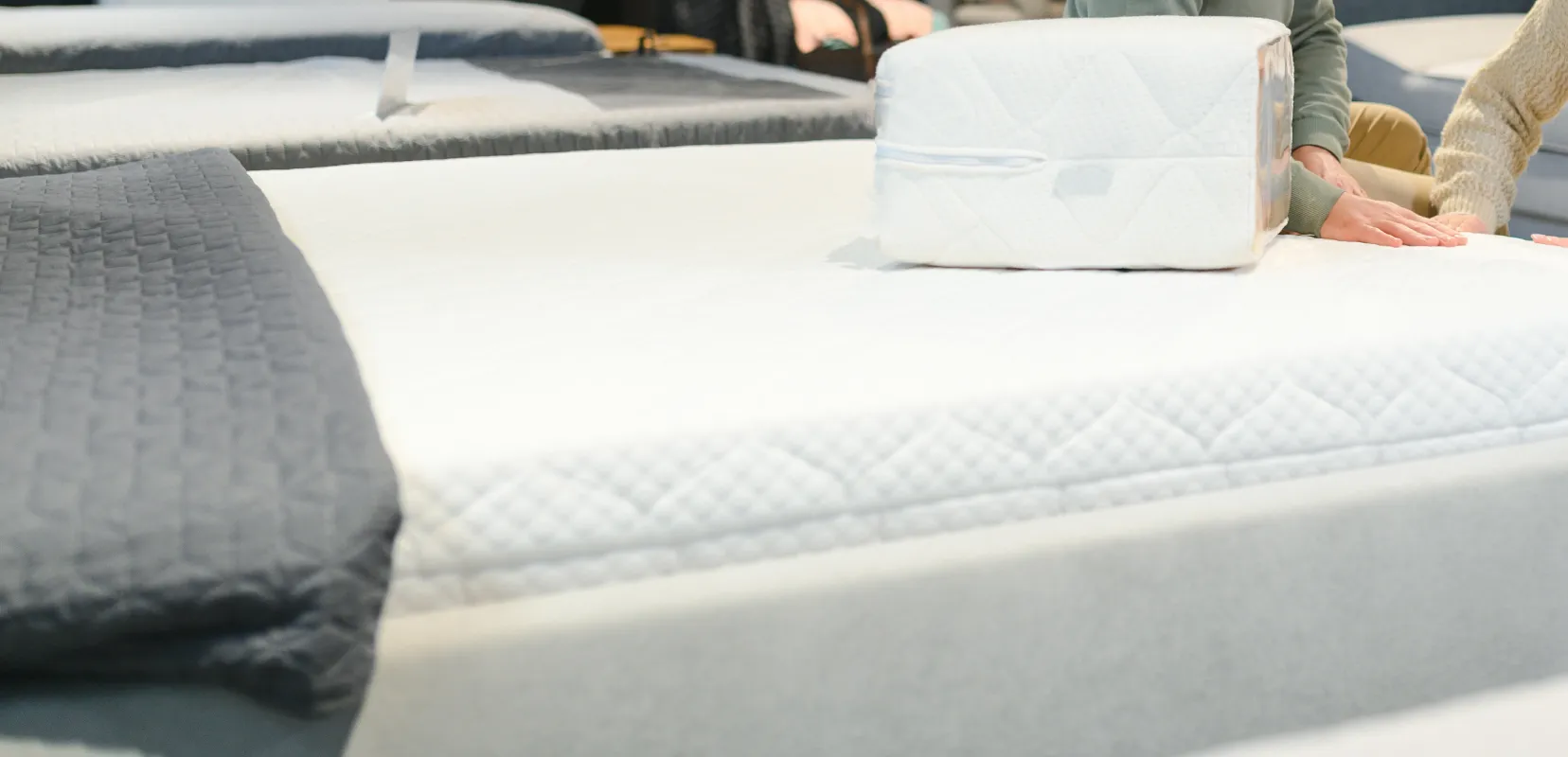
2. Bed Frame Manufacturer Requirements for Mattress Chain Programs
Mattress chains occupy a specific position in the bedding retail market. Their core product is the mattress, but their attach-sale economics depend heavily on selling adjustable bed bases and bed frames alongside every mattress transaction. A mattress chain that successfully converts 30 percent of mattress buyers into attach-sale purchasers of an adjustable base or frame generates substantially higher average order value and overall store profitability than one that treats the frame as an afterthought.
For a bed frame manufacturer serving this channel, the product specifications must match the attach-sale use case. The frame must be compatible with the mattress types the chain sells, easy for delivery teams to assemble in the customer’s home, and priced to fit the chain’s bundled pricing promotions without compressing the frame-level margin to unsustainable levels.
The Mattress Industry Association’s 2024 sales data shows that attach-sale frames and foundations now represent approximately 18 percent of total mattress retail revenue, up from 12 percent five years earlier. This shift reflects the growing importance of bundled mattress-and-foundation programs in the competitive positioning of mattress chains. For sourcing teams, this means bed frame procurement is no longer a low-priority component of the mattress purchase — it is a meaningful profit center that deserves the same supplier evaluation rigor applied to mattress sourcing. Further industry analysis is available through the International Sleep Products Association, which tracks bedding category trends and supplier standards for North American retail.
The frame categories most commonly sourced for mattress chain programs include:
• Metal platform bed frames — the entry-level attach-sale option, typically bundled with economy mattress purchases. These frames ship in compact cartons and assemble without tools.
• Center-folding bed foundations — a higher-margin alternative to traditional box springs, bundled with mid-range mattress purchases. The folding mechanism simplifies delivery and returns.
• Adjustable bed bases — the premium attach-sale option, bundled with premium mattress purchases. These products command the highest margin but require more complex supply chain handling.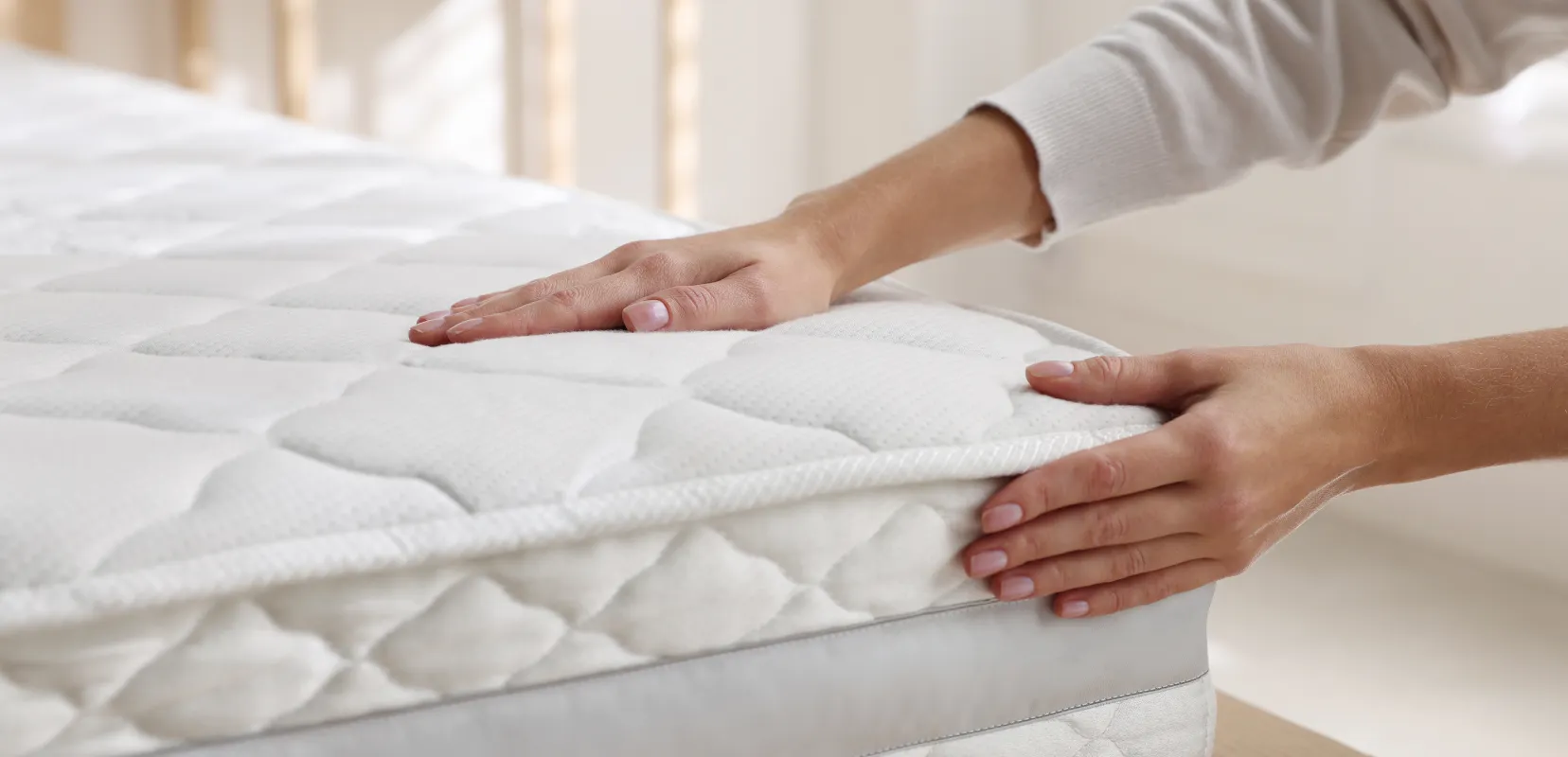
3. Adjustable Bed Supplier Evaluation: What Retail Buyers Should Verify
Evaluating a potential adjustable bed supplier for furniture retail programs requires verifying operational capabilities that may not be obvious from a product catalog or initial sales conversation. The following criteria help buyers distinguish between suppliers who can support long-term retail programs and those who may struggle with consistency at retail scale.
Production capacity should be evaluated in relation to your projected annual volume, not just your first order. A supplier operating at 85 to 95 percent capacity utilization will have difficulty accommodating order increases, seasonal surges, or new program launches without extending lead times. Ask for the supplier’s monthly capacity in units, current capacity utilization, and historical production data for the past 12 months.
Multi-facility capability provides supply chain resilience that single-facility suppliers cannot match. A supplier with production bases in multiple countries or regions can shift production in response to capacity constraints, trade policy changes, or regional disruptions. Seemoon operates production facilities in both Pinghu, China, and Long An Province, Vietnam, with identical quality standards across both locations. When one facility faces capacity pressure, the other maintains continuous order fulfillment.
Quality management systems are foundational for retail supply programs. The supplier should hold ISO 9001 certification at minimum, with documented quality procedures for incoming material verification, in-process inspection, and final product testing. Suppliers who have passed Walmart and Costco factory audits have demonstrated compliance with some of the most demanding retail supplier standards in the industry. This audit-passing capability is a stronger indicator of operational discipline than ISO certification alone.
Quality testing laboratory capability allows the supplier to verify product performance before shipment. A supplier with an in-house testing laboratory can conduct structural load testing, motor endurance cycling, electrical safety inspection, and weld joint verification on sample units from each production batch. Suppliers who outsource testing to third-party laboratories introduce delays and costs that affect lead time and unit economics.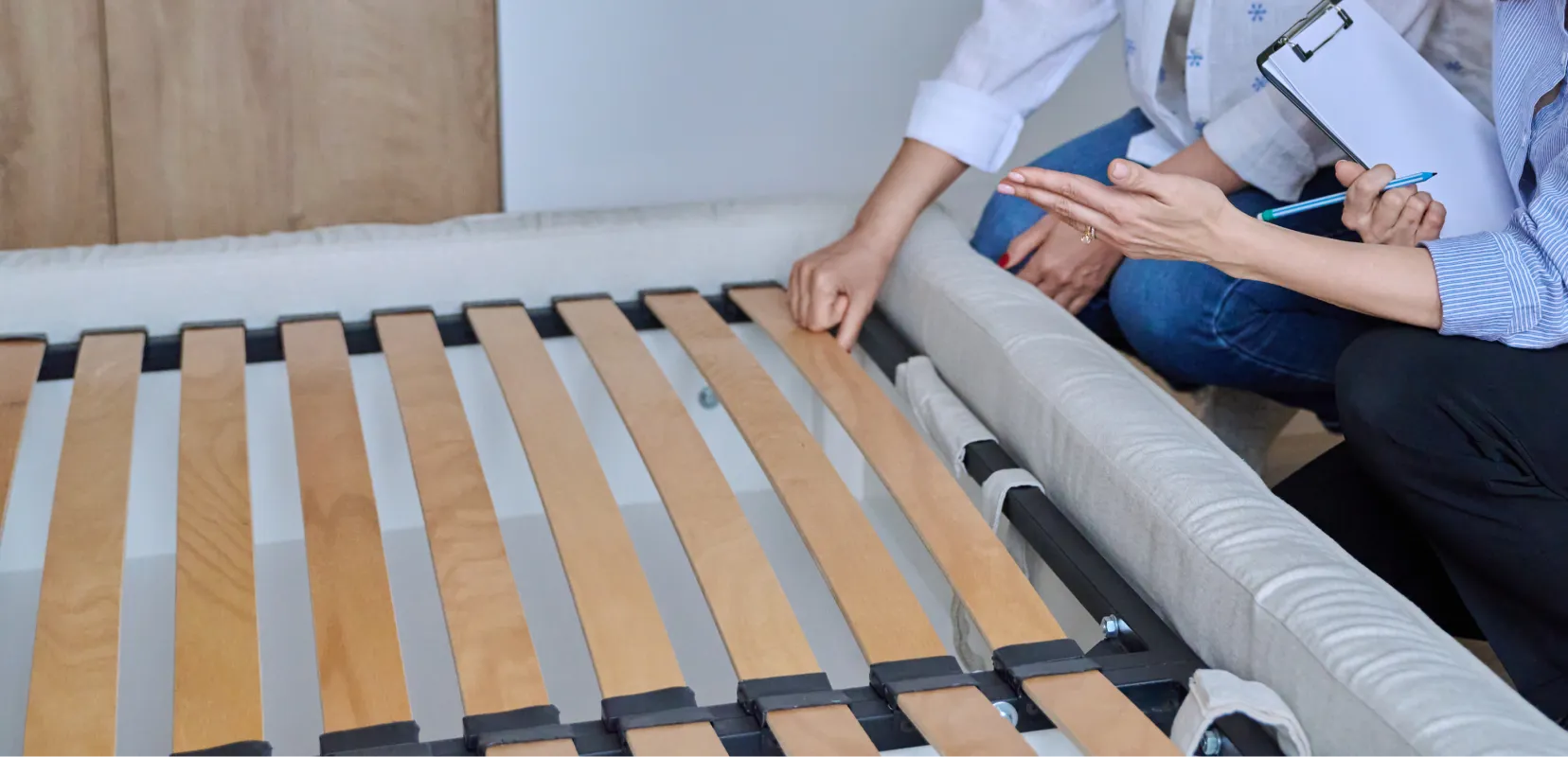
| Evaluation Criterion | Baseline Requirement | Preferred Capability |
| Annual production capacity | 100,000+ units | 300,000+ units with expansion capability |
| Quality certification | ISO 9001 | ISO 9001 + ISO 14001 + Walmart/Costco audit |
| Manufacturing automation | Manual welding with fixtures | Robot welding (15+ units) |
| Surface finishing | Outsourced coating | In-house electrostatic powder coating |
| Testing laboratory | Third-party testing | In-house testing lab with documented procedures |
| Facility count | Single facility | Multi-country production network |
| ERP production tracking | Basic order management | Full ERP with order visibility for customers |
| Spare parts inventory | Limited or on-demand | Dedicated warranty parts inventory |
4. Adjustable Bed OEM Specifications for Mid-to-Premium Retail Positioning
The adjustable bed category has fragmented into multiple price tiers over the past five years, and the specifications required for each tier have diverged meaningfully. Mid-range retail positioning typically uses dual-motor systems with standard features, while premium positioning requires three-motor or quad-motor configurations with advanced programming.
Mid-range adjustable bed bases (retail price range approximately 600 to 1,200 USD) typically include dual-motor systems for independent head and foot articulation, wireless remote control with preset memory positions, USB charging ports, and under-bed LED lighting. The motor brand is usually a mid-tier option such as Timotion or an equivalent, which balances cost with acceptable performance. Zero-gravity positioning is standard; massage function is optional.
Premium adjustable bed bases (retail price range approximately 1,200 to 2,500 USD) require three-motor or quad-motor configurations with independent lumbar support and pillow tilt zones. Motor brand becomes a differentiating specification — premium positioning often requires OKIN or Linak motors to support the retail price point. Bluetooth app control, advanced preset programming (anti-snore, TV, reading, yoga positions), and massage functions with multiple intensity levels are standard at this tier.
For a mattress brand or furniture retailer launching a new adjustable bed product line, the motor configuration decision drives the entire product economics. A dual-motor base with Timotion motors may cost 180 to 220 USD at the OEM level; the same base with OKIN motors may cost 230 to 280 USD. This 30 to 60 USD cost differential translates to retail price differences of 100 to 200 USD once channel margins are applied. Selecting the correct motor tier for your intended retail positioning is therefore one of the most consequential specification decisions in the OEM development process.
Adjustable bed feature configuration should also match the retail channel’s customer profile. E-commerce channels tend to emphasize technology features (Bluetooth app control, USB-C charging, ambient lighting) because these features photograph well and generate positive product review commentary. Brick-and-mortar retail channels tend to emphasize comfort features (massage intensity, position memory, wall-hugger engineering) because customers can physically experience these features on the showroom floor.
5. Bed Frame Supplier Selection for Multi-Store Distribution Programs
Bed frame supplier selection for furniture retail distribution programs involves logistical considerations that product-focused evaluation often misses. The supplier’s ability to handle multi-store distribution is as important as their ability to produce the product.
Flat-pack packaging engineering affects both the landed cost per unit and the efficiency of distribution center handling. A bed frame that packs into a 38 by 16 by 8 inch carton loads approximately 15 to 20 percent more units per container than a frame packed in a 42 by 18 by 10 inch carton. Over a 10,000-unit annual program, this packaging efficiency difference can translate to 30 to 50 thousand dollars in reduced ocean freight costs. For distribution center operations, smaller and more uniform carton dimensions simplify palletization, reduce handling time, and lower damage rates during warehouse transfer.
Container loading consistency is another logistical factor. A supplier who consistently achieves 90 to 95 percent container utilization delivers more units per shipping dollar than a supplier who averages 75 to 85 percent utilization. Ask prospective suppliers for container loading calculations on their standard product configurations, and verify these calculations against actual loading photos from recent shipments.
Labeling and barcode compliance is a requirement for most multi-store distribution programs. Retail distribution centers expect each carton to include a scannable SKU barcode, UPC code, and often a destination store code printed on the carton exterior. Some retailers require GS1-128 labels that encode ship-to information, purchase order number, and carton dimensions. Suppliers who have supported retail distribution programs typically have labeling infrastructure in place; suppliers without this experience may need several months of adjustment to meet labeling requirements consistently.
Container documentation must meet customs, insurance, and receiving requirements. Commercial invoices, packing lists, and certificates of origin must match the physical shipment exactly. Discrepancies between documentation and physical shipment create customs clearance delays that affect inventory arrival timing and sales event preparation. Experienced OEM suppliers handle documentation as a standard operational function; inexperienced suppliers often require buyer intervention to resolve documentation errors.
6. Adjustable Bed Private Label Program Structure for Retail Chains
Private label adjustable bed programs for retail chains involve coordination across multiple functional areas — product development, brand design, compliance testing, and distribution logistics. The structure of a well-organized private label program differs significantly from off-the-shelf product sourcing.
Product specification development is the first phase. The retailer defines the target retail price point, feature set, motor configuration, and intended customer segment. The OEM supplier responds with a specification document that details the frame dimensions, motor brand and rating, control system programming, fabric specifications, and packaging dimensions. This specification document becomes the reference point for all subsequent production, quality inspection, and warranty handling.
Sample validation is the second phase. The supplier produces one or more sample units for retailer evaluation. Samples are tested for functional performance, cosmetic quality, assembly workflow, and packaging integrity. Any specification changes identified during sample validation are documented and incorporated into the production specification before mass production begins.
Branded component production is the third phase. Private label programs typically involve several branded components — remote control surfaces with the retailer’s logo, packaging with branded graphics, user manuals with retailer contact information, and barcoded SKU labels. The OEM supplier coordinates the production of these branded components separately from the base frame production and integrates them during final assembly.
Compliance testing and certification coordination is the fourth phase. Depending on the target market, adjustable bed products may require UL/ETL electrical safety certification, CFR 1633 flammability testing (if bundled with a mattress), California Proposition 65 compliance documentation, and specific retailer-required testing such as Walmart factory audit passing reports. Retailers typically specify which certifications are required before production begins; changing certification requirements after production starts creates costly delays.
Production release and delivery coordination is the final phase. The supplier produces the first full container load against the approved specifications and released branded components. The retailer inspects the first container upon arrival and confirms that it meets the specification and branding requirements. Once the first container is approved, subsequent containers ship on the established production schedule.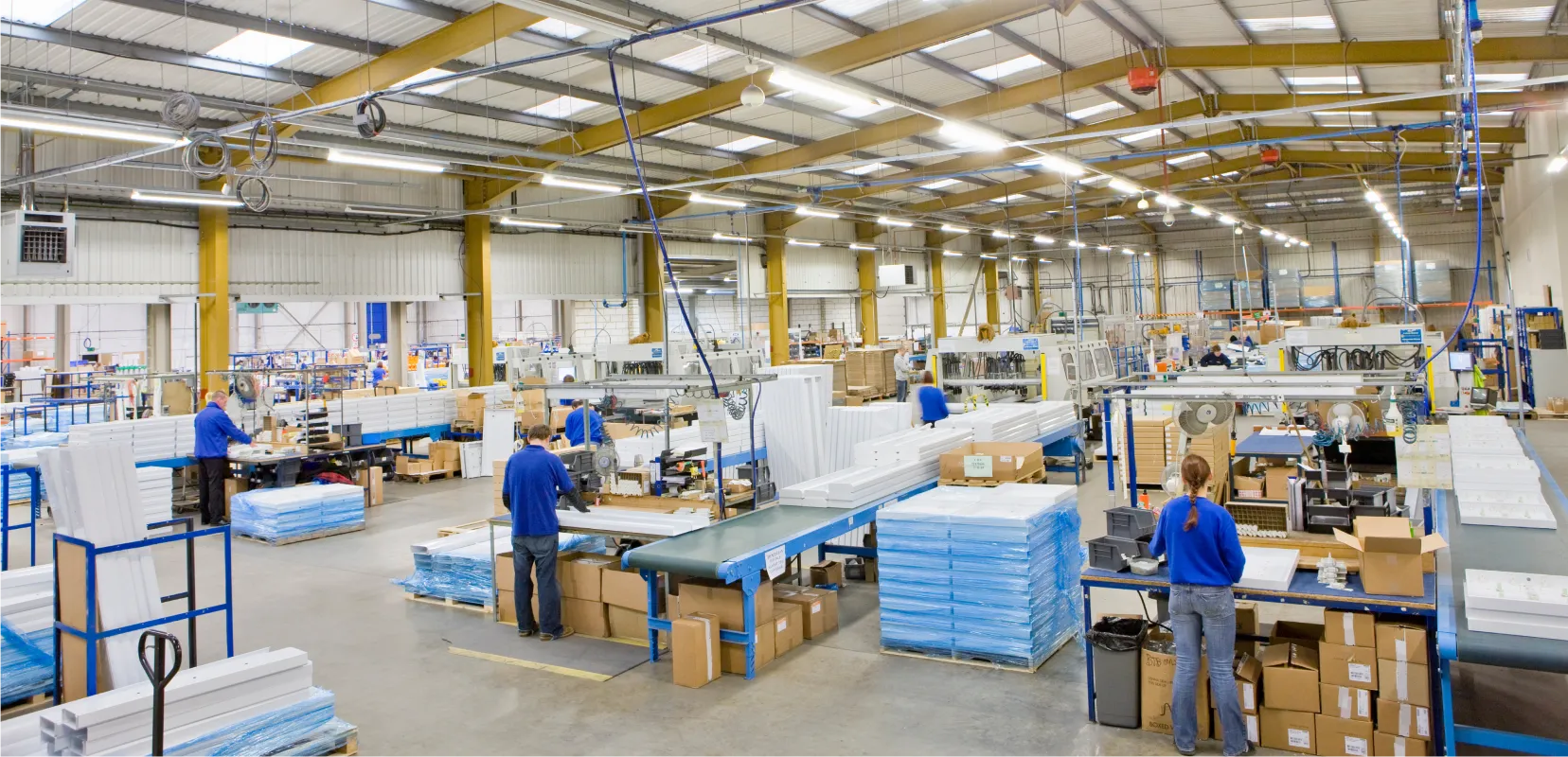
7. Electric Bed Base Sourcing for Floor Sample and Warranty Service
Electric bed base sourcing for retail channels must account for the product’s entire lifecycle — not just the initial sale, but the floor sample usage pattern and the warranty service obligations that extend years after the sale.
Floor sample usage is physically more demanding than consumer home use in certain respects. A showroom floor sample is operated by customers, salespeople, and delivery teams dozens of times per day. The motor actuators cycle through their full range hundreds of times per week. Remote control buttons are pressed thousands of times. Fabric surfaces are touched, sat on, and occasionally spilled on.
For an electric bed base to hold up as a floor sample, the motor duty cycle rating matters. Consumer home use typically involves 5 to 10 motor cycles per day; showroom sample use can involve 50 to 100 motor cycles per day. Motors rated for a 10 percent duty cycle (2 minutes operation, 18 minutes rest) are adequate for home use but may overheat under continuous showroom operation. Motors rated for 15 to 20 percent duty cycle are more appropriate for floor sample use.
Warranty service obligations extend the sourcing evaluation beyond the initial unit quality. Most retail channels offer 1-year full warranty on electric adjustable bed bases, with 5 to 10 year warranty coverage on the frame and limited warranty on the motor system. Supporting this warranty requires:
• Spare parts inventory maintained by the OEM supplier for the expected warranty period.
• Technical documentation that enables field service technicians to diagnose and repair common issues without returning the unit to the factory.
• Replacement part shipping logistics that can deliver parts to customers within acceptable service timeframes.
• Warranty registration systems that track which units are in service, when they were sold, and what warranty coverage applies.
Suppliers without this warranty infrastructure push the warranty service burden back onto the retailer, which increases the retailer’s effective cost of ownership for each unit sold. When evaluating electric bed base suppliers, ask specifically about warranty parts inventory, expected service response times for warranty replacement parts, and documentation availability for field service technicians.
8. Total Landed Cost Analysis for Retail Bed Supply Programs
Total landed cost analysis is essential for accurate sourcing decision-making. The FOB factory price represents only one component of the true cost of ownership for bed products in retail distribution programs.
The major components of total landed cost include:
• FOB factory price — the price quoted by the manufacturer for product at the factory dock.
• Ocean freight — typically 5 to 15 percent of FOB depending on container utilization and current freight rates.
• Import duties — varies by product classification and country of origin. Adjustable bed bases and bed frames have specific HTS codes that determine duty rates.
• Customs brokerage and port handling — typically 1 to 3 percent of total shipment value.
• Inland freight from port to distribution center — varies by destination and volume.
• Distribution center receiving and storage — allocated per unit based on throughput.
• Warranty cost reserves — typically 1 to 3 percent of unit cost, based on expected warranty claim rates.
• Quality-related costs — including incoming inspection, sample approval, defect handling, and customer service for quality issues.
For a retail buyer, comparing two suppliers based on FOB price alone misses the cost categories where supplier quality differences matter most. A supplier with a 10 percent higher FOB price but superior packaging efficiency, lower defect rates, and better warranty parts support may deliver a 5 to 8 percent lower total landed cost than a cheaper supplier with quality inconsistency.
Recent trade policy changes have also shifted the landed cost calculation for bed products. According to the United States International Trade Commission, tariff classifications for furniture products manufactured in Vietnam versus China carry meaningfully different duty rates under current trade policy. For retail buyers planning multi-year supply programs, this policy differential affects both supplier selection and total program economics in ways that were not relevant five years ago.
9. How Mattress Chains Can Build Long-Term OEM Supply Relationships
Long-term OEM supply relationships deliver better operational outcomes than transactional sourcing arrangements. The benefits compound over multiple order cycles and become significant over the course of a multi-year supply program.
Price stability improves in long-term relationships. Suppliers who view a buyer as a long-term partner are willing to absorb short-term component price volatility, stock raw materials to hedge against supply disruptions, and provide advance notice on planned price adjustments. Transactional suppliers typically pass through every cost change immediately, which creates margin volatility for the buyer.
Lead time reliability improves as the supplier becomes familiar with the buyer’s ordering patterns, seasonal cycles, and specification preferences. Established relationships allow the supplier to pre-position raw materials, schedule production line capacity in advance, and handle surge orders without impacting other customers’ delivery schedules.
Quality consistency improves as the supplier’s workforce becomes familiar with the buyer’s specification requirements and quality expectations. Dedicated production lines and trained operators deliver more consistent results than rotating production across multiple customer specifications.
Innovation and product development cooperation becomes possible in long-term relationships. Suppliers who have confidence in the relationship continuity are willing to invest in custom tooling, new product development, and process improvements that benefit the specific buyer. These investments require multi-year payback periods that transactional relationships cannot support.
Shared strategic planning emerges as the relationship matures. Supplier and buyer can coordinate on capacity planning, new product launches, and market expansion initiatives. This level of cooperation requires trust that develops only through sustained partnership over multiple years and order cycles.
Source Adjustable Beds and Bed Frames for Your Retail Distribution Program
Seemoon has supplied adjustable beds and bed frames to North American retail distribution programs for over 8 years, with cumulative shipments exceeding 3 million units and current annual capacity above 360,000 units. Our dual-facility manufacturing network in China and Vietnam operates 20 robot welding machines, in-house powder coating systems, 4 dedicated adjustable bed production lines, and ERP-managed production tracking.
Our retail channel customers include programs serving Amazon, Costco, Walmart, Target, Macy’s, Wayfair, Ashley Furniture, and Bed Bath & Beyond. We hold ISO 9001 and ISO 14001 certifications, have passed Walmart and Costco factory audits, and maintain dedicated quality inspection protocols for floor sample grade products and multi-store distribution consistency.
If you are a furniture retailer, mattress chain, or regional distributor evaluating new OEM suppliers for your adjustable bed or bed frame program, contact our sales team. We will provide a manufacturing proposal including FOB pricing, lead time, sample arrangement, and total landed cost estimates within 48 hours.
-

Author
Seemoon
Seemoon is a Senior Product Expert and Sleep Ergonomics Specialist. With extensive experience in the design and manufacturing of adjustable beds and smart sleep solutions, Seemoon is dedicated to sharing authoritative insights on furniture innovation, ergonomic health, and global B2B sourcing trends. All content is grounded in authentic manufacturing expertise to help global buyers make informed decisions.