
Procuring medical equipment for long-term care facilities, nursing homes, or regional distribution networks involves managing significant risk. Unlike individual retail purchases, commercial procurement demands strict adherence to international safety certifications, clinical functionality, and structural longevity. A single mechanical failure or compliance oversight can lead to severe operational liabilities, regulatory penalties, or compromised patient safety.
For B2B buyers, medical equipment suppliers, and healthcare channel managers, selecting a manufacturing partner requires looking beyond surface-level aesthetics and basic price points. This guide breaks down the top five technical, safety, and functional benchmarks that must dictate your commercial procurement strategy for medical beds.
1. Entrapment Prevention and Side Rail Geometry (IEC 80601-2-52 Compliance)
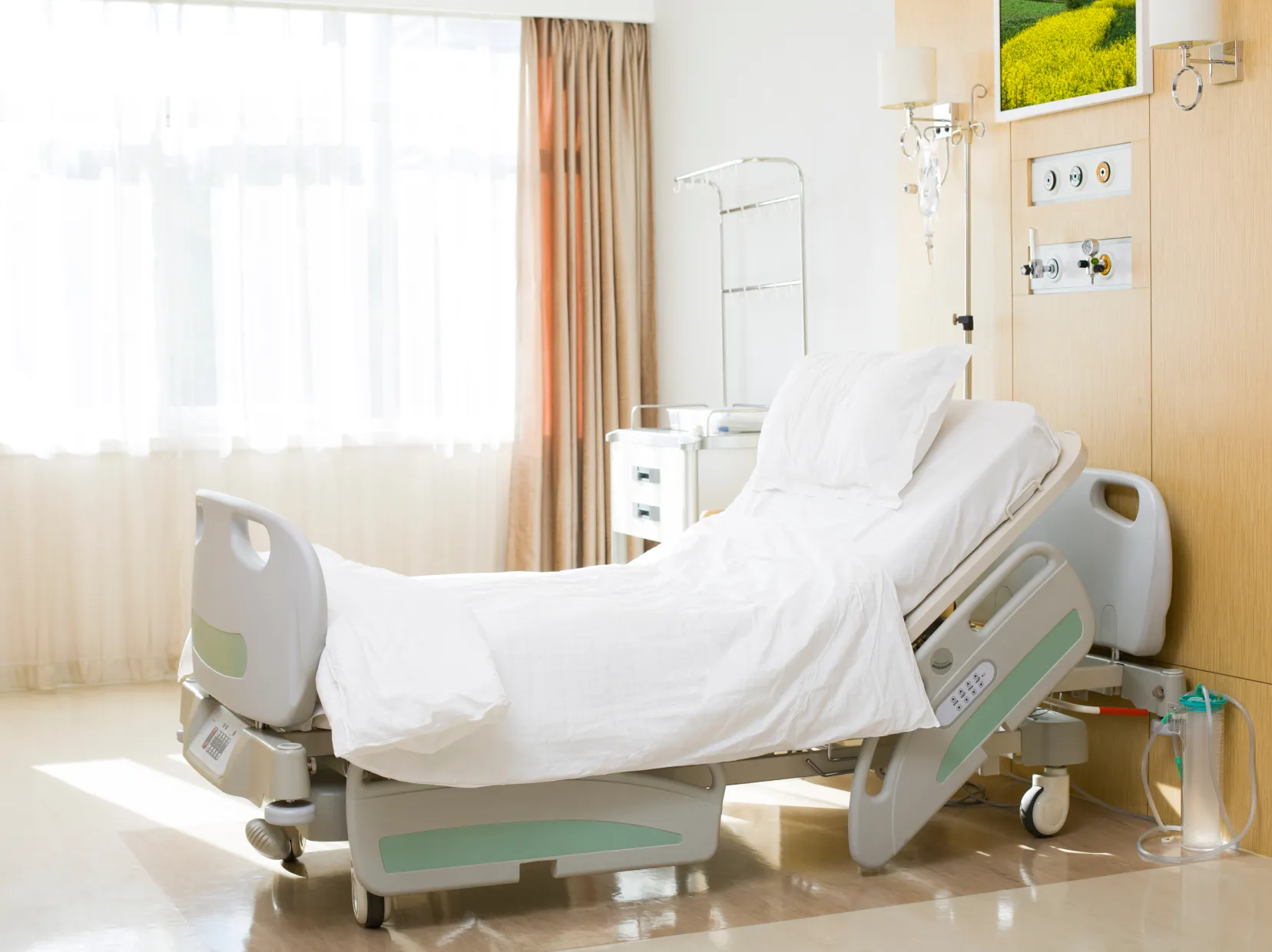
Patient entrapment remains one of the most critical safety risks associated with motorized medical beds. Entrapment occurs when a patient becomes caught in the gaps between the mattress, the bed frame, and the side rails, which can result in severe injury or suffocation. To systematically eliminate this hazard, international regulatory bodies established the IEC 80601-2-52 standard. This standard mandates exact dimensional limitations across seven distinct entrapment zones, with a primary focus on the clearance around the side guard rails.
The Seven Entrapment Zones Explained
When evaluating a manufacturer's inventory, ensure their engineering team utilizes standardized test tools to verify compliance across these critical areas:
- Zone 1 (Within the Rail): Any completely enclosed gap within the side rail structure must be small enough to prevent a patient's head from entering.
- Zone 2 (Under the Rail / Between Mounts): The space between the bottom of the side rail and the top of the compressed mattress must be tightly regulated.
- Zone 3 (Between the Rail and Mattress): Gaps here frequently cause lateral chest entrapment if the mattress shifts during articulation.
- Zone 4 (Between Rail Segments): For beds utilizing split guard rails, the distance between the head-end and foot-end rails must prevent neck or torso restriction.
Commercial wholesale operations should prioritize purchasing a dedicated home care adjustable bed with side rails and headboard that has undergone verified static and dynamic load testing on all barriers. Tuck-away or split-rail mechanisms must feature robust locking pins to prevent accidental collapsing when a patient leans their full weight against the support structure.
2. Structural Integrity and Safe Working Load (SWL)
Commercial environments expose bed frames to continuous, round-the-clock physical stress. Standard consumer-grade construction quickly succumbs to mechanical fatigue under these conditions. B2B procurement specifications must demand structural frameworks engineered from heavy-gauge, cold-rolled steel tubes. This material choice provides the necessary structural geometry to ensure stable operation during complex positioning adjustments.
Material Standards for Heavy-Duty Performance
High-quality commercial beds typically utilize carbon steel equivalent to international standards such as ISO E235 or US-ASTM A36. This base metal must be treated with an electrostatic epoxy powder coating to guarantee long-term corrosion resistance and to withstand harsh chemical disinfection protocols.
| Bed Classification | Typical Target Weight Capacity | Primary Structural Material | Recommended Commercial Application |
| Standard Home Care Bed | 350 to 450 lbs | Cold-Rolled Steel Tube | Standard assisted living & residential care |
| Heavy-Duty Bariatric Bed | 600 to 1,000 lbs | Reinforced Carbon Steel (ASTM A36) | Specialized bariatric care clinics |
When compiling your sourcing documents, always verify the Safe Working Load (SWL) rating. The SWL represents the combined weight of the patient, the mattress, the bedding, and any attached medical accessories like I.V. poles or trapeze equipment. Overloading a frame with an insufficient rating will compromise the motorized lift actuators, stripping the internal gears and creating a sudden drop hazard.
3. Advanced Mobility and Braking Control
In a professional facility setting, beds cannot remain permanently static. Caregivers must regularly reposition frames to accommodate medical procedures, facility cleaning schedules, or room reassignments. Consequently, an optimized mobility system is a non-negotiable functional requirement.
Bulk buyers must analyze the caster assembly configurations carefully. Cheap plastic wheels quickly track debris, lock up, or scar high-grade institutional flooring. Instead, look for medical-grade polyurethane or solid rubber casters featuring sealed precision ball bearings. For most standard care channels, a mobile home care bed with brake wheels and side rails provides the baseline agility required by on-duty nursing staff.
Furthermore, look for central braking systems or heavy-duty individual locking mechanisms. When the brakes engage, the frame must maintain absolute spatial stability without any lateral wobbling or slipping, particularly during high-impact lateral patient transfers from wheelchairs or stretchers.
4. Electrical Safety and Liquid Ingress Protection (IP Rating)
Because modern long-term care beds rely entirely on electric motors for head, foot, and overall height adjustments, electrical safety architecture is paramount. Incontinence events, spilled fluids, and aggressive wet-cleaning methods mean that the underlying electronics are constantly exposed to moisture risks.
Always inspect the Ingress Protection (IP) ratings of the actuator motors, control boxes, and hand pendants. For commercial medical environments, an IPX4 rating (protection against splashing water from any direction) is the absolute bare minimum required for basic safety. However, premium options designed for intensive sanitation protocols often utilize IPX6-rated enclosures, which can safely withstand high-pressure water jets during deep cleaning cycles.
Additionally, look for electrical safety enhancements such as:
- Flame-Retardant Cabling: Thick, medical-grade PVC power cords with molded strain relief points to prevent fraying.
- Emergency Battery Backup Systems: An integrated lead-acid or lithium backup battery ensures that if a facility experiences a sudden power failure, caregivers can still lower the head and height sections to safely extract or resuscitate a patient.
- Low-Voltage Control Systems: Stepping down standard wall power to 24V or 32V DC at the control box level minimizes the risk of severe electrical shock to both patients and operators.
5. Infection Control and Sanitization-Friendly Design
Nosocomial infections represent a massive financial and operational burden for healthcare providers. The surface materials used across your facility furniture play an active role in breaking the chain of pathogen transmission. Intricately molded designs with deep crevices, exposed wooden elements, or porous materials act as breeding grounds for bacteria and are incredibly difficult to sanitize thoroughly.
When selecting your inventory from a commercial home care bed manufacturer, favor sleek, seamless finishes. High-grade Engineering ABS plastic is ideal for removable headboards, footboards, and side rail assemblies. ABS plastic offers excellent impact resistance, smooth rounded edges to eliminate injury risks, and complete stability when exposed to harsh EPA-approved chemical disinfectants.
The sleeping platform itself should feature a perforated metal deck rather than traditional link-spring grids. Perforated cold-rolled steel plates promote continuous air circulation beneath the mattress, drastically reducing moisture accumulation. This moisture control helps mitigate the risk of mold growth and assists in preventing skin maceration for bed-bound patients who are highly susceptible to developing pressure ulcers.
Sourcing Strategy for Global Distributors and Tender Submissions
Navigating municipal healthcare tenders or large-scale private supply contracts requires absolute clarity regarding international conformity certificates. When preparing a bid or auditing a manufacturing plant, you should request formalized test reports for the following three regulatory benchmarks:
- CE Certification (MDR 2017/745): Essential for entry into the European Economic Area, confirming the bed's status as a compliant Class I medical device.
- FDA Registration: Required for commercial distribution within the United States market.
- ISO 13485: Proves that the factory's internal quality management system is specifically optimized for medical device manufacturing consistency.
Working directly with an established OEM/ODM factory allows bulk buyers to customize specific structural dimensions, motor brands (such as Linak or Dewert), and accessory configurations to meet local tender protocols without sacrificing compliance. Exploring comprehensive catalogs from verified adjustable bed and medical furniture manufacturers ensures your supply chain remains stable, legally compliant, and profitable over multi-year contract cycles.
Conclusion and Commercial Call to Action
Investing in commercial-grade care beds requires a careful balance of structural durability, absolute patient safety, and functional efficiency. By centering your procurement checklist around certified entrapment prevention, robust safe working loads, and elite sanitation properties, you protect your business reputation and deliver exceptional long-term value to your healthcare clients.
Are you preparing a large-scale procurement bid for a nursing home project or expanding your regional wholesale inventory? Our engineering team provides fully customized, certified OEM manufacturing configurations designed to pass the most stringent medical equipment audits worldwide. Contact our commercial sales division today to receive detailed technical blueprints, compliance documents, and competitive bulk pricing packages tailored to your market requirements.
FAQ
What is the primary difference between a retail adjustable bed and a commercial home care bed?
Retail adjustable beds focus primarily on comfort aesthetics for residential use, whereas commercial home care beds are certified medical devices engineered with heavy-duty steel, strict entrapment-preventing side rails, and high IP-rated waterproof motors to withstand constant multi-patient institutional use.
Why is IEC 80601-2-52 certification mandatory for facility procurement?
IEC 80601-2-52 is an international standard that explicitly defines safe dimensional gaps for medical bed frameworks and side rails. Compliance with this standard prevents catastrophic patient entrapment and suffocation accidents, shielding facilities from extreme operational liability.
What is a Safe Working Load (SWL) and how does it differ from max patient weight?
Max patient weight refers strictly to the individual's body mass. Safe Working Load (SWL) is a comprehensive metric that includes the total combined weight of the patient, the mattress, full bedding sets, and any attached medical accessories like IV poles or trapeze bars.
Can these home care beds be customized with specific motor brands for tender requirements?
Yes, working with a professional OEM manufacturer allows bulk buyers to specify premium medical-grade motor systems like Linak or Dewert to perfectly match the precise requirements detailed in regional healthcare tender documents.
How do ABS plastic components improve infection control in long-term care environments?
ABS plastic is non-porous and highly resistant to aggressive chemical disinfectants. Its smooth, seamless molded surface eliminates deep crevices where pathogens typically hide, making daily wipe-downs faster and far more effective for infection control teams.
What configuration is recommended for facilities requiring high patient mobility?
For active environments, we recommend a mobile configuration featuring 5-inch medical-grade polyurethane casters equipped with a central steering and braking system, allowing a single nurse to safely steer and secure the bed structure.
-

Author
Seemoon
Seemoon is a Senior Product Expert and Sleep Ergonomics Specialist. With extensive experience in the design and manufacturing of adjustable beds and smart sleep solutions, Seemoon is dedicated to sharing authoritative insights on furniture innovation, ergonomic health, and global B2B sourcing trends. All content is grounded in authentic manufacturing expertise to help global buyers make informed decisions.