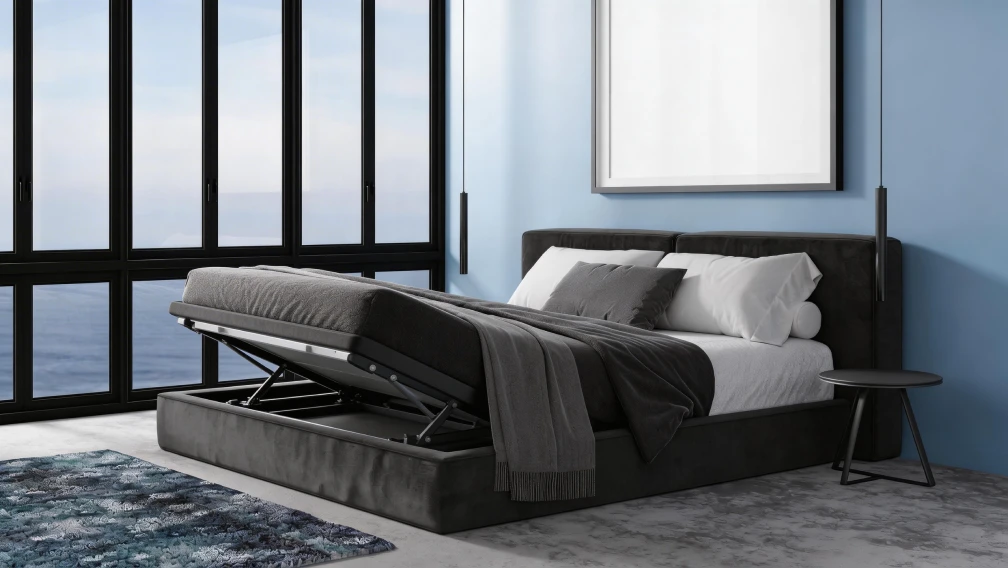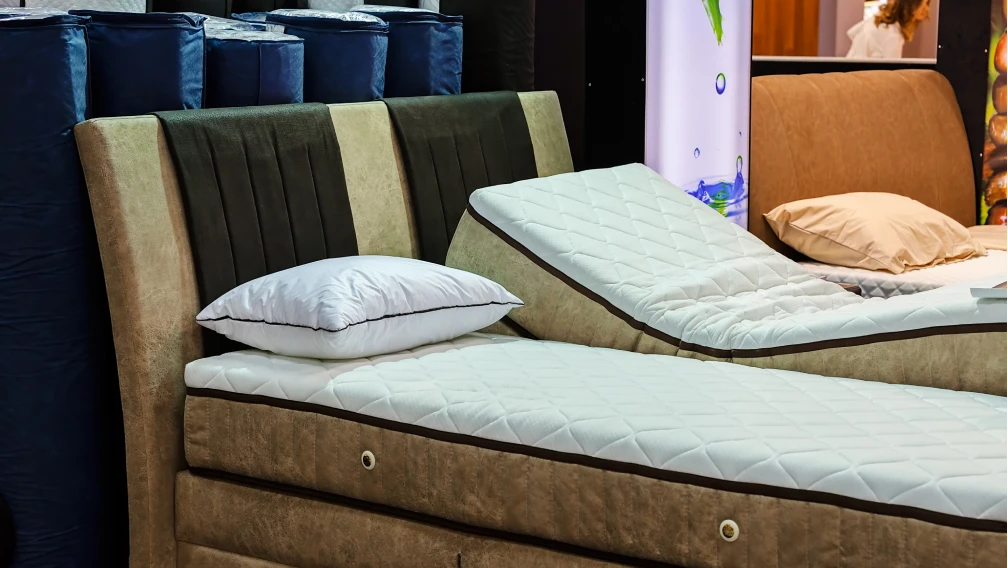

The transition from selling independent mattresses to complete motorized sleep systems represents the highest margin opportunity for modern furniture retailers. However, this transition introduces a critical engineering and operational variable: compatibility. Supplying a premium motorized chassis without understanding how the resting mattress material reacts to dynamic articulation leads to catastrophic mechanical failure, negative consumer reviews, and high return rates. This procurement guide details the material science, mechanical tolerances, and retail merchandising strategies required to pair mattresses with motorized bases accurately, ensuring a high average order value and eliminating post-sale warranty claims.
As an experienced Original Equipment Manufacturer of advanced electric beds, we analyze thousands of warranty claims across the industry annually. The vast majority of actuator failures are not caused by defective factory engineering, but by retailers pairing high-torque bases with excessively rigid or improperly constructed mattresses. For B2B sourcing managers, establishing strict mattress compatibility protocols for your retail floor is essential for protecting supply chain profitability.
The Mechanics of Articulation and Mattress Stress
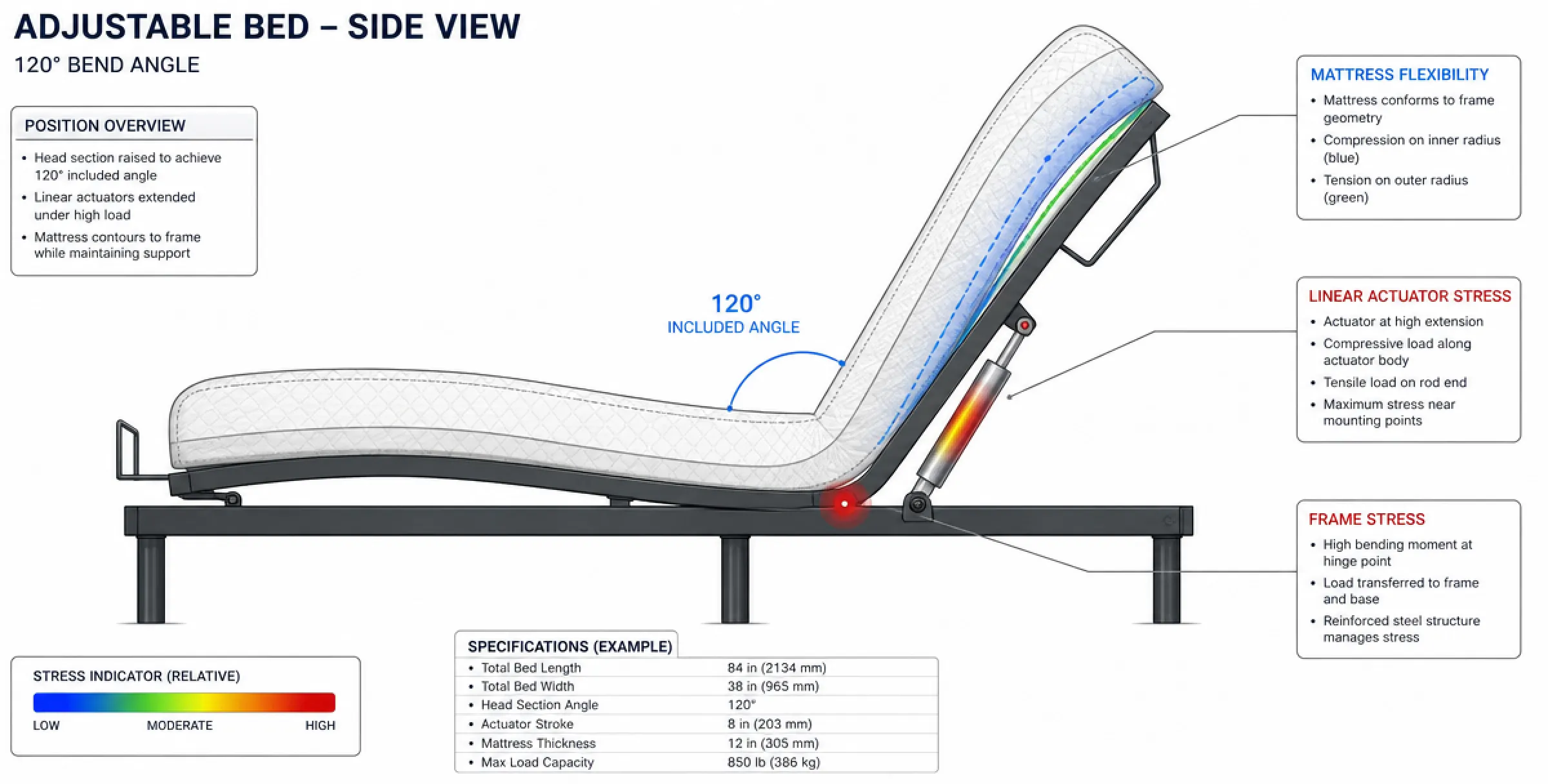
When an adjustable bed moves into the zero gravity or reading position, the platform bends at highly specific angles, typically around 120 degrees at the hip pivot point. A standard mattress is historically designed to sit completely flat on a static wooden foundation or box spring. When forced to bend, the internal components of an incompatible mattress will resist the kinematic motion.
This resistance forces the linear actuators beneath the steel deck to push against both the physical weight of the sleeper and the structural rigidity of the mattress itself. Over time, this dual resistance forces the motors to draw excessive electrical amperage. This triggers thermal overload protection, strains the internal nylon gears, and eventually burns out the control box. To prevent this mechanical degradation, retailers must curate an inventory of compliant mattresses specifically engineered to flex with the steel chassis without sustaining permanent structural deformation.
Analyzing Mattress Material Compatibility
The core material of the mattress dictates its functional compatibility with a motorized bed frame. Sourcing managers must evaluate the internal construction of their mattress catalog before merchandising them as a unified sleep system on the showroom floor.
Memory Foam and Pure Latex Constructions
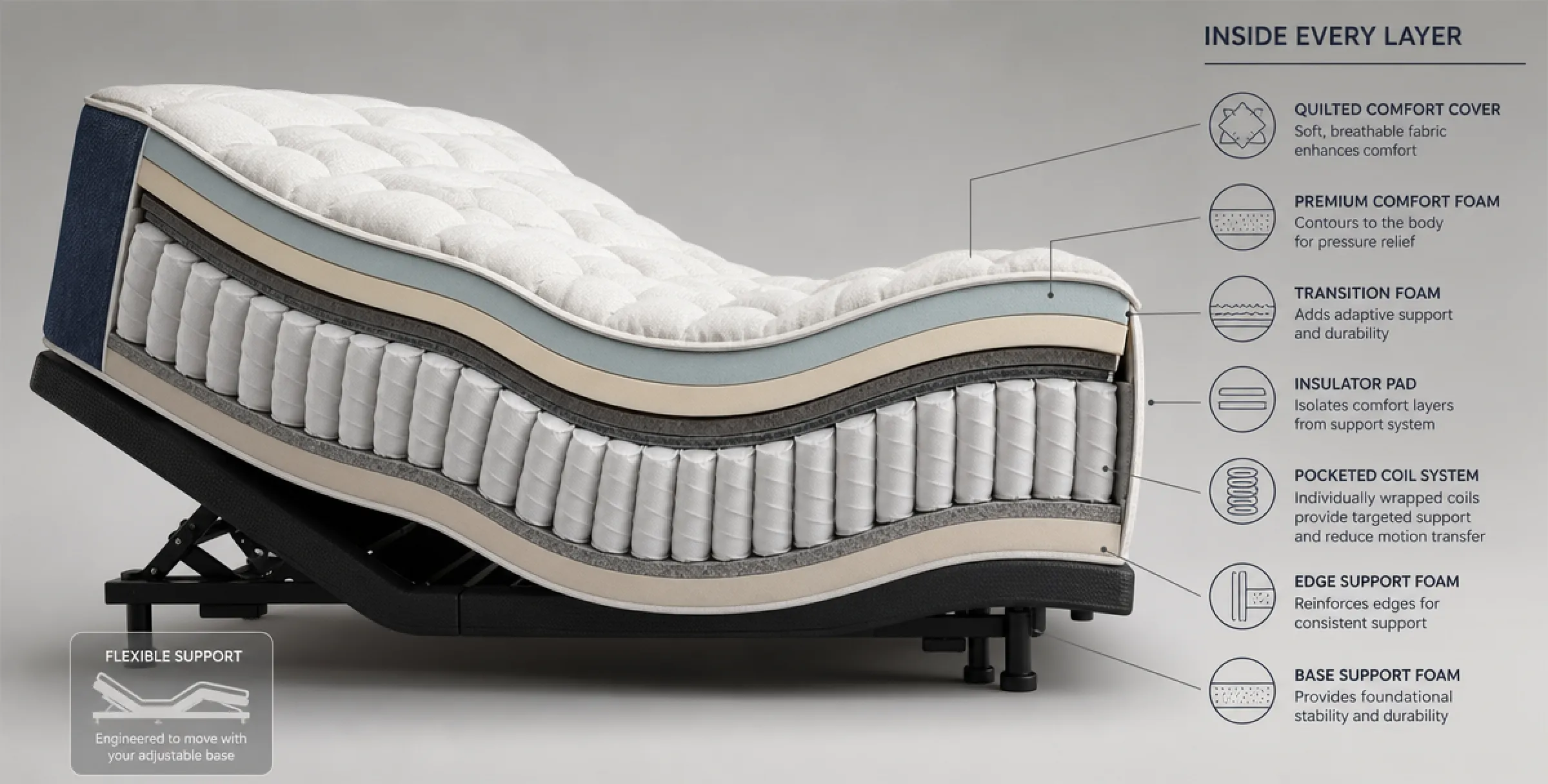
High-density memory foam and pure latex are the optimal materials for dynamic articulation. These cellular structures possess high elasticity, allowing them to bend seamlessly with the articulated steel deck and immediately return to their flat state when the motors retract to the level position. They do not place excess opposing force on the bed's mechanical linkages. When curating the adjustable bed frames category for a retail environment, bundling them heavily with memory foam ensures the highest degree of mechanical reliability and consumer comfort.
Pocketed Coil Hybrid Systems
Hybrid mattresses combine a foam comfort layer with an underlying spring support system. It is vital to distinguish between spring types. Traditional continuous-coil innersprings are entirely incompatible with motorized beds. Forcing a continuous wire network to bend will snap the border wires, permanently ruin the mattress core, and exert massive opposing force against the lifting motors.
Conversely, modern pocketed coil systems feature individual steel springs wrapped in isolated fabric casings. Because the coils are not wired directly to one another, they can move independently. Retailers can safely pair pocketed coil hybrids with a motorized base, provided the mattress manufacturer explicitly rates that specific SKU for articulation testing.
Thickness Profiles and Flexibility Tolerances
Material type is only one part of the compatibility equation; overall thickness dictates the thermodynamic and kinematic performance of the sleep system. Retail sales associates often make the error of upselling the thickest, most expensive mattress alongside a motorized base, assuming maximum height equals maximum luxury. In the context of adjustable beds, this is a severe engineering error.
If an adjustable mattress exceeds 14 inches in thickness, its sheer volume prevents it from bending tightly at the pivot joints. Instead of contouring perfectly to the angle of the base, the thick mattress will create a mechanical bridge, hovering several inches above the waist and knee joints of the steel frame. This bridging effect completely negates the ergonomic benefits of the zero gravity position and places extreme localized stress on the lifting arms. For optimal performance, the ideal mattress thickness profile for motorized articulation falls strictly between 10 and 12 inches. This depth provides adequate pressure relief for the sleeper while retaining enough flexibility to hug the panels of the base tightly during motion.
Structuring Bundles for Retail Margin Expansion
The primary retail objective of an adjustable bed program is not merely to sell the hardware, but to secure the mattress sale concurrently. Acquiring a retail customer carries a high Customer Acquisition Cost. Selling the base and mattress together as a unified health solution prevents the consumer from shopping competitors for the mattress, effectively amortizing the marketing cost over a much larger ticket.
The Split King Configuration Strategy
The most lucrative configuration in the sleep industry is the split setup. When a couple has divergent sleep needs or distinct medical conditions, a standard king size adjustable bed restricts them to identical elevation angles, which often leads to sleep disruption for the healthy partner.
By transitioning the customer to a split system, the retailer sells two independent Twin XL bases and two Twin XL mattresses. This strategy effectively doubles the mattress unit volume on a single transaction. Alternatively, sourcing a split head adjustable bed with pillow tilt offers a highly specialized hybrid solution. This base allows the lower half of the bed to remain unified while providing independent upper-body articulation. It requires a proprietary split-head mattress, which locks the consumer into a premium, high-margin proprietary ecosystem.
Target Demographics and Showroom Merchandising
Positioning the product accurately on the showroom floor dictates the conversion rate. For the senior demographic requiring mobility assistance and fall mitigation, retailers should display specialized setups. Demonstrating how a thinner, highly flexible foam mattress operates perfectly on adjustable beds for seniors highlights the safety and ease of use, focusing on how the system lowers the risk of falls and provides caregiver accessibility without looking like hospital equipment.
Conversely, for younger demographics interested in smart home tech integration, presenting a fully upholstered adjustable bed base paired with a cooling hybrid mattress creates a compelling lifestyle vignette. This targets the growing segment of consumers who use the bedroom as a multifunctional space for remote work, reading, and media consumption, validating the purchase as a lifestyle upgrade rather than a medical necessity.
Minimizing Warranty Claims Through Consumer Education
Post-sale service calls rapidly erode retail profit margins. Dispatching a technician to diagnose a broken bed or shipping a heavy replacement chassis destroys the profitability of the initial sale. Educating the consumer at the point of sale is the most effective preventative measure.
Retailers must strictly enforce weight limit guidelines during the sales process. Every linear actuator is rated for a specific lifting capacity. The static and dynamic weight limits listed by the OEM account for the combined weight of the human sleepers and the mattress. Dense, 14-inch pure latex mattresses are incredibly heavy. If a retail associate pairs a massive latex mattress with an entry-level, low-torque motor system, the actuators will eventually fail under the sustained load. Sourcing managers must ensure their sales teams calculate the combined weight accurately to ensure it falls well below the maximum operating capacity of the chosen motorized foundation.
Logistics and Supply Chain Considerations
For B2B buyers operating e-commerce drop-shipping models, mattress compatibility also impacts freight logistics. A highly flexible 10-inch memory foam mattress can be roll-packed and shipped via standard parcel networks like FedEx or UPS. When paired with a folding, cheap adjustable bed that meets ISTA 3A packaging standards, the entire sleep system can be delivered directly to the consumer's door without relying on expensive Less Than Truckload freight networks or white-glove delivery services. This streamlined logistical approach protects profit margins for volume-driven online retailers.
Conclusion for B2B Sourcing Managers
Selling motorized sleep systems without a strict mattress compatibility protocol is a commercial liability. To maximize the average order value and protect the supply chain from excessive warranty returns, B2B buyers must procure the right hardware and establish rigid bundling rules for their retail floors. By matching high-torque actuator bases with flexible, optimally thick foam or pocketed coil mattresses, distributors can confidently market the best adjustable bed and mattress combo. This strategic alignment ensures long-term mechanical reliability, eliminates bridging effects, and delivers total consumer satisfaction in an increasingly competitive market.
Frequently Asked Questions (FAQ)
What type of mattress is best for an adjustable bed?
Memory foam, pure latex, and pocketed coil hybrid mattresses are the most compatible materials for motorized bases. These cellular and independent spring structures possess the necessary elasticity to bend with the articulating steel panels of the base without suffering permanent structural damage or exerting opposing force on the motors.
Can I use a regular innerspring mattress on an adjustable bed?
No. Traditional continuous-coil innerspring mattresses feature rigid steel border wires that connect the entire spring network. Forcing an adjustable base to bend these thick wires will break the mattress springs and exert extreme physical resistance against the bed's lifting motors, rapidly leading to mechanical failure.
How thick should a mattress be for an adjustable base?
The optimal thickness profile for motorized articulation is between 10 and 12 inches. If a mattress is thicker than 14 inches, its mass makes it too rigid to bend smoothly at the pivot points. This causes the mattress to bridge or hover over the base, negating the ergonomic benefits of the zero gravity position.
Do adjustable beds ruin mattresses over time?
As long as the mattress is explicitly engineered and rated for articulation by the manufacturer, an adjustable bed will not ruin it. High-quality foam and pocketed coil mattresses are rigorously tested to withstand tens of thousands of bending cycles without losing their structural integrity or supportive properties.
What is the weight limit on an adjustable bed base?
Weight limits vary significantly depending on the motor configuration and steel chassis design. Most professional-grade bases support a combined dynamic weight of 750 to 1,000 lbs. It is critical for consumers to remember that this limit includes both the weight of the human sleepers and the physical weight of the mattress itself.
Why do retailers push split king adjustable beds?
A split king configuration pairs two independent Twin XL bases with two Twin XL mattresses. This highly popular setup allows couples with different medical requirements or comfort preferences to adjust their side of the bed independently without disturbing their partner, providing the ultimate customized ergonomic sleep solution.
-

Author
Seemoon
Seemoon is a Senior Product Expert and Sleep Ergonomics Specialist. With extensive experience in the design and manufacturing of adjustable beds and smart sleep solutions, Seemoon is dedicated to sharing authoritative insights on furniture innovation, ergonomic health, and global B2B sourcing trends. All content is grounded in authentic manufacturing expertise to help global buyers make informed decisions.