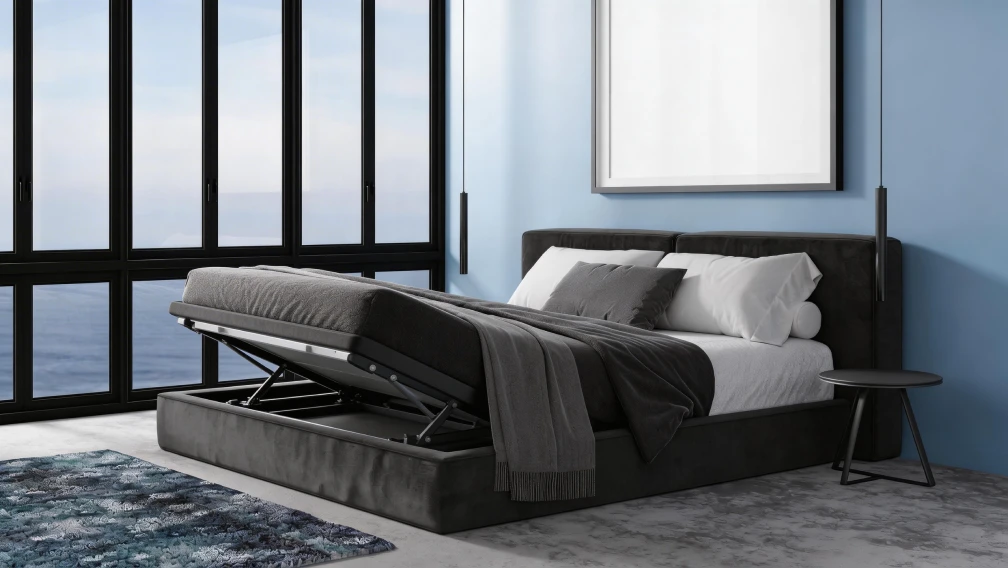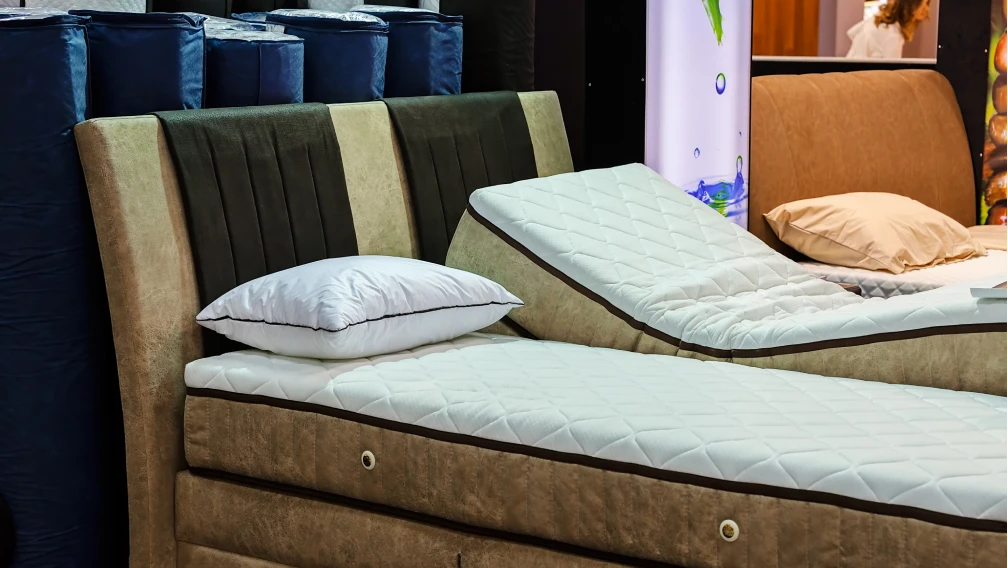

The adjustable bed market is undergoing a profound structural and aesthetic transformation. For decades, motorized sleep systems were strictly categorized as durable medical equipment (DME). They featured exposed steel frames, visible linear actuators, and a clinical design language that clashed with domestic interior decor. Today, consumer expectations have shifted. Buyers demand the ergonomic and health benefits of zero gravity positioning without sacrificing the visual warmth of premium furniture. This shift has driven the rapid rise of the upholstered adjustable bed.
As an original equipment manufacturer specializing in advanced sleep technology, we track these procurement trends closely. Retailers, interior designers, and hospitality procurement managers are aggressively phasing out bare-metal bases in favor of fully upholstered motorized foundations. For B2B buyers, understanding the engineering behind these products, the available fabric technologies, and the retail margin advantages is critical for updating catalog offerings. This guide explores the manufacturing standards, design trends, and supply chain logistics of modern upholstered adjustable beds.
The Evolution from Mechanical Chassis to Aesthetic Furniture
The primary barrier to consumer adoption of adjustable beds has historically been their appearance. Traditional models looked like hospital beds, which alienated younger demographics and design-conscious homeowners. The industry's solution was to engineer a hybrid product: marrying a heavy-duty mechanical steel chassis with the soft, tailored exterior of traditional bedroom furniture.
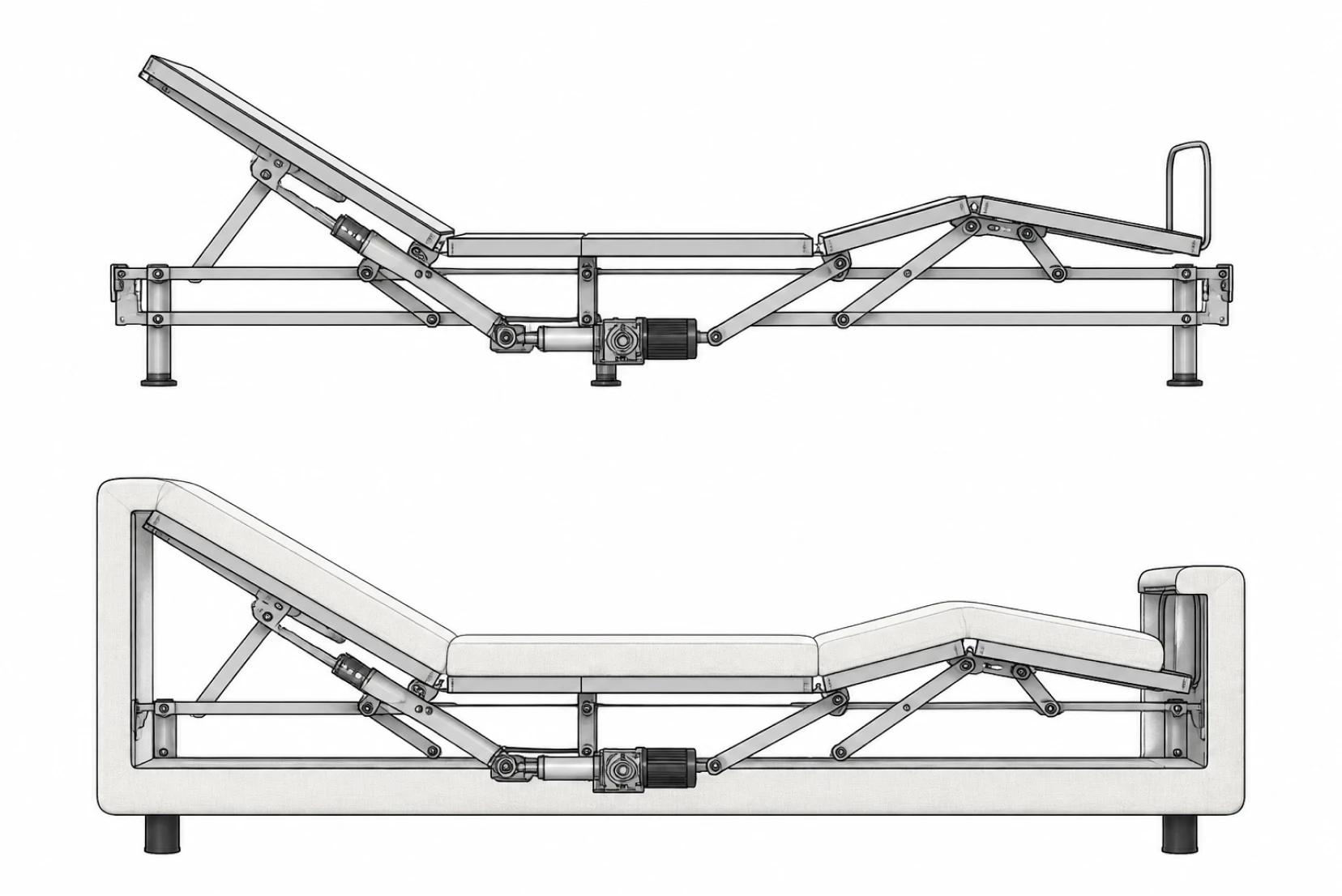
Manufacturers achieve this by wrapping the perimeter of the articulated steel frame in high-density polyurethane foam and encasing it in upholstery-grade fabric. The result is a sleep system that completely conceals the internal lifting mechanisms, hinges, and retention bars. When in the flat position, the bed appears indistinguishable from a high-end static foundation. By procuring an adjustable bed with upholstered outer frame, furniture retailers can bridge the gap between wellness devices and luxury bedroom decor, significantly expanding their addressable market.
Core Design Trends in Upholstered Motorized Bases
Modern bedroom design emphasizes minimalism, texture, and visual cohesion. Upholstered adjustable beds align with these principles through specific design configurations that appeal to contemporary consumer tastes.
Fabric Selection and Performance Materials
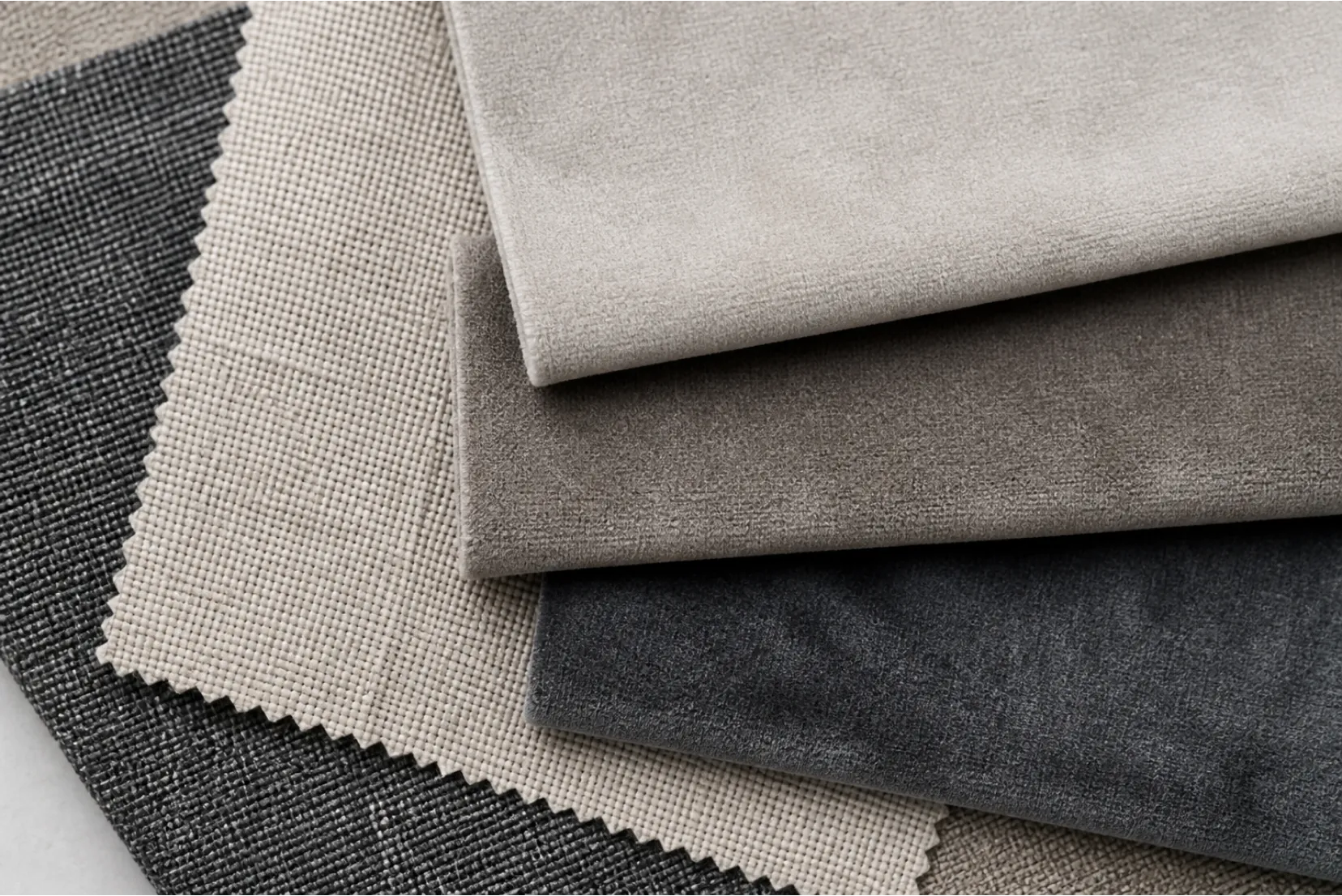
The choice of upholstery dictates the product's perceived value and longevity. In our manufacturing process, we utilize textiles that pass rigorous abrasion testing (Martindale or Wyzenbeek rub counts) to ensure they withstand the mechanical friction generated by the bed's movement. Current retail trends heavily favor neutral color palettes—such as charcoal, heather gray, oatmeal, and navy—which seamlessly integrate with diverse bedding styles.
The most requested materials from bulk buyers include linen blends, which offer a breathable, organic texture, and performance velvet, which provides a luxurious sheen while resisting stains. Additionally, manufacturers must ensure all fabrics and underlying foams comply with regional fire safety regulations, such as CFR 1633 in the United States or BS 7177 in the United Kingdom, before they are approved for wholesale distribution.
Integrated Headboards and Modular Profiles
Consumers increasingly prefer all-in-one bedroom solutions rather than purchasing bases and headboards separately. Advanced upholstered adjustable beds feature modular bracket systems that allow for seamless headboard integration. Combining a motorized base with a curved top upholstered fabric headboard softens the angular geometry of the room and provides padded acoustic insulation.
For a more classic aesthetic, buyers often gravitate toward designs similar to a standard upholstered platform bed frame with tufted headboard. Integrating these design elements directly onto the motorized chassis eliminates the need for wall-mounting and ensures the headboard remains stable even as the mattress articulates through various ergonomic angles.
Concealed Hardware and the Zero Clearance Standard
A major engineering hurdle in designing upholstered adjustable beds is managing the clearance of the moving parts. When a bed has a thick, upholstered side rail, the mechanical arms that lift the head and foot sections must clear the fabric without tearing it or causing friction.
Premium manufacturers employ zero clearance adjustable base architecture. This means the actuators and metal linkages are engineered to operate strictly within the internal dimensions of the upholstered perimeter. The moving components never drop below the base line of the frame. This allows the upholstered adjustable base to sit flat on a solid floor, on a pedestal, or inside a customer's pre-existing decorative bed surround, offering maximum installation flexibility.
Demographic Shifts: Selling to the Modern Consumer
The demographic purchasing adjustable beds has skewed significantly younger over the last five years. Millennials and Gen Z consumers view the bedroom not just as a place for sleep, but as a multifunctional living space. They use their beds for remote work, streaming media, and reading.
This younger cohort is highly motivated by lifestyle enhancements rather than solely medical necessity. They actively seek an adjustable bed for tv reading that features USB-C charging ports, under-bed LED lighting, and Bluetooth application controls. However, this demographic is also highly sensitive to interior design aesthetics. They will flatly reject an exposed metal frame. Offering a fully upholstered, tech-enabled base is the only reliable strategy to capture this growing market segment.
B2B Procurement Advantages for Furniture Retailers
For distributors and brick-and-mortar retailers, transitioning inventory to upholstered adjustable models offers substantial commercial advantages, from elevated profit margins to streamlined logistics.
Elevating Perceived Value and Retail Margins
Exposed metal bases are frequently subjected to intense price competition, often treated as commoditized hardware by consumers comparing specs online. Upholstery entirely changes the product category. By adding tailored fabrics, foam padding, and detailed stitching, the base is elevated to a piece of premium furniture.
This aesthetic upgrade significantly increases the product's perceived value on the showroom floor. Retailers can command higher price points and realize wider profit margins on upholstered models compared to their bare-metal counterparts. When buyers review a supplier's adjustable bed product list, prioritizing upholstered SKUs is a direct strategy for increasing the average order value (AOV) of a sleep system bundle.
Modular Packaging and Drop-Ship Logistics
Historically, upholstered furniture was notoriously expensive to ship due to its fixed, bulky dimensions, requiring costly Less Than Truckload (LTL) freight. Modern engineering has solved this issue through modular design. Our upholstered adjustable beds are constructed with folding steel chassis and segmented upholstery panels.
The entire base folds at a central hinge, and the upholstered side rails are often designed to be quickly assembled on-site using tool-free slot-and-pin mechanisms. This allows a fully upholstered king-size base to be packed into a compact, ISTA 3A certified carton. Distributors can ship these units via standard parcel networks (like UPS or FedEx) directly to the consumer's door, bypassing expensive white-glove delivery services and massively reducing supply chain overhead.
Selecting the Right Mattress for Upholstered Bases
An upholstered adjustable base requires a compatible mattress to function correctly. Because the base itself features padded, fabric-covered edges, the mattress must contour perfectly to the articulating panels to maintain a clean visual line. Rigid mattresses that "bridge" or hover over the fold points will ruin the aesthetic appeal and strain the lifting motors.
Retailers should strictly bundle these bases with high-density memory foam, natural latex, or pocketed coil hybrid mattresses. The ideal thickness profile remains between 10 and 12 inches. This depth provides adequate pressure relief for the sleeper while retaining enough flexibility to conform tightly to the upholstered deck when moving into the zero gravity or reading positions.
Conclusion for Sourcing Managers
The integration of upholstery into motorized sleep systems represents the permanent future of the adjustable bed industry. Consumers refuse to compromise between ergonomic functionality and beautiful bedroom design. For B2B sourcing managers, updating product lines to include modular, drop-shippable upholstered bases is essential. By partnering with a capable OEM manufacturer, brands can customize fabric profiles, integrate smart technologies, and secure high-margin products that resonate with the modern, design-conscious consumer. Contact our commercial sales team today to explore custom procurement options.
Frequently Asked Questions (FAQ)
Why are upholstered adjustable beds becoming so popular in modern design?
Consumers want the health and ergonomic benefits of adjustable beds, such as zero gravity positioning and acid reflux relief, without the clinical, mechanical appearance of traditional metal bases. Upholstered beds conceal the motors and steel frames behind premium fabrics, allowing the sleep system to blend seamlessly with luxury residential bedroom decor.
Can an upholstered adjustable bed fit inside an existing bed frame?
Yes. Many modern upholstered adjustable bases are engineered with a "Zero Clearance" design. This means all the moving parts operate above the bottom line of the base. Consequently, the upholstered base can be placed directly inside an existing decorative wooden or metal bed surround, resting on the slats or the floor without interference.
What fabrics are best for upholstered motorized bases?
High-performance fabrics that can withstand mechanical friction are ideal. Linen blends, premium polyester weaves, and performance velvets are the most popular choices. These materials offer high abrasion resistance (measured by rub counts) and are often treated for stain resistance, ensuring the base maintains its aesthetic appeal over years of articulation.
Are upholstered adjustable beds difficult to assemble and ship?
No. Despite their furniture-like appearance, modern upholstered bases are designed for drop-shipping. They feature a folding steel chassis and modular upholstered panels that can be assembled without tools in minutes. This compact packaging allows them to be shipped via standard parcel carriers like FedEx or UPS, eliminating expensive freight costs.
How do retailers attach a headboard to an upholstered adjustable base?
Most upholstered adjustable bases come with compatible headboard brackets. These heavy-duty steel brackets bolt directly to the stationary part of the frame near the head of the bed. This allows the user to attach a matching upholstered headboard that remains perfectly still and stable while the mattress and the articulated deck move up and down.
How does the upholstery affect the bed's zero clearance capability?
The upholstery is integrated into the stationary perimeter of the base, while the moving deck articulates inside this perimeter. Professional manufacturers engineer the tolerances so that the moving platform clears the upholstered side rails smoothly. The fabric covering does not hinder the zero clearance function, allowing the bed to sit flat on a platform foundation.
-

Author
Seemoon
Seemoon is a Senior Product Expert and Sleep Ergonomics Specialist. With extensive experience in the design and manufacturing of adjustable beds and smart sleep solutions, Seemoon is dedicated to sharing authoritative insights on furniture innovation, ergonomic health, and global B2B sourcing trends. All content is grounded in authentic manufacturing expertise to help global buyers make informed decisions.