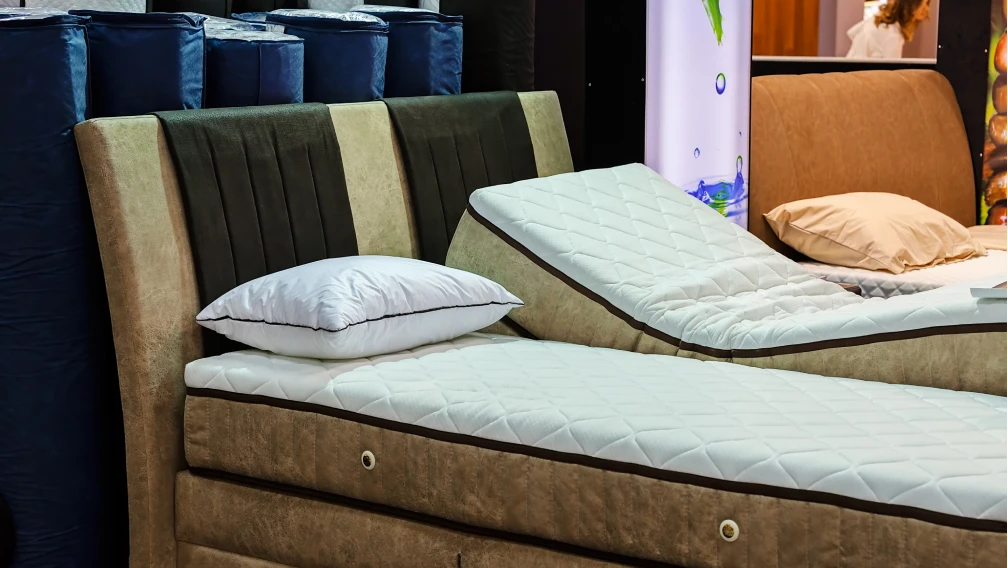

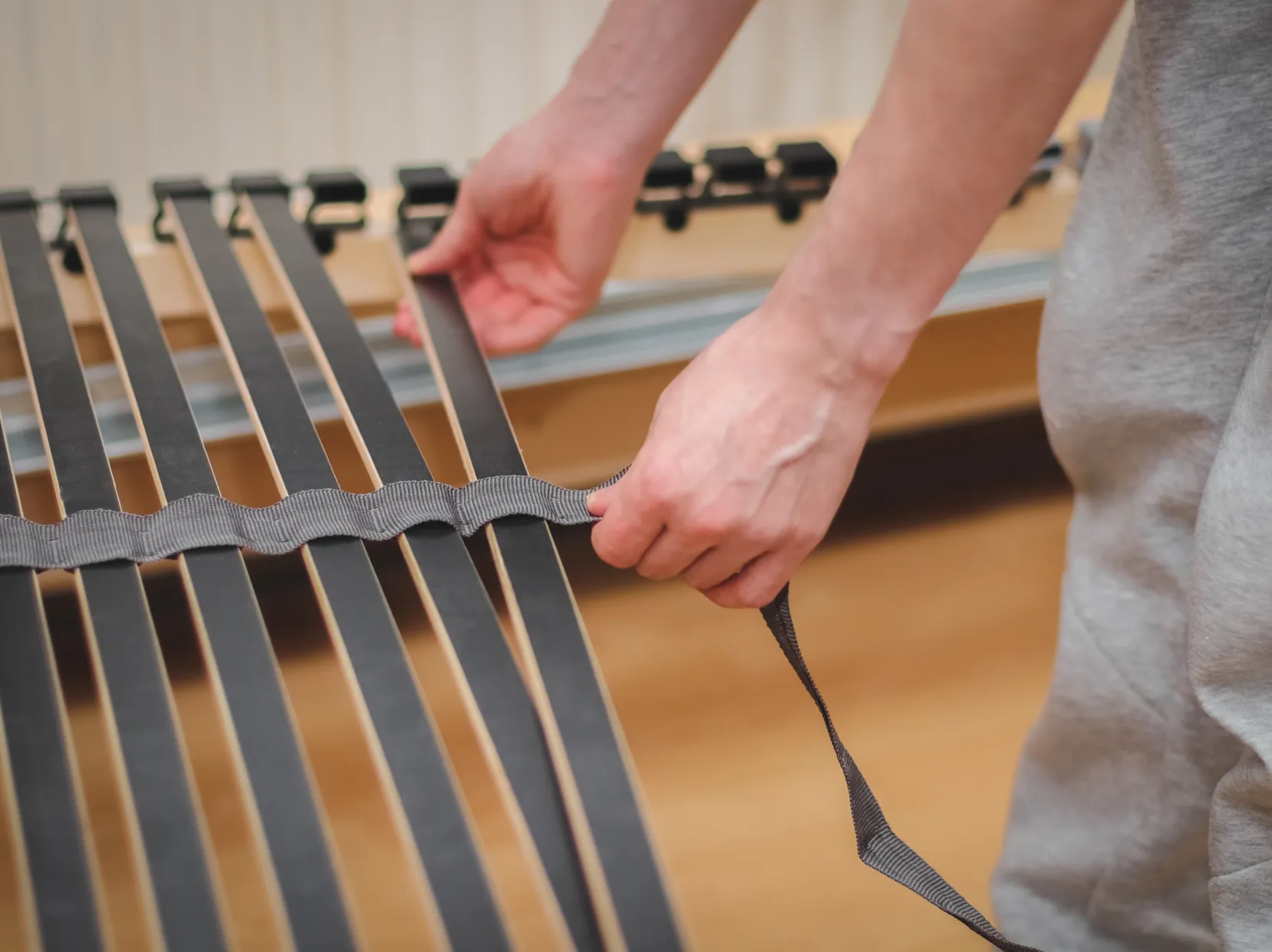
An adjustable bed that has stopped moving is almost always a power, remote, or obstruction problem, and the fix usually takes a few minutes. A dead motor is rare. This guide works through the common faults in diagnostic order, cheapest checks first, flags the warning signs that mean stop and call a technician, and covers the maintenance that keeps a base running for 8 to 15 years. If you sell or distribute these beds, it also works as a returns-reduction tool, since a large share of “defective” units are simple setup faults a buyer can clear at home.
1. Start here: the 60-second check
Before anything else, run these four checks in order. They resolve most adjustable bed faults and cost nothing.
1. Power: confirm the outlet works by plugging in a lamp or phone charger, and check that the cord is seated in the control box under the bed.
2. Remote: swap in fresh batteries and press a button to see the indicator light respond.
3. Obstruction: look under the base for bedding, cords, or a pet toy caught in the mechanism.
4. Reset: unplug the base for 30 seconds, plug it back in, and test again.
Safety: Stop testing and call service if you smell burning, see smoke or sparks, notice frayed or exposed wiring, or hear loud grinding. Those point to an electrical or mechanical hazard.
2. The bed won’t move at all
A base that ignores every button is almost always not getting power. Work through these before you suspect the motor.
• Test the outlet with a lamp or charger. If it is on a wall switch, make sure the switch is on.
• Check the control box under the bed for a green LED. No light usually means the power cord is loose at the box or the wall.
• Skip extension cords and shared outlets. An adjustable base should run on its own grounded outlet; sharing a circuit can trip the breaker.
• Reset the electronics. Unplug for 30 seconds to a minute, then plug back in. Some models reset when you press Flat or Seat Down three times after replugging — check the manual.
• Read the lights. A blinking light on the remote usually means the base needs a reset. A blinking light on the power supply points to a loose connection or a power interruption.
Many bases ship with 9V backup batteries that only run the bed during a power outage to drop it flat. Left in place, drained backup batteries can stop the bed from working on mains power. Remove them unless the power is actually out.
3. The remote isn’t responding
If the base has power but ignores the remote, the remote is the usual culprit. Run these checks:
• Replace the batteries first. Weak batteries often let a few functions work while others fail.
• Re-pair the remote to the base using the manual’s pairing steps. RF and Bluetooth remotes lose their link after a power cut or battery change.
• Move nearby electronics away. Another wireless device can interfere with the signal.
• Check the child lock. Many remotes lock when Head Up and Head Down are held together for about six seconds; repeat the hold to unlock.
• Test the app, if the base has one. If the bed responds in the app but not the remote, the remote is faulty or unpaired.
4. Only part of the bed moves, or one side of a split
When the head works but the foot does not, or one half of a split king sits still, the cause is usually an obstruction, a loose cable, or a single failed motor.
• Clear the mechanism. Check that nothing is jammed under the section that will not move.
• Check the wiring to that motor. A cable can work loose during delivery or assembly.
• Confirm a split is actually faulty. The two sides move independently by design. If they should move together, flatten both, unplug both for 30 seconds, reconnect, and retest. A loose sync cable between the bases is a common cause of sync problems on a split king vs king adjustable bed setup; understanding these hardware nuances helps distributors choose the right configuration for their inventory.
• Isolate a dead motor. If one motor is out while the rest works, it can usually be replaced on its own. Keep the model and serial number handy for the spare.
Stuck in a raised position during an outage? Most bases can be lowered manually, but the method is model-specific and lives in the manual — often a release on the motor or the backup battery. Do not force a section down by hand.
5. Noises, creaks, and uneven movement
A soft motor hum is normal. Grinding or scraping needs attention.
• Tighten the hardware. Creaks and clicks usually come from bolts that loosened with use. Go around the frame with a wrench.
• Lubricate the moving joints. Use a lubricant the manufacturer approves; the wrong type can attract dust or damage finishes.
• Level the base. On an uneven floor a frame will rock and creak — adjust the legs or add shims until it sits flat.
• Spread the load. Uneven movement can come from weight sitting mostly on one side, or from a section catching on bedding.
• Treat grinding as a worn part. A loud motor or a scraping sound means stop using that function and arrange service or a replacement motor.
6. When to stop and call a technician
Some symptoms are past safe DIY territory. Stop using the bed and contact support if you see any of these:
• A burning smell, smoke, or sparks from the motor or control box.
• Frayed, pinched, or exposed wiring.
• Flashing error lights that a reset does not clear.
• Persistent grinding or a motor that runs hot.
• Visible bending or cracking in the frame or welds.
These are electrical or structural problems. Forcing them risks injury and voids most warranties. Have the model and serial number ready when you call.
7. Repair or replace?
Knowing which faults are free fixes, which need a part, and which mean a new base saves money.
| Situation | Action | Typical cost |
| Power cycle, re-pair, unlock child lock, clear obstruction | Fix it yourself | Free |
| Dead remote or worn power supply | Replace that part | Low |
| One failed motor, rest of base sound | Replace the motor | Moderate |
| Recurring motor or control failures after part swaps | Replace the base | Full unit |
| Bent frame or cracked welds | Replace the base | Full unit |
| Parts no longer made for the model | Replace the base | Full unit |
Most adjustable bases are modular, so a single remote, power supply, or motor can be swapped without scrapping the unit, which is far cheaper than a new base. When you buy, confirm the maker stocks spares for the model and market. That one detail decides how repairable the bed will be in year five.
8. Maintenance that extends lifespan
An adjustable base lasts 8 to 15 years, and its parts wear at different rates.
| Component | Typical lifespan | Notes |
| Steel frame | 15–20+ years | Most durable; fails mainly from overloading or corrosion |
| Motors and electronics | ~10 years | Most failure-prone; usually decides replacement |
| Remote and massage motors | Sooner than the frame | Easy and low-cost to replace |
| Mattress on the base | 7–10 years | Slightly shorter than on a flat foundation due to flexing |
Four habits do most of the work to extend an adjustable base’s life: return it to flat when you are not using it, so the motors are not held under tension and the mattress is not stuck bent; stay within the combined weight limit for sleepers plus mattress; plug it into a surge protector, since power surges are the main threat to the electronics; and run a quick service every few months — vacuum dust from the frame and motor area, tighten loose bolts, lubricate the joints, and check the wiring and power cord for wear.
• Rotate the mattress head to foot about once a month, so the seated position does not leave a permanent dip.
• Use a mattress protector and keep the room ventilated; trapped moisture corrodes steel over time.
• Protect the cord. Keep the base from pressing the power plug against the wall. On an premium electric adjustable bed frame with wall-hugger technology, the head slides back as it raises, which helps keep the cord clear from pinches.
9. Sourcing beds that are easier to support
For retailers and distributors, return rates track build quality and after-sales setup more than anything else. The units that generate the fewest tickets share a pattern: remotes paired at the factory, modular motors with stocked spares, a surge protector and a plain-language quick-start guide in the box, and a manual that actually shows the reset and manual-lowering steps.
We build adjustable beds to that standard for distributors, retailers, hotels, and healthcare buyers, offering comprehensive private label adjustable bed OEM manufacturing and spare-parts support for the destination market. Browse the adjustable bed collection or our heavy-duty wholesale metal bed frame catalog, or send us your spec and we will match the motor system, frame, and after-sales kit to keep your returns low.
10. FAQ
Why is my adjustable bed not working?
Usually power or the remote. Test the outlet with a lamp, check the power cord is seated in the control box, replace the remote batteries, and unplug the base for 30 seconds to reset it. Clear anything caught underneath.
How do I reset an adjustable bed?
Unplug it from the wall for 30 seconds to a minute, then plug it back in. Some models also need you to press Flat or Seat Down three times after replugging. Check the manual for your model.
Why won’t my adjustable bed go down?
Check for an obstruction under the base, confirm it has power, and reset it. During a power outage, lower it with the model’s manual-release or backup-battery method from the manual. Do not force a section by hand.
My remote stopped working — what do I check?
Fresh batteries first, then re-pair the remote to the base. Rule out the child lock, which is often Head Up and Head Down held together for six seconds, and move other wireless devices away.
Why does only one side of my split king move?
Split sides move on their own by design. If they should sync, flatten both, unplug both for 30 seconds, reconnect, and retest. A loose sync cable between the two bases is the usual cause.
How long do adjustable beds last?
About 8 to 15 years overall. The steel frame lasts 15 to 20+ years; the motors and electronics, the parts most likely to fail, last around 10. The mattress on top lasts 7 to 10 years.
Can I replace just the motor, or do I need a new bed?
On most bases a single motor, remote, or power supply can be replaced on its own, which is far cheaper than a new unit. Replace the whole base only for recurring failures after swaps, frame damage, or when parts are no longer made.
How do I stop my adjustable bed from squeaking?
Tighten the frame bolts, lubricate the moving joints with a manufacturer-approved lubricant, and level the base on the floor. Grinding rather than a creak means worn parts and needs service.
-

Author
Seemoon
Seemoon is a Senior Product Expert and Sleep Ergonomics Specialist. With extensive experience in the design and manufacturing of adjustable beds and smart sleep solutions, Seemoon is dedicated to sharing authoritative insights on furniture innovation, ergonomic health, and global B2B sourcing trends. All content is grounded in authentic manufacturing expertise to help global buyers make informed decisions.