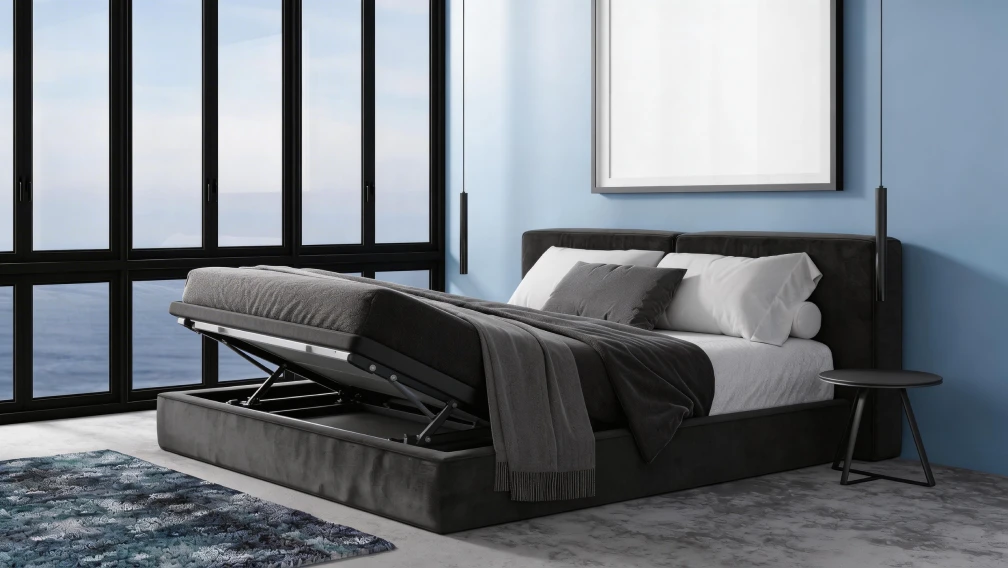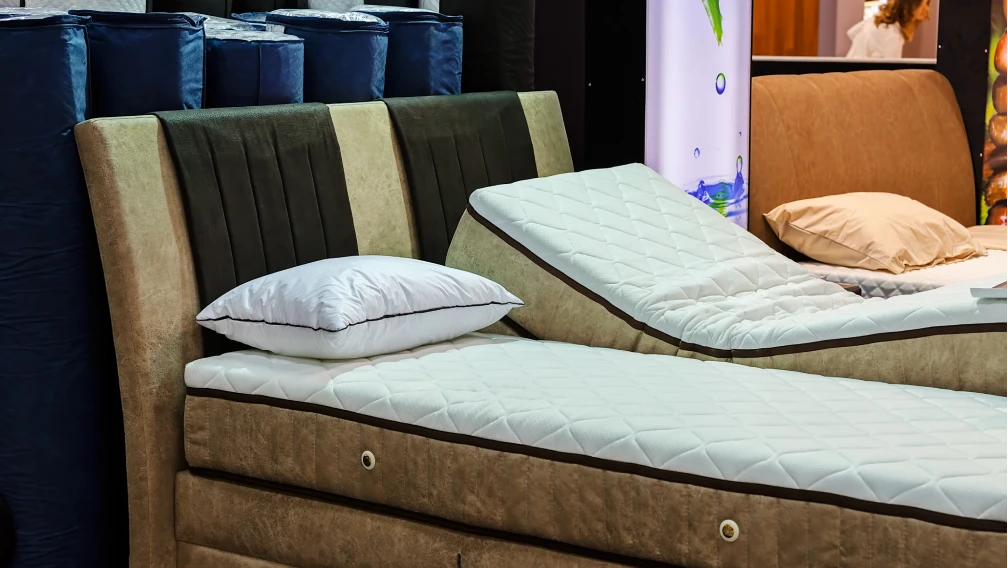

E-commerce and DTC bedding sellers operate under economics that brick-and-mortar retailers never face. The product travels alone through a parcel network instead of a pallet network. A damaged delivery becomes a one-star review, not a quiet warranty claim. And every carton dimension carries a price, because carriers bill by size as much as by weight. These conditions change what buyers should demand from a factory.
This guide is written for Amazon sellers, direct-to-consumer mattress and bedding brands, online furniture retailers, and marketplace operators sourcing adjustable beds, folding beds, and metal bed frames from overseas manufacturers. It covers parcel-ready product engineering, category selection, supplier evaluation, damage control, and inventory models for online channels.
1. Why Online Bed Sales Require a Different Supplier Profile
A retail chain can absorb a supplier who ships good products in mediocre cartons. Store staff inspect deliveries, swap damaged units from backroom stock, and never involve the customer. An online seller has no such buffer. The carton that leaves the factory is the carton that arrives at the customer's door, and its condition shapes the review that follows.
The supplier profile for e-commerce therefore starts with packaging engineering rather than price. Factories that primarily serve container-load retail programs often treat the export carton as protection for the ocean leg only. Online channels need that same carton to survive parcel sorting hubs, conveyor drops, and last-mile delivery vans after it clears customs. These are different test conditions, and the packaging specification must reflect both.
The second difference is feedback speed. Retail programs surface product problems over quarters. Online listings surface them over weeks, in public, with photographs. A supplier serving e-commerce accounts must run quality control and corrective action at the speed the channel demands, because a defect batch does not stay a private matter between buyer and factory.
2. Parcel-Shippable Product Engineering: The Non-Negotiables
US parcel carriers price large cartons through a layered system of dimensional weight and surcharges. Understanding the thresholds is the foundation of profitable online bed sales, and the carton design must be engineered around them before tooling starts.
The rules that matter most for bed products, under current UPS and FedEx guidelines:
• Dimensional weight applies to every parcel: length x width x height in inches, divided by 139, billed against actual weight, whichever is greater. Since August 2025 both carriers round each dimension up to the next whole inch before calculating.
• Additional handling surcharges trigger above 48 inches on the longest side, 30 inches on the second side, or 50 lb actual weight. FedEx adds a cubic volume trigger at 10,368 cubic inches from January 2026.
• Large package (UPS) or oversize (FedEx) pricing triggers above 96 inches long, 130 inches length plus girth, 17,280 cubic inches, or 110 lb, with a 90 lb minimum billable weight. At this tier the freight cost of a single carton can approach the wholesale value of the product inside it.
These thresholds define the design targets. A queen adjustable base engineered for online sale ships in a split-fold carton around 63 x 43 x 8 inches, which stays under the 96-inch and 130-inch limits but carries weight-based surcharges. Splitting the order into two lighter cartons, one for the deck and one for motors and hardware, sometimes costs less in total parcel fees than one heavy carton, and it reduces damage claims because each piece stays within manual handling limits. We model both configurations for e-commerce accounts during quotation.
For static products the engineering is simpler. Our flat-pack metal bed frames and tri-fold foundations compress into cartons under 48 inches on the longest side, which avoids dimension surcharges entirely. At the quotation stage we provide the carton dimensions, actual weight, and dimensional weight for every SKU, so the landed parcel cost can be calculated per unit before the listing goes live.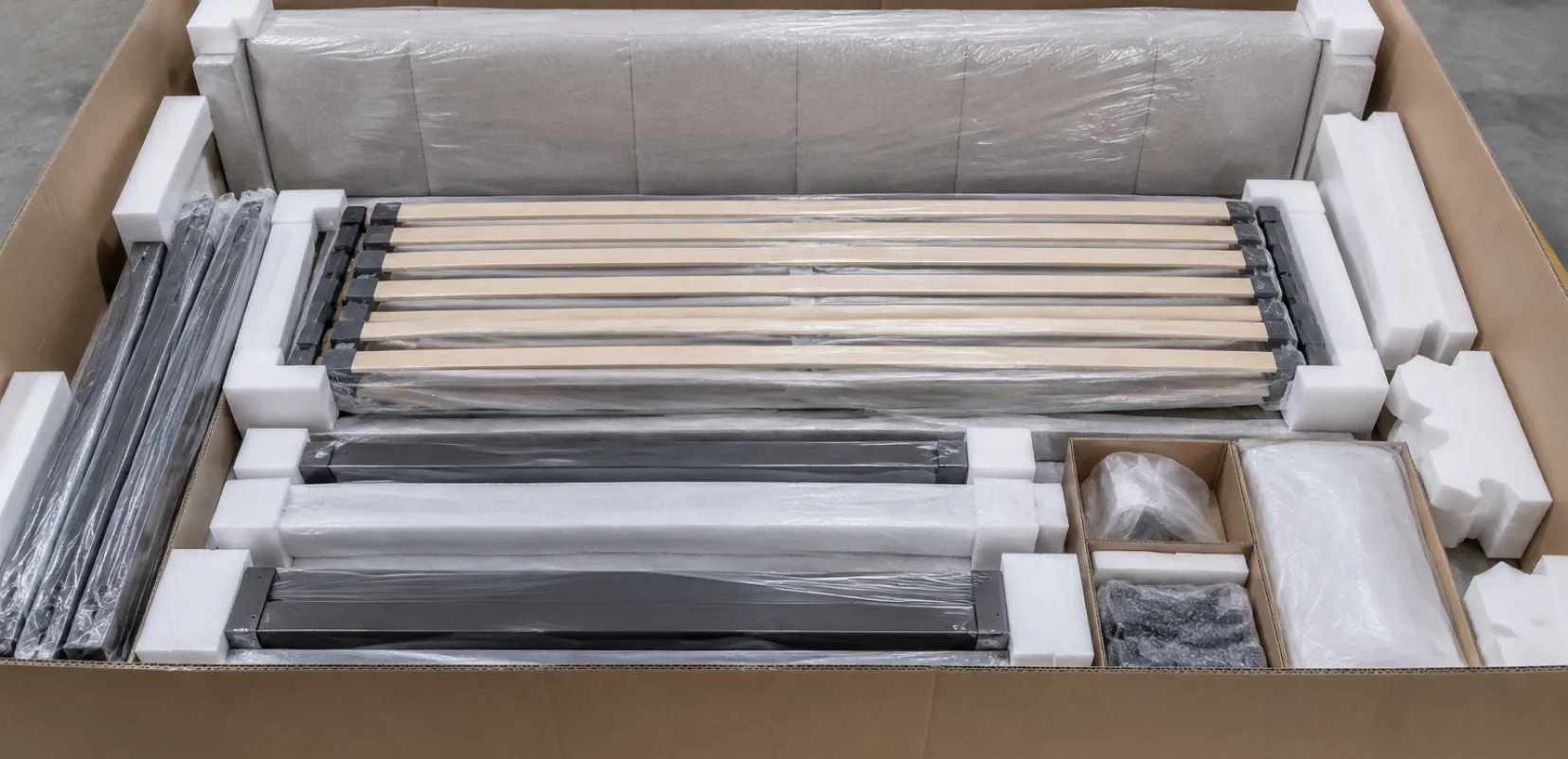
3. Product Categories That Fit Online Channels
Not every bed category suits parcel delivery. The table below summarizes how the main Seemoon product lines map to online channel requirements.
| Product Category | Typical Export Carton | Parcel Surcharge Exposure | Online Channel Fit |
| Folding guest bed with mattress | ≈0.25 CBM, 22-28 kg | Weight surcharge only | Strong: high review volume, gift and guest-room demand |
| Metal platform bed frame, flat pack | ≈0.10 CBM, 14-22 kg | Minimal | Strong: proven Amazon category, price-competitive |
| Zero-clearance adjustable base | Split-fold, ≈0.33 CBM, 60-68 kg | Weight + dimension surcharges | Strong at premium price points; margin absorbs surcharges |
| Upholstered headboard | Nested flat carton | Dimension surcharge on larger sizes | Good as add-on SKU to raise order value |
| Tri-fold box spring foundation | ≈0.15 CBM | Minimal | Good: bundles naturally with mattress-in-box offers |
Folding products deserve special attention from new sellers. A rollaway folding bed with mattress arrives as a complete sleep solution in one carton, which removes the compatibility questions that generate pre-sale inquiries and post-sale complaints. For adjustable bases, the zero-clearance adjustable base configuration ships without legs and sits directly on an existing bed frame or platform, which cuts carton height and broadens the addressable market to customers who already own furniture they like. Category context for frame programs is covered in our guide to metal bed frame types for wholesale buyers.
4. Evaluating Suppliers for an E-Commerce Program
Supplier selection for online channels adds several criteria to the standard factory audit checklist.
Trial order flexibility comes first. Online sellers validate products with data before committing to volume, so the supplier should accept mixed-model first containers that combine two or three SKUs. This lets a seller test a folding bed, a platform frame, and an adjustable base in a single shipment and scale whichever listing performs.
Inspection transparency comes second. Seemoon issues a pre-shipment inspection report with every container, covering quality checks, sample unit tests, loading photographs, and carton counts. For sellers who cannot visit the factory between orders, this report is the operational substitute for presence.
Design protection comes third. Marketplaces reward differentiated listings and punish commoditized ones with price erosion. Seemoon develops product structures protected by utility model patents, which gives partner brands designs that competing sellers cannot legally copy onto the same marketplace. For sellers building a proprietary brand line, our overview of private label adjustable bed OEM manufacturing explains how branding, packaging, and specification control work at the factory level.
Finally, ask about spare parts policy before signing. Online sellers handle warranty claims directly with end customers, and a supplier who ships individual replacement motors, handsets, and control boxes by courier keeps a listing alive. A supplier who only ships parts with the next container forces the seller to refund instead of repair.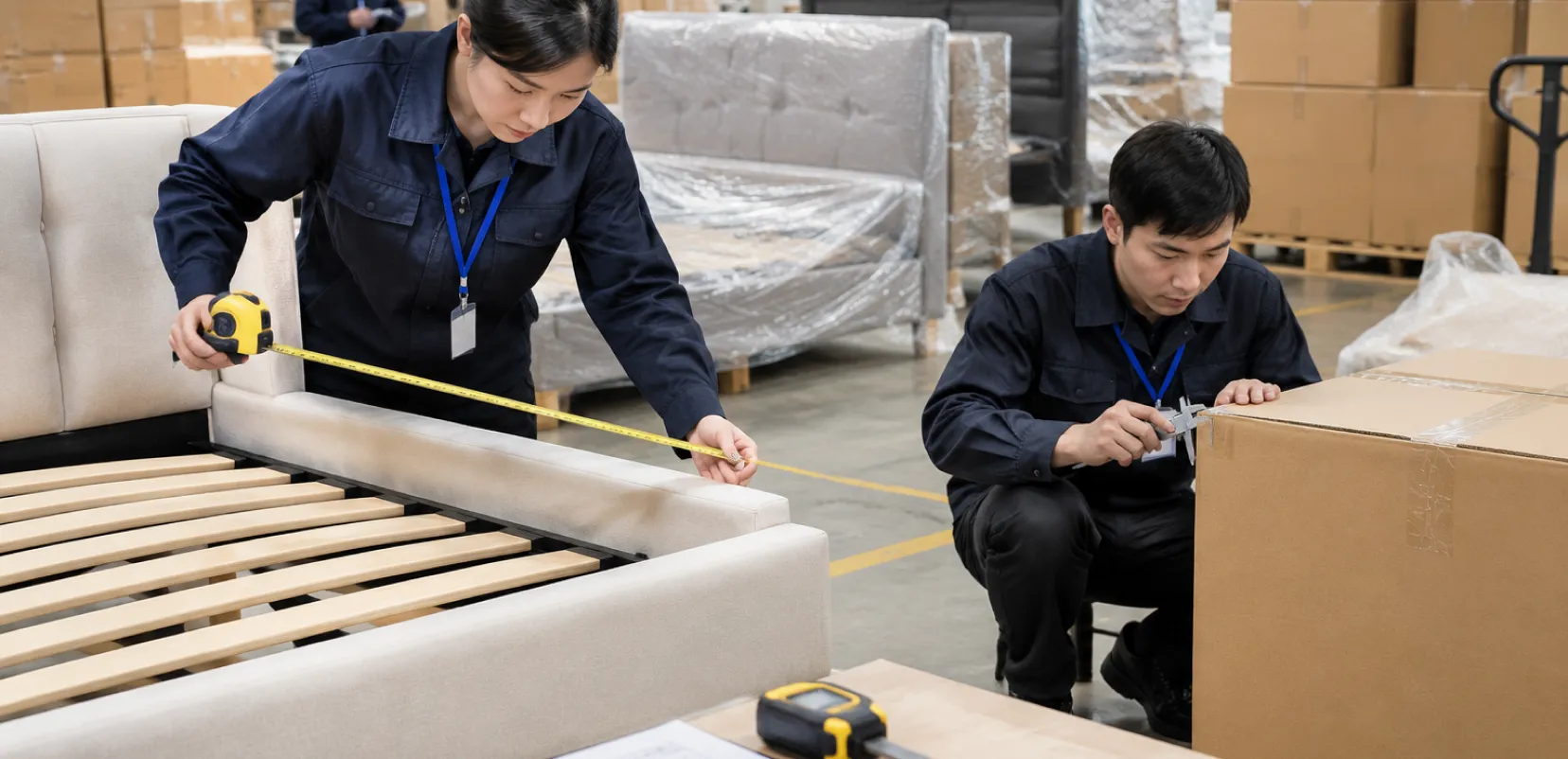
5. Returns, Damage Rates, and Review Management
Large-item categories carry the highest damage and return exposure in online furniture. The damage rate a seller experiences is set at the factory packaging line; the carrier only reveals it. Treat this rate as an explicit number in the supplier conversation, with a target and a remedy, never as an assumption.
Our export packaging for e-commerce accounts uses five-ply double-wall kraft cartons, EPE foam sheets on all six faces, EPS corner blocks, and a PE moisture barrier for ocean transit. Cartons for parcel-channel SKUs can be validated against ISTA-series drop and vibration protocols on request, which simulates the parcel network rather than the container. The added packaging cost typically runs well under one percent of unit price, while a single damage claim on an adjustable base wipes out the margin of several units.
When failures do occur in the field, modular design limits the cost. Seemoon adjustable bases are built so that motors, control boxes, and handsets swap independently without replacing the whole unit, and the same modularity supports low-cost RMA handling for online sellers. The service-side process is detailed in our guide to modular actuator replacement and smart bed RMA. Keeping a small buffer of these components in a US warehouse converts potential refunds into five-minute repairs, which directly protects listing ratings.
6. Inventory Models: Direct Container Versus Overseas Warehouse
E-commerce sellers typically move through three inventory stages as volume grows, and the supplier should support all three.
The first stage is the mixed trial container, ordered factory-direct with full payment against shipment. Cash exposure stays limited to one container, and the seller learns which SKUs deserve scale.
The second stage is repeat full-container orders against stable listings. At this point finished goods inventory arrangements become valuable: Seemoon maintains finished stock for repeat programs with stable SKUs, which allows same-week shipment on urgent restocks instead of waiting through a full production cycle. For established accounts we also hold dedicated raw material inventory, cutting 7 to 15 days from standard lead times.
The third stage is inventory pre-positioning in the destination market. For customers in key markets, Seemoon can arrange stock at overseas warehouses, which removes ocean transit time from the replenishment cycle and supports just-in-time fulfillment for marketplace and DTC channels. This model shifts working capital requirements, so it suits sellers with proven listings and predictable sell-through rather than early-stage testing.
Source E-Commerce-Ready Beds From Seemoon
Seemoon manufactures adjustable beds, folding beds, and metal bed frames for online sellers, DTC brands, and marketplace operators, with production based in Vietnam. Our e-commerce support covers parcel-optimized carton engineering with documented dimensional weights, mixed-model trial containers, pre-shipment inspection reports, patent-protected designs, courier-shipped spare parts, and overseas warehouse pickup in key markets. Our facility holds ISO 9001 and ISO 14001 certification and has passed Walmart and Costco factory audits.
If you are building or scaling an online bed program, send us your target categories and sales channels. Our team will return carton specifications, dimensional weight calculations, and a trial order proposal within 48 hours. Review how we work to see the order process step by step, or contact our export team directly.
Frequently Asked Questions
Can adjustable beds be shipped profitably by parcel carriers?
Yes, at the right price point. A split-fold queen base carton attracts weight and dimension surcharges that typically add USD 40 to 90 per unit depending on zone and carrier agreement. Premium adjustable base price points absorb this cost within normal online margins. The carton must stay under the 96-inch and 130-inch length-plus-girth limits, because large-package pricing above those thresholds can erase the margin entirely.
What carton size should an online bed product stay under?
Design targets for US parcel channels: longest side at or under 48 inches where possible, second side at or under 30 inches, actual weight at or under 50 lb per carton, and length plus girth under 130 inches as an absolute ceiling. Products that cannot meet the first three targets should at least meet the ceiling, since crossing it triggers large-package pricing with a 90 lb minimum billable weight.
What is the minimum first order for an e-commerce seller?
A mixed-model container is the practical starting point. Seemoon accepts trial containers combining two or three SKUs, which lets sellers test folding beds, platform frames, and adjustable bases in one shipment. Smaller LCL trial quantities are possible but carry higher per-unit freight and more handling touches.
How do online sellers handle adjustable bed warranty claims?
The standard model is modular repair: replace the failed component and keep the unit in service. The seller keeps a buffer of handsets, motors, and control boxes in a local warehouse, ships the failed component to the customer, and guides the swap remotely. Seemoon ships individual spare parts by courier between container orders, so the buffer can be restocked without waiting for the next production run.
Does Seemoon support Amazon FBA prep requirements?
Export cartons can be produced to FBA inbound specifications, including carton weight limits, labeling placement, and suffocation warning bags where required. FBA prep details are confirmed per SKU during quotation, because requirements differ between standard and oversize fulfillment classifications.
Why does Vietnam production matter for US online sellers?
US tariffs on Chinese-made furniture add a significant duty burden that Vietnam-origin goods currently avoid under standard trade terms. For adjustable beds and bed frames, the duty difference flows directly into landed cost per unit. Sellers should confirm current tariff schedules with their customs broker, since trade policy changes over time.
Can packaging be customized for our brand?
Yes. E-commerce accounts can specify printed cartons, branded inserts, instruction manuals, and QR-code setup videos as part of the OEM program. Custom packaging requires its own print plates and a one-time setup, so it normally starts from the second or third order once SKU performance is proven.
- Author Seemoon Seemoon is a Senior Product Expert and Sleep Ergonomics Specialist. With extensive experience in the design and manufacturing of adjustable beds and smart sleep solutions, Seemoon is dedicated to sharing authoritative insights on furniture innovation, ergonomic health, and global B2B sourcing trends. All content is grounded in authentic manufacturing expertise to help global buyers make informed decisions.
-

Author
Seemoon
Seemoon is a Senior Product Expert and Sleep Ergonomics Specialist. With extensive experience in the design and manufacturing of adjustable beds and smart sleep solutions, Seemoon is dedicated to sharing authoritative insights on furniture innovation, ergonomic health, and global B2B sourcing trends. All content is grounded in authentic manufacturing expertise to help global buyers make informed decisions.