
In the global B2B supply chain, importing standard residential furniture is relatively straightforward. However, when importing medical beds from China, distributors and healthcare procurement officers enter a complex regulatory landscape. Home care beds blur the line between domestic furniture and medical devices, carrying significant liability. A failure in compliance can result in halted shipments, customs seizures, or severe legal repercussions in the event of patient injury. At Seemoon, we engineer our home care bed product list to meet and exceed global regulatory standards.
This authoritative guide unpacks the critical FDA and CE compliance requirements that every medical furniture importer must verify before placing an order.
Classifying the Product: Furniture or Medical Device?
The first hurdle in regulatory compliance is accurate classification. As detailed in our analysis of the differences between a hospital bed vs home care bed vs adjustable bed, standard adjustable beds are generally classified as consumer electronics or furniture. However, once a bed incorporates features specifically intended to alleviate or compensate for an injury or handicap—such as high-low elevation, side rails, or Trendelenburg positioning—it crosses the threshold into medical device territory.
In the United States, these are typically classified as Class I or Class II medical devices by the FDA. In the European Union, they generally fall under Class I according to the Medical Device Regulation (MDR 2017/745).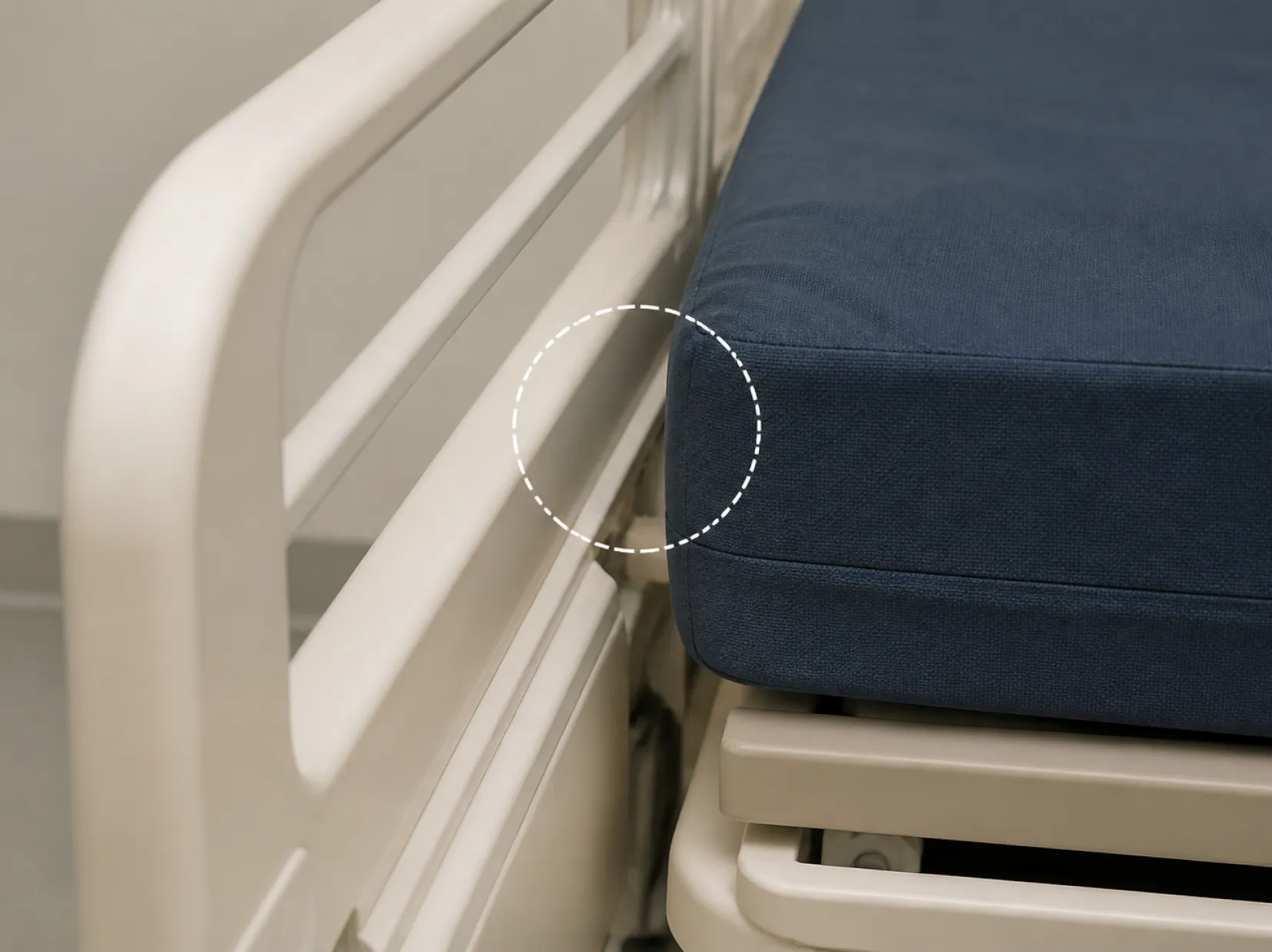
Demystifying FDA Registration for US Importers
For distributors targeting the US market, FDA compliance is non-negotiable. Importers must ensure their manufacturing partner is officially registered with the FDA and operates under Good Manufacturing Practices (GMP) outlined in 21 CFR Part 820 (Quality System Regulation).
Entrapment Hazards and FDA Guidance
One of the FDA's primary focuses regarding hospital and home care beds is the mitigation of entrapment risks—situations where a patient can become caught in the bed rails or mattress gaps. Procurement teams must source models engineered strictly according to the FDA's "Hospital Bed System Dimensional and Assessment Guidance to Reduce Entrapment." Our home care adjustable bed with side rails and headboard features precision-spaced rails that eliminate the seven defined zones of entrapment, ensuring absolute patient safety.
Navigating CE Certification and EU MDR
For the European market, home care bed CE certification is mandatory. The CE mark is not merely a logo; it is a legal declaration that the product complies with the Essential Safety and Performance Requirements (ESPR) of the EU MDR.
IEC 60601-2-52: The Gold Standard for Medical Beds
To achieve CE compliance, electromechanical medical beds must pass rigorous testing under the IEC 60601-2-52 standard (Particular requirements for the basic safety and essential performance of medical beds). This standard tests for electromagnetic compatibility (EMC), electrical safety of the actuators to prevent macro-shock, and structural stability under load. When assessing safety and functional requirements for commercial home care beds, verifiable IEC 60601 compliance is the ultimate benchmark of a reputable supplier.
Supply Chain Diligence: ISO 13485 Manufacturing
Paperwork alone does not guarantee consistent quality. When executing home care bed distributor sourcing, buyers should prioritize factories operating under an ISO 13485 certified Quality Management System (QMS) specifically designed for medical devices. This ensures traceability of raw materials, rigorous stress testing of mechanical joints, and documented post-market surveillance protocols.
Engineering for Clinical Functionality
Compliance also extends to clinical utility. Caregivers require specific functionalities to perform their duties safely. For example, a high-low lift and tilt adjustable bed provides critical Trendelenburg/Reverse Trendelenburg positioning for respiratory and circulatory care, meeting both clinical needs and regulatory safety criteria. For facilities requiring patient transfer capabilities, models like our mobile home care bed with brake wheels and side rails integrate heavy-duty central locking casters that comply with institutional safety codes.
Frequently Asked Questions
Do I need FDA "approval" to import home care beds from China?
Medical beds are typically Class I or Class II devices. Most Class I devices are exempt from Premarket Notification 510(k), meaning they do not require FDA "approval" or "clearance," but the manufacturing facility MUST still be registered with the FDA, and the specific device must be listed in the FDA database before importation.
Are CE-marked home care beds automatically accepted in the UK market?
Following Brexit, the UK implemented the UKCA (UK Conformity Assessed) marking. While there have been transitional periods allowing the CE mark to be recognized, long-term importers to Great Britain must ensure their manufacturer provides Technical Files compliant with the MHRA (Medicines and Healthcare products Regulatory Agency) for UKCA marking.
Who assumes liability if an imported home care bed causes a patient injury?
In most Western jurisdictions, the "Importer of Record" (the domestic company bringing the goods into the US or EU) assumes the liability of the manufacturer if the actual manufacturer is located overseas. This is why partnering with an ISO 13485 certified factory like Seemoon, with verified compliance documentation, is critical to protecting your business from catastrophic legal risk.
-

Author
Seemoon
Seemoon is a Senior Product Expert and Sleep Ergonomics Specialist. With extensive experience in the design and manufacturing of adjustable beds and smart sleep solutions, Seemoon is dedicated to sharing authoritative insights on furniture innovation, ergonomic health, and global B2B sourcing trends. All content is grounded in authentic manufacturing expertise to help global buyers make informed decisions.