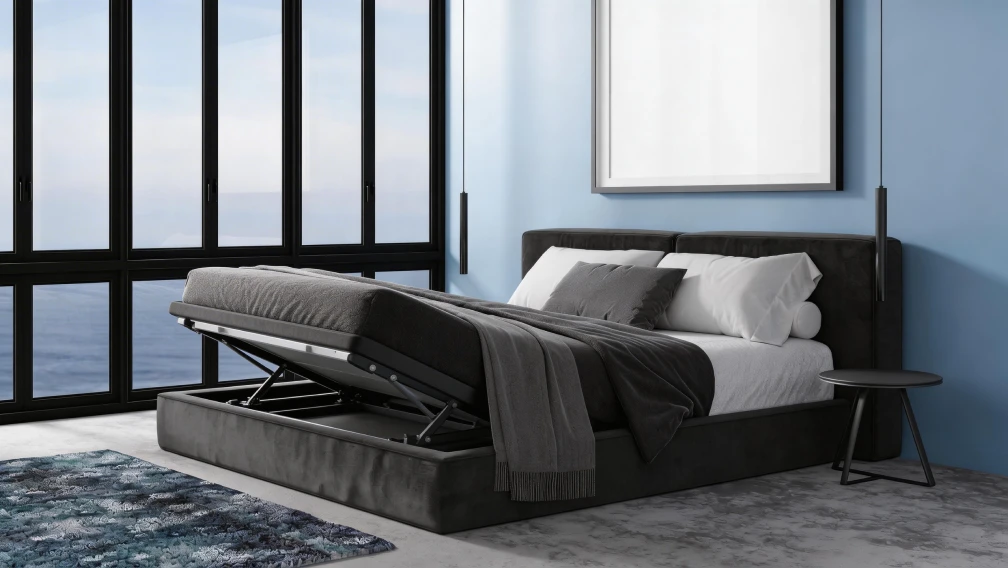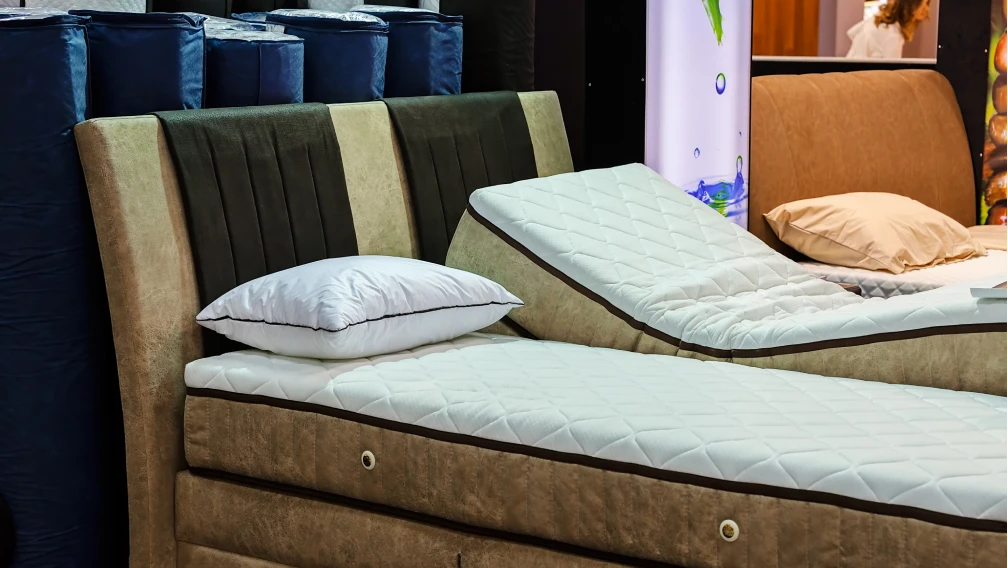

The adjustable bed industry has officially transitioned from the medical equipment sector into the consumer electronics and luxury lifestyle space. For decades, motorized bases were sold primarily on their ergonomic merits—specifically their ability to alleviate back pain, acid reflux, and snoring. However, as the core demographics purchasing these systems shift, so too must the retail merchandising strategy. Today’s consumers view the bedroom as a multifunctional hub for remote work, media consumption, and wellness recovery. For modern furniture retailers and e-commerce distributors, relying solely on head and foot articulation to close a sale is no longer sufficient.
To maximize the Average Order Value (AOV) and protect profit margins against commoditized online competition, retailers must leverage the "soft tech" ecosystem built into premium motorized chassis. Integrating features such as multi-zone massage therapy, Bluetooth application controls, high-wattage USB charging, and integrated ambient lighting transforms a basic mechanical frame into a high-margin sleep tech device. As an Original Equipment Manufacturer (OEM) specializing in advanced sleep solutions, we have observed a direct correlation between tech-enabled floor models and elevated retail conversion rates. This comprehensive sourcing guide provides B2B buyers and retail sales teams with the technical knowledge and showroom strategies necessary to successfully market smart sleep technology.
The Demographic Shift: Marketing the Electric Bed for Home
The historical buyer persona for an adjustable bed was typically aged 60 and older, driven by acute medical necessity. Consequently, B2B buyers primarily sourced utilitarian frames designed to look and function like an electric hospital bed for home use. Today, Millennials and Generation Z represent the fastest-growing segments in the motorized bedding market. This younger demographic does not associate adjustable beds with aging; they associate them with convenience, luxury, and smart home integration.
To capture this market, sourcing managers must pivot their catalog toward the modern electric bed for home. This category strips away the clinical aesthetics (such as exposed steel retention bars and plastic side rails) and replaces them with premium upholstered perimeters and invisible mechanical linkages. More importantly, this demographic expects their furniture to interact seamlessly with their digital lives. When a millennial consumer searches for a new sleep system, the presence of integrated tech add-ons is often the deciding factor that justifies the upgrade from a static wooden frame to a motorized base.
High-Margin Tech Features and Showroom Merchandising
Stocking smart beds is only the first step in the procurement process. Retail success relies entirely on how effectively the sales associates can demonstrate these features on the showroom floor. Each technological add-on solves a specific lifestyle problem, and sales teams must be trained to pitch these solutions directly to the consumer.
Under Bed Lighting: Safety Meets Cinematic Aesthetics
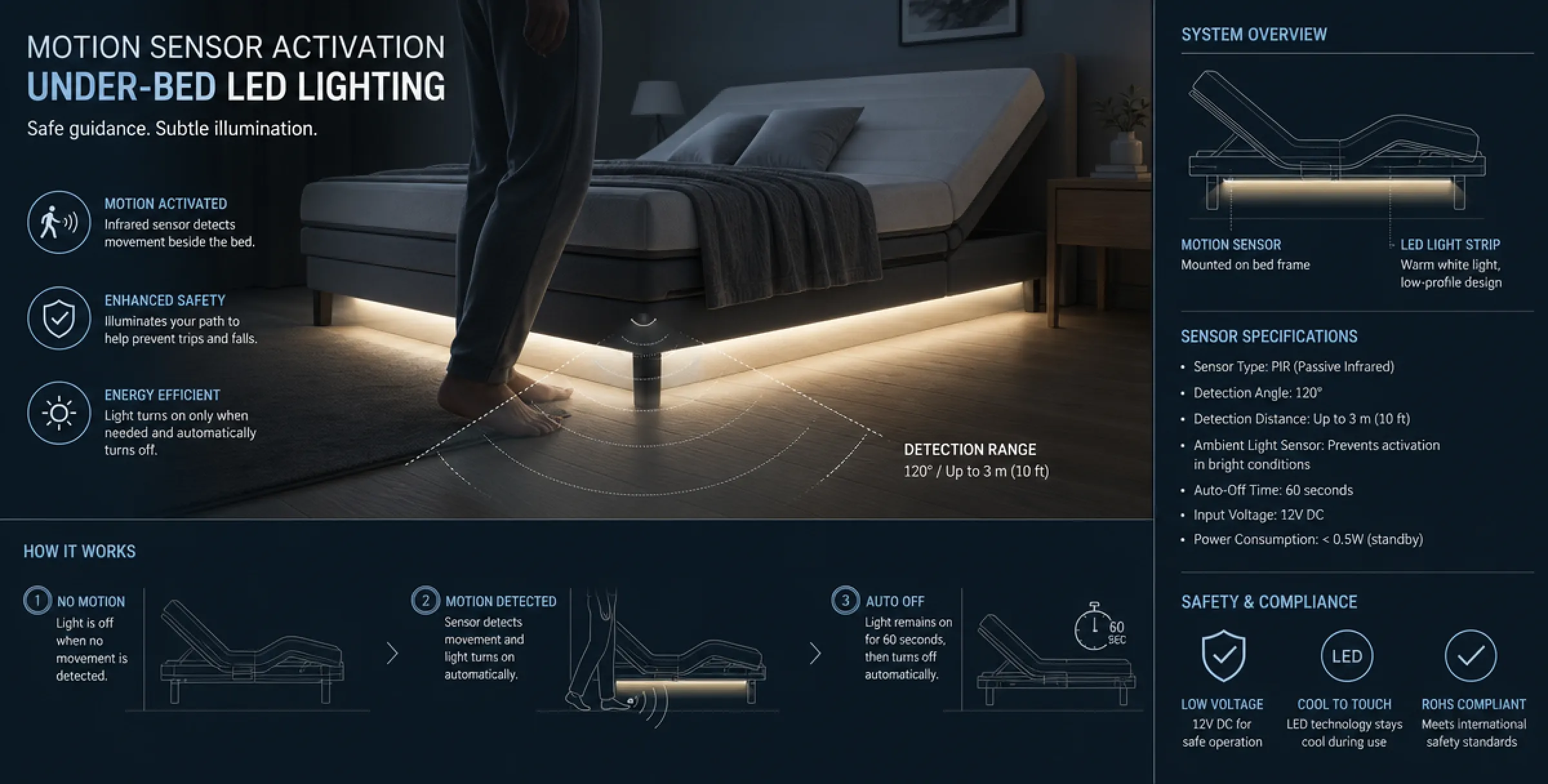
Integrated under bed lighting is one of the most visually impactful features a retailer can demonstrate. At the OEM manufacturing level, we install low-heat, high-efficiency LED strips directly to the underside of the steel chassis, routing the power seamlessly through the central control box. This eliminates the need for messy aftermarket wires or separate wall adapters.
The sales pitch for led lights under bed changes depending on the customer in front of you. For senior demographics or those purchasing a home care bed, the lighting is pitched as an essential safety feature. The motion-activated sensors detect when the user swings their legs over the edge of the mattress in the dark, casting a soft glow on the floor to prevent tripping hazards during nighttime bathroom visits.
Conversely, for younger buyers purchasing an adjustable bed for tv reading, the under bed lighting is pitched as a lifestyle enhancement. Dimming the overhead showroom lights and activating the LED glow creates a cinematic, floating aesthetic that instantly elevates the visual appeal of the bedroom. Consumers actively searching for the best under bed led lights are already primed to pay a premium for a bed that offers this feature natively built into the remote control.
Multi-Zone Massage Therapy: The Tactile Close
While lighting provides visual appeal, integrated massage therapy provides the tactile experience necessary to close high-ticket sales. Premium motorized systems, such as a four motor electric adjustable bed, typically feature dual or quad Eccentric Rotating Mass (ERM) motors bolted directly to the articulating deck. These motors generate resonant frequencies that travel through the mattress to stimulate blood flow and reduce lactic acid buildup.
To merchandise this feature effectively, the sales associate should execute the "Zero-Gravity Close." The associate guides the customer onto the bed, elevates them into the zero-gravity position to decompress their spine, and then activates the wave massage feature on a medium intensity setting. At this point, the associate should step back and remain silent for 60 seconds, allowing the customer to physically experience the stress relief. This sensory demonstration shifts the consumer's mindset from analyzing price to rationalizing a lifestyle investment.
Bluetooth App Control and Smart Home Integration
The traditional wireless remote control, while functional, is increasingly viewed as an outdated interface by tech-savvy consumers. Sourcing beds with integrated Bluetooth modules allows the user to pair the bed directly with a proprietary iOS or Android smartphone application.
App connectivity offers functionalities that a physical remote simply cannot accommodate. Users can program highly specific memory positions, set sleep timers that automatically return the bed to a flat position after they fall asleep, and utilize gentle-wake alarms. A gentle-wake alarm replaces a jarring auditory alarm clock by slowly elevating the head section of the bed, waking the user naturally through physical movement. By prioritizing Bluetooth-enabled SKUs in their adjustable bed product list, retailers immediately differentiate themselves from budget competitors selling basic mechanical frames.
USB and Type-C Charging Ports: The Convenience Factor
Because the modern bedroom acts as a secondary home office, the demand for accessible power is paramount. Consumers regularly work on laptops or scroll through smartphones while in bed. Reaching down to a floor-level wall outlet is a frustrating daily friction point. Factory-installed USB-A and high-wattage USB-C ports located on the side of the bed base provide immediate, ergonomic charging capabilities.
OEM Quality and Component Reliability
While tech features drive retail sales, they also introduce new vectors for mechanical failure. For a B2B distributor, excessive warranty claims can rapidly destroy the profitability of a product line. Sending a technician to a customer's home to fix a broken USB port or a faulty LED strip is highly expensive. Therefore, sourcing managers must rigorously vet the OEM engineering standards of the smart beds they procure.
Cable Management and Articulation Clearances
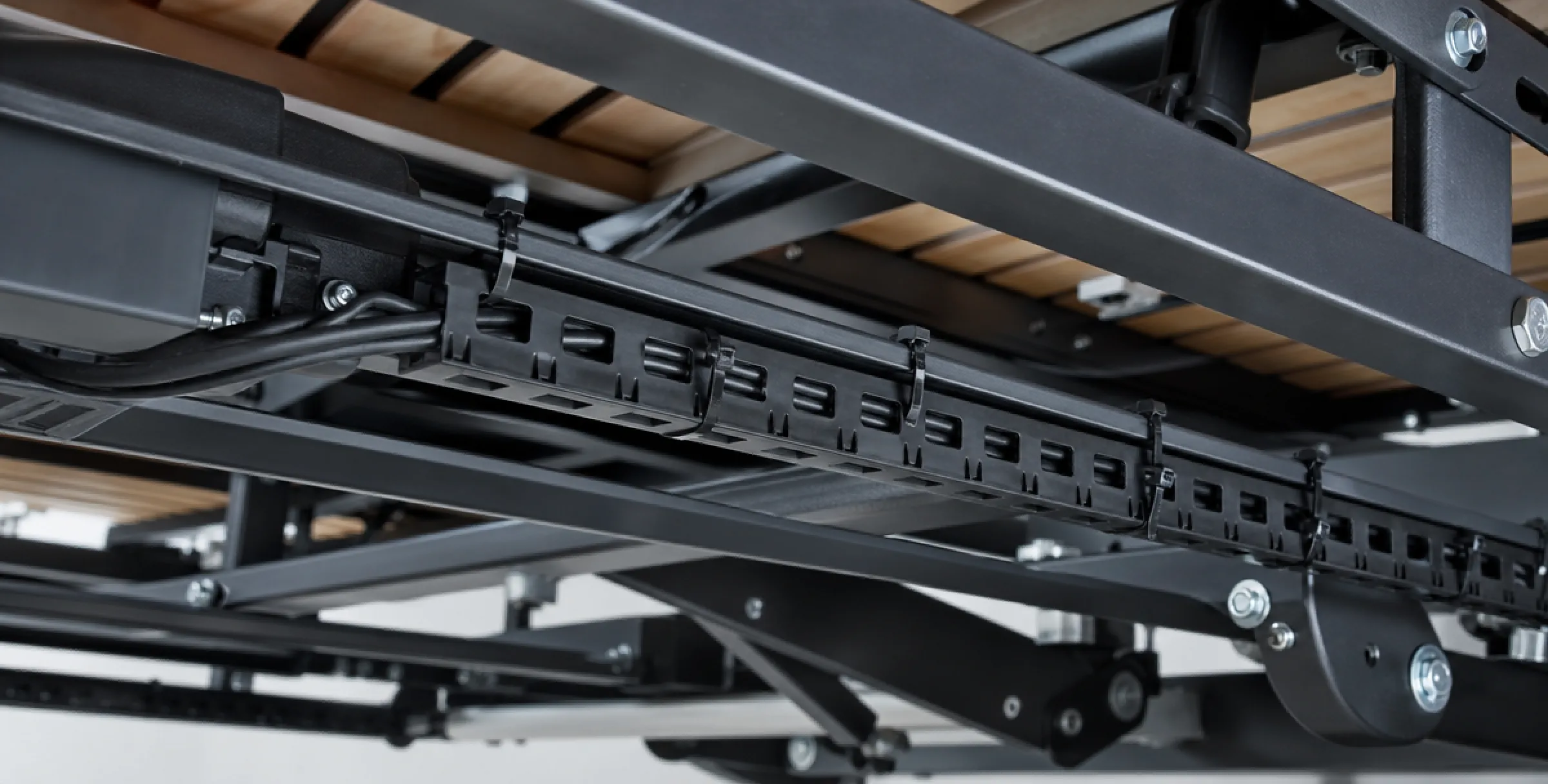
The primary cause of electronic failure in smart beds is pinched wiring. As the heavy steel frame articulates up and down, loose wires connecting the massage motors, Bluetooth modules, and lighting strips can easily get caught in the scissor mechanisms or linear actuators. We engineer our bases using proprietary nylon cable management tracks and robust zip-tie anchor points. This ensures all electronic conduits remain tightly secured to the static portions of the frame, completely eliminating the risk of severed wires during motion.
Modular Componentry and Certifications
To minimize service costs, all electronic add-ons must be modular. If a Bluetooth module fails, the control box must feature a simple plug-and-play port so the retailer can mail a small replacement part directly to the consumer for self-installation. We ensure our retail partners have access to comprehensive adjustable bed troubleshooting maintenance guides to facilitate this process. Furthermore, sourcing managers must demand that all internal power supplies, transformers, and LED drivers carry strict regulatory certifications (such as UL, CE, or FCC) to guarantee fire safety and residential compliance.
Developing a Tiered Retail Strategy
To successfully integrate smart tech into a retail floor, buyers should adopt a tiered merchandising strategy to capture all segments of the market.
The entry-level tier should feature a cheap adjustable bed with basic 2-motor head and foot articulation. This serves as a promotional loss-leader to drive foot traffic into the store. The mid-tier should introduce wireless remotes and perhaps dual-zone massage. The premium tier must be a fully loaded ecosystem: featuring wall-hugging technology, under bed lighting, Bluetooth app control, USB-C charging, and advanced lumbar support. By positioning the fully loaded tech bed next to the basic model, the sales associate creates a stark contrast in value, naturally guiding the consumer toward the higher AOV product.
Conclusion for B2B Procurement Teams
The adjustable bed is no longer just a piece of furniture; it is a sophisticated consumer electronic device. Sourcing managers who fail to adapt their catalogs to include smart sleep technology will lose market share to competitors who understand the demands of the modern lifestyle consumer. By procuring motorized bases equipped with OEM-integrated under-bed lighting, multi-zone massage, and Bluetooth connectivity, retailers can dramatically increase their profit margins, elevate the showroom experience, and secure their position in the rapidly expanding sleep wellness market.
Frequently Asked Questions (FAQ)
How does under bed lighting work on an adjustable bed?
Factory-integrated under bed lighting utilizes LED strips attached to the underside of the steel frame. They are wired directly into the bed's primary control box and are operated either via the bed's wireless remote or automatically through built-in motion sensors that detect movement when the user gets out of bed in the dark.
Are the massage features on adjustable beds actually effective?
Yes, but they function differently than a mechanical shiatsu massage chair. Adjustable beds use Eccentric Rotating Mass (ERM) motors to create whole-body resonant vibration. This high-frequency vibration penetrates the mattress to stimulate blood circulation, reduce muscle tension, and promote deep relaxation before sleep.
Why do I need a Bluetooth app to control my bed?
While standard remotes are useful, Bluetooth app integration allows for advanced lifestyle features. Through a smartphone app, users can program custom memory positions, set automated sleep timers to flatten the bed after a certain period, and utilize gentle-wake alarms that raise the bed slowly instead of using a loud audio alarm.
Can the electronic features on a smart bed cause fire hazards?
Not if the bed is manufactured to strict B2B standards. Professional OEM manufacturers ensure that all electronic components, including the main power supply, USB charging ports, and LED drivers, carry rigorous safety certifications such as UL (Underwriters Laboratories), CE, or FCC to guarantee absolute safety in residential environments.
What happens if a smart feature like a USB port or LED light breaks?
Premium smart beds are engineered with modular electronic components. If a specific feature fails, you do not need to replace the entire bed or the main control box. The retailer can simply supply a small, plug-and-play replacement part that the consumer can easily swap out without requiring specialized tools or a technician.
How do tech features help retailers increase their profit margins?
Basic mechanical adjustable beds suffer from intense online price competition. By offering beds with integrated smart tech like massage, app controls, and ambient lighting, retailers transform the product into a luxury lifestyle device. These highly demonstrable features significantly raise the perceived value, allowing retailers to justify a premium price point and increase their Average Order Value (AOV).
-

Author
Seemoon
Seemoon is a Senior Product Expert and Sleep Ergonomics Specialist. With extensive experience in the design and manufacturing of adjustable beds and smart sleep solutions, Seemoon is dedicated to sharing authoritative insights on furniture innovation, ergonomic health, and global B2B sourcing trends. All content is grounded in authentic manufacturing expertise to help global buyers make informed decisions.