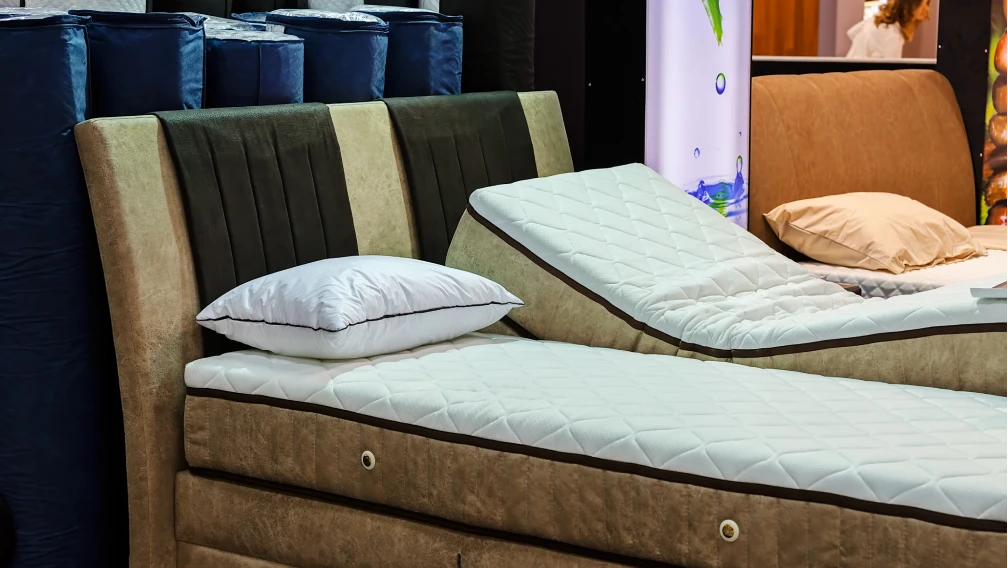

The bedding industry is undergoing a definitive structural shift. Mattress brands and furniture distributors can no longer rely solely on passive ergonomics to command premium price points. The modern consumer expects their sleep environment to function as an active health management ecosystem. Transitioning from traditional mechanical bases to connected sleep-tech infrastructure requires manufacturing partners capable of bridging the gap between heavy-duty steel fabrication and sophisticated Internet of Things (IoT) hardware.
At Seemoon, we engineer and manufacture smart adjustable beds that serve as the technological foundation for the world's leading sleep brands. This solution guide details the architectural requirements, sensor integration protocols, and data synchronization methodologies necessary for successful sleep-tech hardware procurement and OEM deployment.
The Transition from Mechanical to Biometric Hardware
Traditional adjustable bases rely on a reactive input-output model: the user presses a button on a remote handset, and the control box directs voltage to the corresponding linear actuator. Smart beds introduce a proactive, closed-loop system. The bed must continuously monitor the user's physiological state, process that data through localized algorithms, and execute physical adjustments without conscious user intervention.
This transition fundamentally alters the manufacturing requirement. The control box is no longer merely a power relay; it becomes an edge computing hub. It must manage sensor polling rates, execute micro-adjustments via the actuators to prevent sleep disruption, and maintain stable wireless connections to cloud infrastructures. For brands engaging in adjustable bed OEM manufacturing, selecting a partner with proven competencies in printed circuit board (PCB) design and firmware development is as critical as verifying their steel welding capabilities.
Sensor Architecture: Ballistocardiography (BCG) and Piezoelectric Integration
The core of any smart sleep system is its biometric tracking capability. Unlike wearable devices that rely on optical photoplethysmography (PPG), smart beds must gather high-fidelity physiological data non-invasively through thick mattress layers. This is achieved through Ballistocardiography (BCG).
BCG measures the micro-mechanical movements of the body generated by the ejection of blood at each heartbeat and the physical expansion of the lungs during respiration. To capture these minute forces, we integrate highly sensitive piezoelectric film sensors directly into the steel chassis or the rigid decking of the base. When mechanical stress (the heartbeat vibration) is applied to the piezoelectric material, it generates a corresponding electrical charge.
The engineering challenge lies in signal isolation. A bed frame is subjected to massive macro-movements (tossing and turning). The sensor array and its accompanying analog-to-digital converter (ADC) must possess the dynamic range to register a heartbeat while filtering out the mechanical noise of the sleeper shifting positions. Our hardware architecture utilizes specialized operational amplifiers (op-amps) and digital band-pass filters to isolate the 0.5 Hz to 3.0 Hz frequencies typical of human cardiovascular and respiratory activity.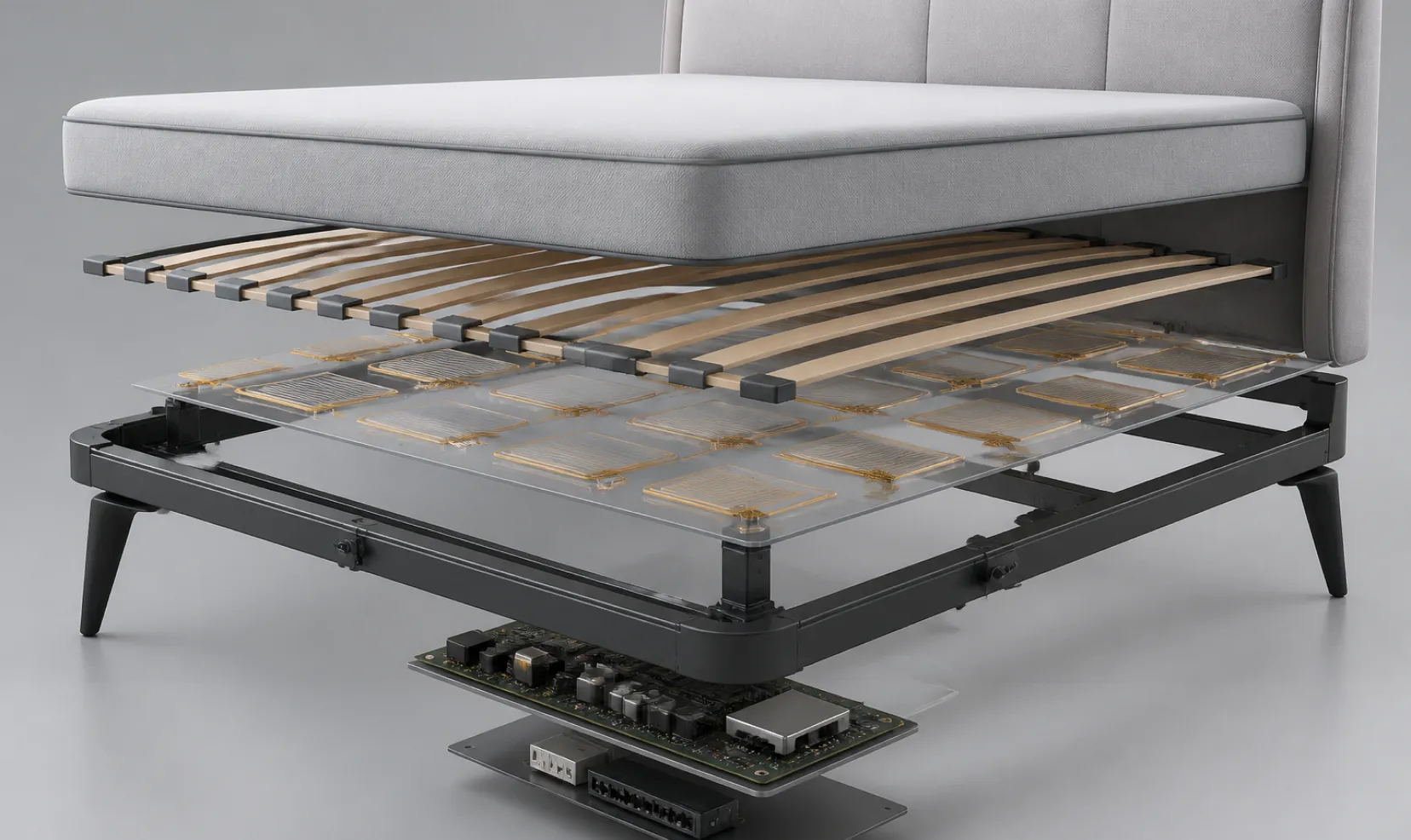
Edge Computing and Actuator Synchronization (Anti-Snore Auto-Response)
Capturing biometric data is only the first step; executing an automated physical response defines the true smart bed experience. The most prevalent application is automated snore mitigation. When the sensor array detects the specific vibrational frequencies of snoring, the system must articulate the head section to clear the user's airway.
This process demands strict synchronization between the sensor hub and the motor controllers. We utilize edge computing—processing the snore detection algorithm locally on the bed's microcontroller unit (MCU) rather than sending the raw audio or vibrational data to the cloud. This localized processing guarantees near-zero latency.
Once a snoring event is verified, the MCU commands the head actuator to elevate to a pre-programmed angle (typically 10 to 15 degrees). Crucially, this movement must not awaken the user. We implement Pulse Width Modulation (PWM) on the motor control lines to ensure a 'soft-start' and 'soft-stop' articulation, gradually ramping up the voltage to the actuators in our 4-motor adjustable bases to ensure whisper-quiet, imperceptible movement.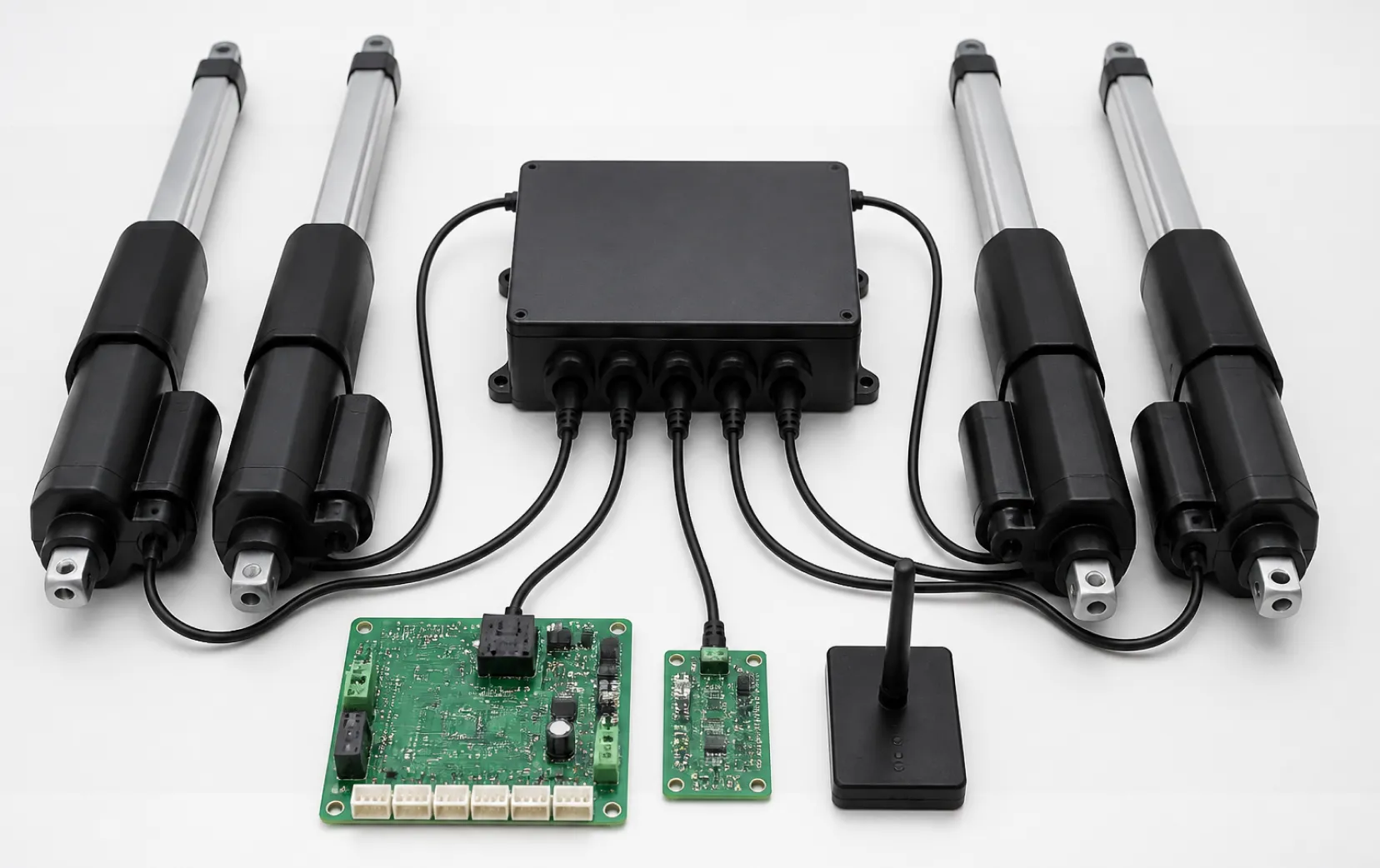
Connectivity Protocols: BLE 5.0, Wi-Fi, and API Ecosystems
A smart bed must integrate seamlessly into the broader smart home ecosystem. Hardwiring a proprietary communication module severely limits market adoption. We engineer our control hubs to support dual-band wireless protocols, specifically targeting Bluetooth Low Energy (BLE) 5.0 and 2.4GHz Wi-Fi.
BLE 5.0 is utilized for localized, direct-to-smartphone communication. It offers a robust connection for remote control functions via proprietary iOS and Android applications, ensuring minimal latency when a user manually adjusts their electric beds for home. The low power consumption of BLE is ideal for maintaining a constant connection without generating excess thermal load on the control board.
The 2.4GHz Wi-Fi module serves as the pipeline for long-term data aggregation and ecosystem integration. It allows the bed to upload nightly sleep architecture data (REM, light sleep, deep sleep phases) to cloud servers for historical analysis. Furthermore, Wi-Fi connectivity enables API (Application Programming Interface) integration with third-party platforms like Tuya, Apple Health, or Google Home, allowing the bed to trigger external smart home actions, such as dimming the bedroom lights when the user enters deep sleep.
Electromagnetic Shielding and Medical-Grade Power Management
Integrating sensitive biometric sensors inches away from high-torque DC motors creates a hostile electrical environment. When an actuator engages, it generates significant electromagnetic interference (EMI) and causes voltage drops across the primary power bus. If unmitigated, this electrical noise will corrupt the delicate micro-volt signals generated by the piezoelectric sensors.
Seemoon employs rigorous electrical isolation strategies. The sensor circuitry is physically partitioned on the PCB and shielded with grounded copper planes. We utilize medical-grade switched-mode power supplies (SMPS) equipped with heavy-duty transient voltage suppressors and decoupling capacitors. This ensures that even when multiple motors are drawing maximum current to lift a heavy mattress on a zero-clearance smart bed, the voltage supplied to the sensor array remains absolute, preventing false readings or data dropouts.
Firmware Over-The-Air (OTA) Updates and Data Compliance
Sleep-tech algorithms evolve rapidly. The snore detection algorithm developed today will undoubtedly be refined and optimized within twelve months. Consequently, smart bed hardware must not remain static after it leaves the factory floor. We engineer our IoT control boxes with dual-bank flash memory to support seamless Over-The-Air (OTA) firmware updates.
OTA capability allows mattress brands to push new features, optimize motor control curves, and patch security vulnerabilities remotely, continually increasing the value of the product long after the initial sale. Because the firmware update downloads to a secondary memory bank in the background, the bed remains fully operational during the process. If an update fails, the system automatically reverts to the previous stable firmware, preventing bricked hardware and eliminating unnecessary smart bed RMA claims.
Furthermore, because these systems process highly personal biometric data, hardware-level encryption is mandatory. Our communication modules utilize AES-128 or AES-256 encryption protocols for all data transmission, ensuring compliance with global data privacy regulations such as the GDPR in Europe and the CCPA in California.
Seemoon's Joint Design Manufacturing (JDM) Framework
Developing a proprietary smart bed requires intense collaboration between the brand's software developers and the factory's hardware engineers. Seemoon operates on a Joint Design Manufacturing (JDM) framework to facilitate this integration.
We provide comprehensive Software Development Kits (SDKs) and detailed API documentation to our partners' software teams. This allows the brand to focus entirely on designing their user interface and sleep coaching algorithms, while we handle the complex electromechanical execution, sensor calibration, and regulatory compliance testing (FCC, CE-RED). This parallel development significantly reduces time-to-market and ensures absolute hardware-software synergy upon launch.
FAQ
1. How accurate is Ballistocardiography (BCG) compared to wearable sleep trackers?
BCG technology implemented with high-grade piezoelectric sensors is highly accurate for measuring resting heart rate and respiratory rate, often matching clinical-grade polysomnography within a 90-95% confidence interval for these specific metrics. Unlike optical wearables, it cannot measure blood oxygen saturation (SpO2), but it provides a completely frictionless user experience without requiring devices to be worn or charged.
2. Can a smart bed track two sleepers independently on a single mattress?
Yes, on Queen and King size bases. We integrate dual, physically isolated sensor arrays on the left and right sides of the platform. The localized processing algorithms are calibrated to filter out cross-talk—meaning the vibrations from the left sleeper rolling over will not corrupt the heart rate data of the right sleeper.
3. How does the bed differentiate between snoring and other bedroom noises?
Anti-snore algorithms do not rely solely on audio microphones, which raise severe privacy concerns. Instead, the piezoelectric sensors detect the specific physical vibrational frequencies transmitted through the mattress during snoring (typically in the 20 Hz to 100 Hz range). The MCU cross-references this vibration with the user's respiratory rate to confirm a snoring event before moving the bed.
4. What happens to the biometric data if the home Wi-Fi network goes down?
Our smart control boxes are equipped with localized flash memory buffers. If the Wi-Fi connection drops, the system will securely store up to 7 days of sleep architecture data locally. Once the connection is re-established, the bed will automatically synchronize the backlog with the cloud server, ensuring no gap in the user's sleep history.
5. Are these smart bases compatible with standard memory foam mattresses?
Yes. BCG sensors are highly sensitive and calibrated to read micro-vibrations through up to 14 inches of high-density memory foam, latex, or pocketed coil hybrid mattresses. During the JDM process, we can fine-tune the amplifier gain on the PCB to perfectly match the exact density profile of your proprietary mattress line.
6. How do you protect user privacy when collecting health data in the bedroom?
Privacy is engineered at the hardware level. We do not use optical cameras or raw audio recording microphones. All biometric processing (like snore verification) happens via edge computing on the local MCU. The data transmitted to the cloud consists only of encrypted, anonymized telemetry (e.g., numerical heart rate values, movement timestamps) utilizing strict AES encryption standards.
-

Author
Seemoon
Seemoon is a Senior Product Expert and Sleep Ergonomics Specialist. With extensive experience in the design and manufacturing of adjustable beds and smart sleep solutions, Seemoon is dedicated to sharing authoritative insights on furniture innovation, ergonomic health, and global B2B sourcing trends. All content is grounded in authentic manufacturing expertise to help global buyers make informed decisions.